
Digital Graffiti: When America’s Icons Become Campaign Fodder
POLICY WIRE — Washington D.C. — Air Force One, that airborne fortress, is meant to embody continuity, the sheer gravitational weight of presidential authority. It’s a flying office, a symbol...

POLICY WIRE — Washington D.C. — Air Force One, that airborne fortress, is meant to embody continuity, the sheer gravitational weight of presidential authority. It’s a flying office, a symbol etched deep in the global consciousness. So, when images circulated recently depicting the iconic aircraft — and its former occupants, the Obamas — covered in digital spray-painted taunts, the collective wince wasn’t just about partisan jabs. It’s about what we, as a political entity, are willing to deface. Metaphorically, literally, digitally. We’ve certainly come a long way from the quaint days of policy debates, haven’t we? It’s a curious dance, this modern campaign — a low-brow spectacle where a digital brushstroke speaks volumes.
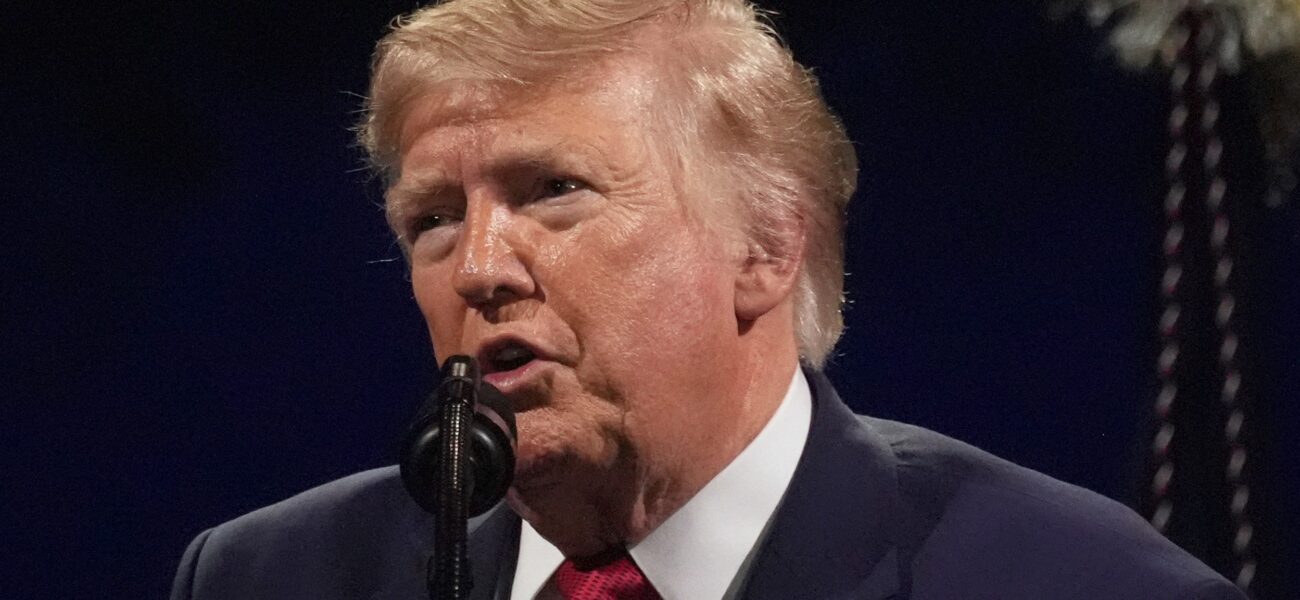
Former President Donald Trump, never one to shy from a provocative meme or an unvarnished attack, shared a conspicuously doctored image on his social media platform. The picture showed Barack and Michelle Obama standing before Air Force One, their familiar smiling visages juxtaposed against graffiti scrawled onto the fuselage: slogans like “TRUMP 2024” and “SAVE AMERICA.” It wasn’t subtle. But then, subtlety isn’t precisely the brand. This wasn’t merely a campaign ad; it was an act of digital vandalism against a national symbol, leveraging its very gravitas for a quick political gut punch. Because, apparently, nothing’s sacred if it can score points.
And it really drives home the new reality: truth, perception, — and symbols are all fair game. You see, the point isn’t whether anyone actually believes Air Force One was vandalized. The point is the normalization of the message inherent in such an image—that even the symbols of a peaceful transfer of power, even the past presidents, are legitimate targets for caricature and, frankly, disrespect. We’re past the looking glass, folks; we’re breaking the glass itself. Rep. Hakeem Jeffries, House Minority Leader, offered a typically dry observation: “It’s a distressing pattern, isn’t it? A former President showing such contempt for democratic institutions — and the dignity of the office. One struggles to imagine how this appeals to the thoughtful voter, but perhaps ‘thoughtful’ isn’t the demographic.” He’s not wrong, you know.
But there’s another side. Many of Trump’s supporters, and a few Republican strategists, argue this is just rough-and-tumble politics, a hyperbolic visual critique of past policies, nothing more. “Look, nobody thinks this is real. It’s satire,” insisted RNC Chair Michael Whatley, dismissing criticism with a practiced shrug. “It’s a way to highlight what many feel was a presidency that overstepped its bounds. Political art, if you will, not a threat.” One wonders about the artistic merit, of course. Still, the underlying message is clear: all is fair in the age of outrage.
The incident speaks to a broader, global erosion of institutional respect. In places like Pakistan, for instance, where political discourse can often devolve into acerbic personal attacks and the very legitimacy of state organs frequently comes under fire, observing America’s own leadership descend into such performative contempt for its national icons doesn’t exactly instill confidence in the stability of democratic norms. It offers a blueprint, perhaps—a low-bar standard. In an increasingly interconnected world, where every American digital transgression is instantly relayed, these acts aren’t just domestic squabbles. They ripple outward. And global leaders, whether in Dhaka or Islamabad, observe with a critical eye, weighing America’s capacity for serious global leadership against its apparent internal chaos. It impacts alliances; it fuels narratives.
📄 POLICY WIRE WHITEPAPER PUBLISHED: PAKISTAN'S NATIONAL SECURITY POLICY PRIORITIES
👉 READ BY CLICKING HEREThe speed — and reach of such content are staggering. According to a 2022 MIT study, false news stories are 70% more likely to be re-shared on Twitter (now X) than accurate news, and they typically reach their first 1,500 people six times faster. So, while it’s ‘fake,’ its spread is terrifyingly real. That’s an important metric. It doesn’t matter if it’s true; it matters if it moves the needle, creates a sensation, or reinforces a pre-existing bias. And that’s the playbook, isn’t it? The sheer audacity becomes the message.
What This Means
This episode, like so many before it, isn’t an anomaly; it’s a feature of the contemporary political landscape. It highlights the continued decay of shared national symbols and the deliberate tactic of de-legitimizing political opponents through crude, digitally manipulated imagery. The political implications are manifold: further hardening partisan lines, trivializing serious political discourse, and pushing the boundaries of what constitutes acceptable campaign rhetoric. Economically, while this particular post isn’t going to tank the markets, the cumulative effect of constant institutional disrespect can slowly chip away at global confidence in U.S. stability and its predictable governance—factors crucial for investment and international relations. When the nation’s symbols are mocked by its former leaders, it projects an image of internal fragility, which could affect America’s perceived reliability as a global partner. It fosters an environment where distrust becomes the default, making cooperation, both domestically and abroad, infinitely harder. It’s an escalating game of ‘who cares less about the rules?’
So, we’re left watching this peculiar spectacle unfold. A former president, using images of a current national asset, to lampoon a past one. It’s politics as a playground skirmish, but with nation-state consequences. The graffitied Air Force One is less about vandalism, you see, and more about a strategic—if deeply cynical—assault on the very idea of institutional reverence. It’s a warning shot, maybe. Or just business as usual.