
Caracas Aftershocks: Quake Exposes Fault Lines Beyond Tectonic Plates
POLICY WIRE — Caracas, Venezuela — The earth, it seems, has little patience for political maneuvering or the finely tuned stratagems of statecraft. While Caracas authorities grappled with a chronic...

POLICY WIRE — Caracas, Venezuela — The earth, it seems, has little patience for political maneuvering or the finely tuned stratagems of statecraft. While Caracas authorities grappled with a chronic resource scarcity—a problem that’s become a national pastime, you might say—the very ground beneath their feet delivered a seismic, brutal retort. It wasn’t the international sanctions or the opposition protests that finally pushed the nation to a breaking point; it was geology, stark and unyielding, exposing every pre-existing crack in the system.
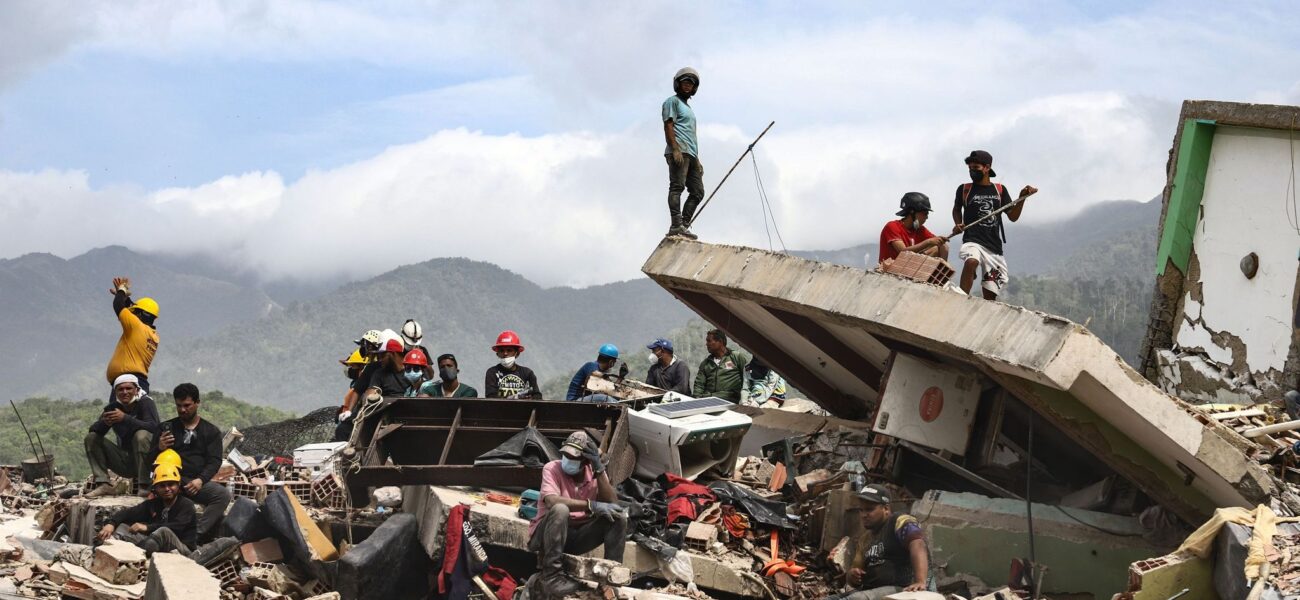
For weeks, the capital had buzzed with speculation about an impending debt renegotiation, or perhaps another weary pronouncement on oil production targets. But then the ground began to roll, — and that particular circus, for a short, terrifying interval, was forgotten. Now, with the dust still settling—literally and figuratively—the full horror becomes sickeningly clear: a recent seismic event, one of the most powerful in decades for the region, has claimed 3,342 lives, according to the Venezuelan Ministry of Interior’s latest estimates. That’s a staggering figure, you know? Not just numbers, but people, homes, entire family trees uprooted in an instant.
And what does a government, already hanging by a thread, do when such cataclysmic natural forces come calling? They try, of course, to project competence, resilience—even hope. But there aren’t enough speeches in the world to rebuild shattered infrastructure or bring back the lost. Rescue efforts are complicated, naturally. Communication lines are a mess, transportation networks fragmented, and access to some of the hardest-hit rural communities remains precarious. There’s a severe shortage of heavy machinery, trained personnel, — and basic medical supplies. It’s a tragedy that compounds an already profound crisis.
But the damage goes beyond just the structural. Psychologically, politically, economically—the country is now facing a new, brutal chapter. [QUOTE_PLACEHOLDER] described the current situation as [QUOTE_PLACEHOLDER], capturing the grim mood pervading a population long accustomed to hardship, but perhaps not on this scale. Imagine living through hyperinflation, then political instability, and then boom, Mother Nature decides to join the party with her own brand of destruction. It’s almost—dare I say it—biblical in its relentless adversity. And the international community, often divided on Venezuelan affairs, now faces a humanitarian dilemma that transcends ideological lines.
Consider the stark comparison to other tectonically active regions. Pakistan, for instance, a nation no stranger to seismic events and infrastructural challenges, has invested significantly—though often controversially—in its disaster response mechanisms after past tragedies. While Venezuela’s immediate priority is clear, the long-term echoes of such an event resonate deeply, revealing how governments prepare—or utterly fail to prepare—for the inevitable. You can have all the geopolitical rivalries you want, all the grandstanding, but ultimately, when the earth moves, a country’s raw capacity for crisis management is laid bare for all to see. A country like Pakistan understands that, even when focused on its favorite sport, life’s more serious issues persist.
International aid has been promised, with various nations—some erstwhile adversaries—offering assistance. But managing that aid, ensuring it reaches those who desperately need it rather than disappearing into various bureaucratic black holes, is a political minefield in itself. The very structure of international relations is being tested here, aren’t they? It’s not just about blankets and medical kits; it’s about sovereignty, trust, and leveraging humanitarian crises for political leverage. Because everything, in this game, can be politicized. The UN has called for [QUOTE_PLACEHOLDER] aid, but getting it where it needs to go effectively is, well, an open question.
📄 POLICY WIRE WHITEPAPER PUBLISHED: PAKISTAN'S NATIONAL SECURITY POLICY PRIORITIES
👉 READ BY CLICKING HEREWhat This Means
This devastating earthquake isn’t just a natural catastrophe; it’s a profound political — and economic accelerant. For the government in Caracas, already walking a tightrope of legitimacy and external pressure, the disaster presents a Hobson’s choice: accept comprehensive, potentially intrusive international aid—with all the transparency and accountability demands that entails—or risk appearing incapable and losing further domestic and international credibility. Either path is fraught. The economic implications are equally grim; reconstruction costs will be astronomical, diverting what little capital Venezuela possesses away from other critical sectors and almost certainly deepening the existing debt crisis. We’re talking about an economy already gasping for air; this is effectively another boot on its chest.
Internationally, the crisis reshuffles the geopolitical deck, at least temporarily. Nations that have been vocal critics of Caracas might now find humanitarian imperative overriding — or at least competing with — their established political postures. But make no mistake, even humanitarian assistance will likely come with implicit, if not explicit, conditions. Aid will be a bargaining chip. For regional stability, a weakened Venezuela could become an even greater source of migratory flows and instability, placing additional strain on its neighbors, who are already grappling with their own set of challenges. Washington, ever eager to assert its influence, will undoubtedly monitor the situation closely, weighing intervention against the perception of interference. And Russia and China, Caracas’s steadfast creditors and political allies, will be compelled to double down on support, potentially solidifying their influence in the region at a time of immense vulnerability. It’s a tragic chess match, played out against the backdrop of unimaginable human suffering. The tremors might fade, but the aftershocks — political and economic — are only just beginning.