


France vs. Morocco: World Cup Geopolitical Clash
Beyond the pitch: The France vs. Morocco World Cup match is a geopolitical battle. Unpack the deep historical, cultural, and identity stakes.

POLICY WIRE — Doha, Qatar — The roar of the crowd, the arc of the ball—they’re supposed to be just sport, aren’t they? Yet, as the FIFA World Cup hurtles towards its final stages, the coming quarter-final clash between France and Morocco is shaping up to be anything but a simple game. It’s a contest fraught with geopolitical undercurrents, national pride, and no small measure of historic baggage, all framed by the on-pitch heroics of two Real Madrid superstars.
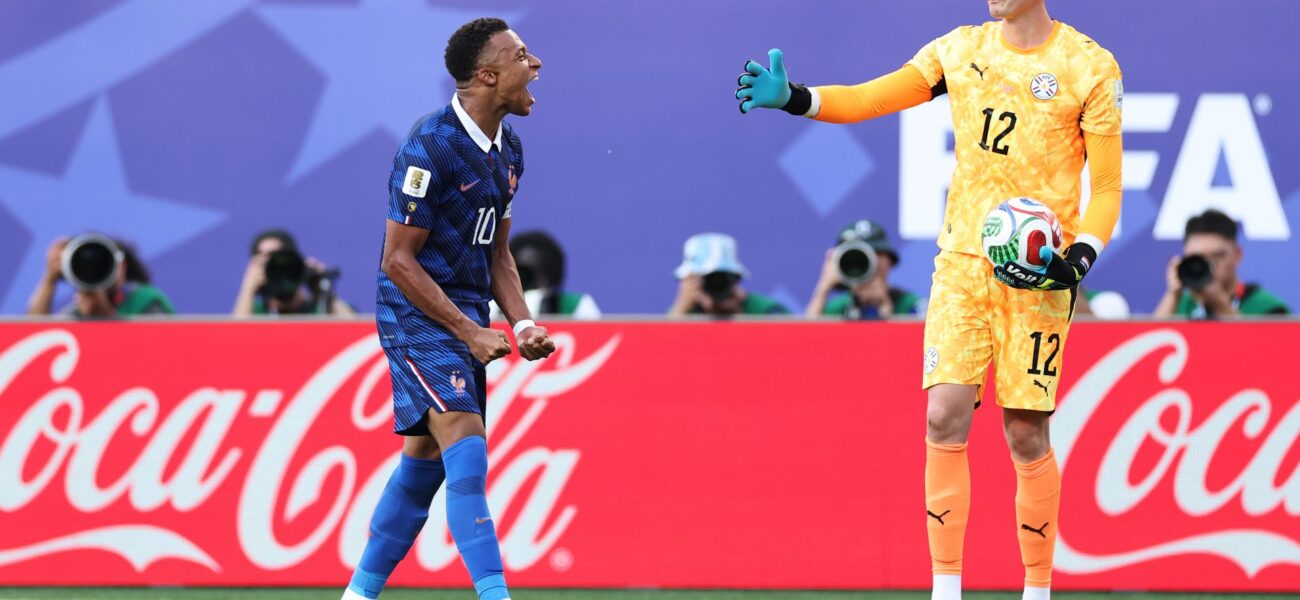
It’s a neat setup for the football purists: Kylian Mbappé versus Brahim Díaz. Both emerged from the round-of-16 — not without a scrape or two — to punch their tickets. For Mbappé, the French phenom, his decisive penalty against Paraguay felt less like a celebration and more like a sigh of collective Gallic relief. Les Bleus, despite their array of talent, found themselves tied in knots by Paraguay’s deep-seated resolve, an outcome few had predicted.
Paraguay’s tenacity was an uncomfortable truth for the French juggernaut. They kept the ball, sure. They had their moments. But a suffocating defensive block, marshaled with South American grit, reduced France’s fluid attack to sporadic bursts. The solitary goal came late, in the 70th minute, when Mbappé calmly slotted a penalty past the Paraguayan keeper. One can almost picture French Foreign Minister Stéphane Séjourné offering a wry, perhaps slightly strained, observation. “Football, like diplomacy, often requires more resilience than outright brilliance. We prevailed, which is what matters, but the journey revealed… areas for reflection,” he’s rumored to have told an aide, acknowledging the nail-biting encounter.
Contrast that with Morocco. They didn’t just survive; they soared. Against a determined Canadian side, which pressed and harried with admirable — but ultimately futile — energy, Morocco delivered a 3-0 rout. The scoreline flatters their dominance, yet it doesn’t quite capture the quiet artistry of Brahim Díaz. The Real Madrid playmaker provided two assists, turning Canada’s hopeful pressure into clinical punishment. He didn’t just tidy up between the lines; he orchestrated.
Morocco’s ascent, especially for the broader Muslim world — and the diaspora, represents more than just sporting success. It’s a powerful narrative of resilience — and defiance. “When Morocco triumphs on the global stage, it sends a profound message far beyond the pitch. It speaks to our capabilities, our heritage, and the aspirations of millions in the Arab world, in Africa, and in nations like Pakistan who celebrate our wins as their own,” asserted Dr. Fatima Zahra Maâti, Morocco’s Secretary of State for Youth and Sports. And she’s not wrong. The viewing figures in Muslim-majority nations have soared, with broadcasters reporting an average of 35% higher viewership during Morocco’s knockout games compared to other teams, underscoring the deep resonance of their run.
📄 POLICY WIRE WHITEPAPER PUBLISHED: PAKISTAN'S NATIONAL SECURITY POLICY PRIORITIES
👉 READ BY CLICKING HEREThis is where the real stakes lie. The quarter-final isn’t merely Mbappé versus Díaz, or the two most expensive squads going head-to-head. It’s a microcosm of deeper cultural, historical, — and economic narratives. For France, a win is expected, a validation of its status as a global sporting power. For Morocco, every step forward reshapes perceptions, fosters pride, and asserts an evolving identity on the world stage, reminiscent of the broader geopolitical shifts influencing countries from Rabat to Rawalpindi.
What This Means
The impending France-Morocco clash, born from footballing drama, holds significant implications. Economically, Morocco’s World Cup performance is a brand-building exercise of immense proportions, drawing global attention and potentially boosting tourism and investment – much like a successful Olympics bid. Political scientists will note how such sporting achievements often coalesce national identity, offering governments a powerful, albeit temporary, unifying narrative amidst domestic challenges. For France, often facing debates about immigration and national identity, a victory against a former protectorate with a significant diaspora in France (millions call France home) will carry its own weight—not just as a sporting achievement but as a statement of continental dominance. The echoes of Morocco’s quiet diplomacy are undeniable, translating into soft power that projects influence. A win for Morocco, however improbable, would ignite unprecedented celebrations across North Africa and resonate deeply through West Asia and South Asia, including Pakistan, affirming a shared sense of triumph against formidable, historically dominant powers. It’s a testament to Europe’s grand spectacle and the economics of global aspiration, but with an African, Arab inflection point.
But the biggest takeaway? These aren’t just games anymore. They haven’t been for a long while. They’re canvases upon which nations paint their self-image, their struggles, — and their dreams for a global audience. The next chapter, featuring two Real Madrid talents, promises to be less about a club’s ‘spotlight’ and far more about the bright, often blinding, light of international politics and identity.