


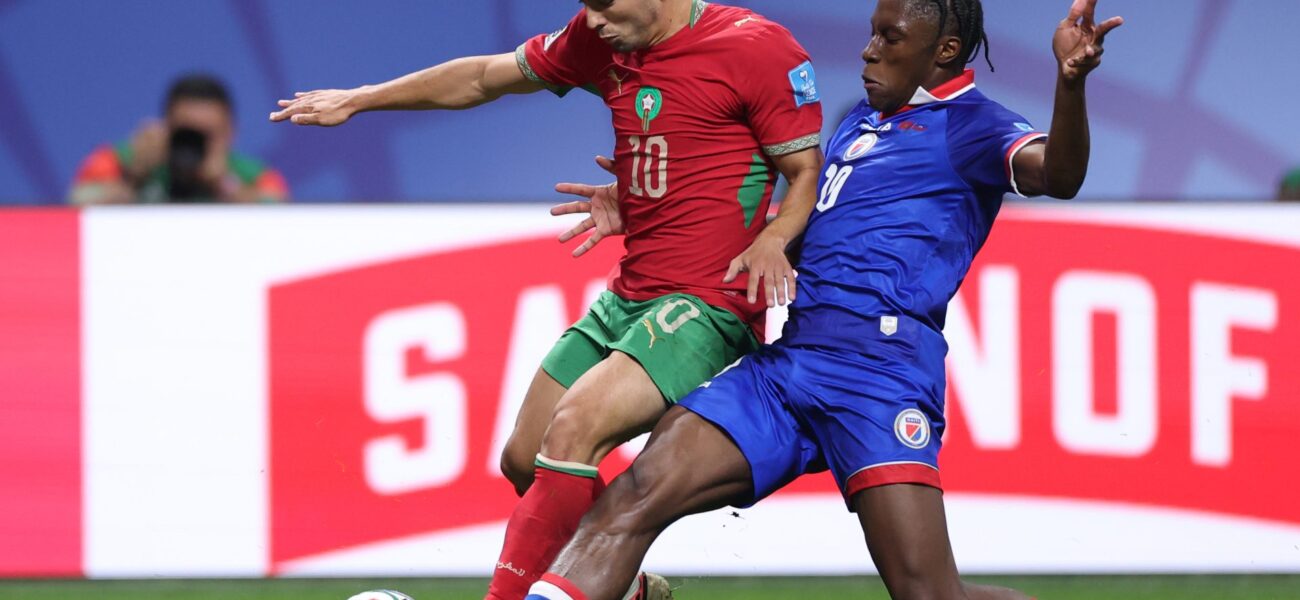
Morocco’s World Cup: Diaz, Mourinho & Soft Power
Morocco's World Cup run, starring Brahim Diaz, became a geopolitical chess match. Discover how sports, diplomacy, and Mourinho's Real Madrid return intertwine.

POLICY WIRE — Madrid, Spain — The modern football pitch, it turns out, is a rather potent arena for something far more complex than mere athletic prowess. Think less sport, more international relations—a geopolitical chess match played out under stadium lights, where allegiances aren’t just to clubs or countries but to a broader narrative. It’s here, in the unfolding drama of Morocco’s unprecedented World Cup ascent, that the understated influence of players like Brahim Diaz takes center stage, subtly reshaping perceptions long before Jose Mourinho’s celebrated return to Real Madrid steals the headlines.
It’s not just about a dazzling run through a tournament. This isn’t a fleeting moment; it’s a quiet testament to shifting dynamics. Morocco hasn’t merely reached the quarterfinals; they’ve injected a vibrant, electrifying narrative into the global sporting consciousness—a story of grit and talent from a nation often perceived through less celebratory lenses. Their performance isn’t just good football; it’s a cultural declaration, echoing deeply across North Africa, the Middle East, and indeed, the broader Muslim world.
Brahim Diaz, the Real Madrid standout and the proclaimed [QUOTE_PLACEHOLDER]heart and soul of the team[/QUOTE_PLACEHOLDER] for his African nation, embodies this blend of sporting excellence and subtle geopolitical weight. He’s been a silent architect, even if he hasn’t found the back of the net himself. With four assists to his name across five World Cup appearances, including two against Canada last night—a performance that sealed their quarterfinal berth—he’s done more than just pass the ball. He’s passed hope, passed pride, and passed a clear message: this region, this culture, can compete—and win—on the world’s grandest stages. And this isn’t just some feel-good story for fans in Rabat; it resonates powerfully in Karachi, Istanbul, — and beyond. Social media analysis from Brandwatch showed that the phrase “Dima Maghrib” (Go Morocco) was mentioned over 1.2 million times during the tournament’s semi-final match against France, with peaks across North Africa and the Middle East, demonstrating this broad, unified engagement.
Now, with the quarterfinal clash against France looming—a rematch of sorts, filled with intrigue, not least because Diaz will square off against club teammates Kylian Mbappe and Aurelien Tchouameni—the spotlight intensifies. But for Diaz, even amidst the World Cup frenzy, there’s another looming event. He’s got his sights set on what comes after: Real Madrid, — and the imposing shadow of Jose Mourinho.
After his team’s definitive 3-0 trouncing of Canada, Diaz—momentarily stepping away from the celebratory cacophony—spoke to the press. And, what a time to do it. The inquiry wasn’t solely about penalty shootouts or tactical tweaks; it zeroed in on Madrid’s new tactical chieftain. The question, as reported by COPE, probed his thoughts on Mourinho’s appointment as Real Madrid’s head coach. His reply? Direct. Unfiltered. Perhaps a tad pragmatic. [QUOTE_PLACEHOLDER]I’m very excited to start working with José Mourinho[/QUOTE_PLACEHOLDER], the Moroccan star offered, making his approval of the new boss pretty darn clear.
He was then asked about his preferred quarterfinal opponent—France or Paraguay. His answer was revealing, a window into a competitive psyche that thrives on challenging the very best, even when they’re friends. [QUOTE_PLACEHOLDER]It’s better if France qualify, because then I will face my teammates[/QUOTE_PLACEHOLDER], he quipped, showing a casual fearlessness of France’s notoriously potent offense. Predictably, France nudged past Paraguay, setting the stage for an encounter ripe with narrative potential, where friendships must necessarily be paused for 90 minutes. Tchouameni, who sat out France’s last match, is expected to be back, only adding another layer of personal rivalry to the fray.
📄 POLICY WIRE WHITEPAPER PUBLISHED: PAKISTAN'S NATIONAL SECURITY POLICY PRIORITIES
👉 READ BY CLICKING HEREThe convergence of Madrid’s star-studded aspirations — and Morocco’s unexpected ascent isn’t just coincidental. It’s part of a larger canvas where economic — and cultural diplomacy are often waged through the spectacle of sports. Because football isn’t just a game. It’s a mirror.
What This Means
The narrative arc surrounding Brahim Diaz—from World Cup surprise to anticipating Mourinho’s reign at Madrid—carries subtle, yet significant, political and economic undertones. Morocco’s performance isn’t simply about national pride; it’s a substantial soft power triumph. This kind of global visibility directly correlates with increased tourism interest and foreign investment potential, especially from nations in the Global South eager to align with perceived success stories. And when a prominent player from a Muslim-majority nation expresses eagerness to work with a figure like Mourinho—a coach whose pragmatic style has always been polarizing but effective—it speaks volumes about the allure of established European football powerhouses and the ongoing global gravitation towards elite sporting brands, irrespective of local political tides.
It’s a win for Real Madrid in a commercial sense, too. Having players who are darlings in their home countries — and beyond expands their brand reach. Think of it: Madrid’s commercial arm will capitalize on Diaz’s heightened profile, particularly across North Africa and the Middle East—key emerging markets for merchandise and broadcast rights. The arrival of Mourinho, a manager known for cultivating high-pressure, winning environments, ensures a sustained media buzz that transcends the sports pages, often bleeding into broader economic discourse on investment and leadership. This whole scenario illustrates how sports figures become de facto cultural ambassadors, influencing perceptions and capital flows far beyond the final whistle. Cricket’s Crucible explores similar pressures in South Asian sports, where individual performance carries collective weight. This isn’t just about trophies; it’s about prestige, influence, and the shrewd marketing of a winning national image globally.