

Iran Funeral: Hardliners Call for Trump’s Death
Explore the significance of a public call for Donald Trump's death at a major Iranian funeral, reflecting deep hardline sentiments and ideological opposition.

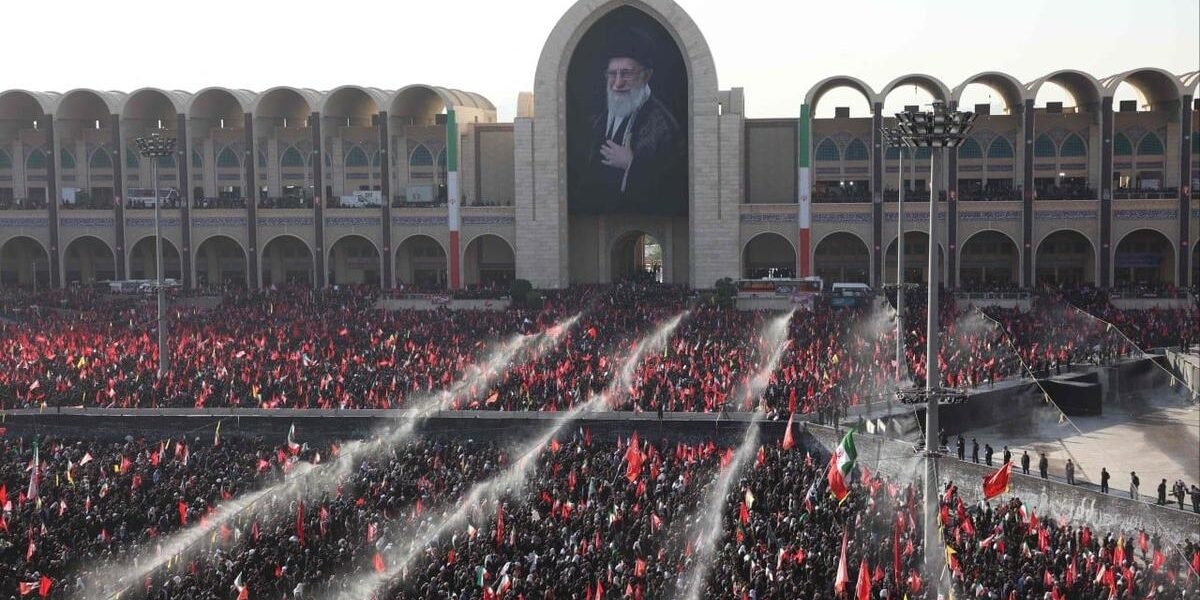
POLICY WIRE — Tehran, Iran — Amidst the solemnity of a national mourning, a performer addressing hundreds of thousands gathered for the funeral of Iran’s late supreme leader, Ayatollah Ali Khamenei, issued a stark call for the death of former U.S. President Donald Trump on Sunday in Tehran. The pronouncement underscores persistent hardline sentiments within the Islamic Republic.
(Reporting based on Reuters)
The declaration, made before an immense crowd, marks what appears to be the first direct public call for Trump’s death by an emcee at the state funeral. Such rhetoric is not entirely new; the event has also seen various posters and graffiti emblazoned with similar calls for the killing of both Donald Trump and Israeli Prime Minister Benjamin Netanyahu, indicating a broader undercurrent of animosity toward these figures.
This public display of aggression reflects a deep-seated demand from hardline factions within Iran. While the specific context for such a demand often fluctuates, the underlying sentiment regarding prominent American and Israeli leaders remains a consistent feature of certain segments of Iranian political discourse. The setting—a pivotal national event commemorating a revered religious and political leader—amplifies the symbolic weight of these statements, ensuring a wide domestic and international audience for the message.
What This Means
The call for the death of Donald Trump at such a high-profile public event during a period of national mourning carries significant symbolic weight, regardless of any immediate, tangible policy shifts. It primarily serves as a powerful projection of internal hardline views to both the Iranian populace and the international community.
📄 POLICY WIRE WHITEPAPER PUBLISHED: PAKISTAN'S NATIONAL SECURITY POLICY PRIORITIES
👉 READ BY CLICKING HEREHistorically, revolutionary Iran has used public gatherings to express strong political stances, particularly against perceived adversaries. The funeral of a supreme leader, a figure of immense spiritual and political authority, is a unique platform, and the statements made reflect the prevailing mood among certain influential segments of society. While official diplomatic channels might engage in negotiations with the United States, such public declarations underscore a fundamental ideological opposition that continues to shape Iranian foreign policy rhetoric.
This episode acts as a clear signal from these hardline elements that their antagonism towards figures like Trump and Netanyahu remains undimmed, even in a transitional period. It reinforces the image of unwavering resistance that’s central to the Islamic Republic’s self-perception and its regional posture. The challenge for any future engagements between Tehran and Western powers lies in navigating these often contradictory public pronouncements alongside quieter diplomatic overtures, assessing which signals genuinely drive policy and which are primarily for domestic or ideological consumption.