


Brazil’s World Cup Challenge: Ending the Norway Jinx
Ahead of their World Cup 2026 clash, Brazil has *never* beaten Norway. Can the Selecao overcome this historical jinx against Haaland's dark horses?

POLICY WIRE — New York City, USA — When you talk about footballing Goliaths, Brazil — five-time World Cup victors, synonymous with the beautiful game — stands taller than most. But for a global titan like the Selecao, there are curious, nagging historical anomalies. And one of the most stubborn wears Viking horns, not carnival feathers. You see, the perennial favorites have a rather embarrassing little secret: they’ve simply never beaten Norway.
It sounds ludicrous, doesn’t it? Yet, in four previous encounters on the pitch, Brazil has somehow consistently found a way to avoid victory. For the footballing establishment, this isn’t just an inconvenience; it’s a deeply uncomfortable statistical hiccup ahead of their pivotal FIFA World Cup 2026 Round of 16 clash in the concrete jungle that’s New Jersey. This weekend isn’t just another game for Brazil; it’s an exorcism of a quirky, almost absurd historical hex that few expected to persist. [QUOTE_PLACEHOLDER]
Saturday’s showdown at the New York New Jersey Stadium will see Brazil’s dazzling forward, Vinicius Jr, lock horns with Norway’s towering phenomenon, Erling Haaland. It’s a clash that, for many, defines modern football’s individual brilliance. But for Brazil, the narrative goes deeper than just star power. This team, led by Carlo Ancelotti, just about clawed its way past Japan in the last 32—a testament, perhaps, to its flaws, not its invincibility. They’ve gotta perform better. Because Norway, one of this tournament’s certified dark horses, arrives with not only Haaland but also Martin Odegaard—and a healthy dose of historical precedent. They’re only one of three countries Brazil has ever faced at a World Cup without snagging at least one win. Talk about an odd bit of trivia.
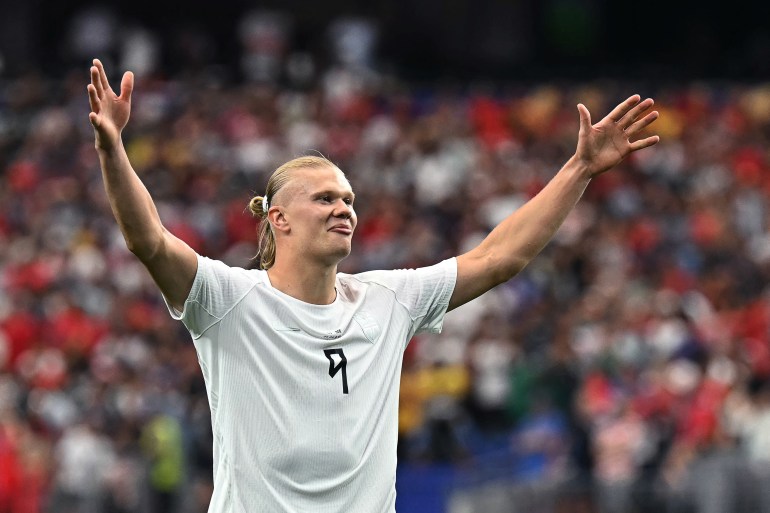
Haaland’s impact on this tournament? Undeniable. Of Norway’s ten goals so far, he’s bagged half of them. Numbers that are truly remarkable for a 25-year-old on his World Cup debut. The expectation, clearly, is for this 1.95-metre- (6.4ft)-tall, pony-tailed talisman to just keep on scoring if Norway hopes to breach the quarterfinal barrier for the very first time. They can draw inspiration from 1998, a group stage shocker where Norway stunned Brazil 2-1. And they don’t even need to scroll through old match footage to do it. Their coach, Stale Solbakken, actually played midfield in that very Norwegian squad. When asked, Solbakken’s assessment of the situation was fairly blunt: Brazil are favourites, of course they’re, but we’re hopeful that we will give them a match, and we’re not playing the game for fun – we’re playing to win the game and to reach the quarterfinals. It’s possible, but it’s very difficult.
Of course, Norway’s defenders won’t exactly be admiring the stadium lights. They’ll be too busy worrying about Vinicius, Brazil’s own lethal weapon, who’s racked up four goals in the tournament—making him the team’s top scorer and, by extension, most influential player. Vinicius made a little bit of history himself, becoming the first Brazilian since Ronaldo and Rivaldo in 2002 to score in all three group stage matches at a World Cup. That, you might recall, was the last time Brazil actually lifted the trophy. Coincidence? Maybe. But you can bet nobody in the Brazilian camp is leaving anything to chance. They know all about the power of belief—and, perhaps, superstition.
The Opta supercomputer, for what it’s worth, isn’t getting carried away with Norway’s past glories. It gives Brazil a 53.6 percent likelihood of winning in regulation time, while Norway’s chances are a slimmer 22.4 percent. The model predicts a 24 percent probability of the game stretching into extra time. But hey, algorithms didn’t account for that 1998 shocker, did they?
📄 POLICY WIRE WHITEPAPER PUBLISHED: PAKISTAN'S NATIONAL SECURITY POLICY PRIORITIES
👉 READ BY CLICKING HEREWhat This Means
This match isn’t just about advancing to the quarterfinals; it’s a quiet geopolitical contest playing out on the grass. For Brazil, a win would be more than just progress; it would be a firm reassertion of their global footballing dominance—a soft power statement, really, from a South American giant. Failure, particularly against an unexpected nemesis like Norway, would ignite a cascade of questions about their system, their coaches, and indeed, their very identity. Consider this: the world watches. And in places like Pakistan, where a passion for football often transcends direct participation—think the massive viewership numbers for Premier League or Champions League games—Brazil represents a footballing dream, a certain panache that inspires. If they falter against a technically proficient but less glamorous European side, it subtly reshapes the global narrative of who holds sporting influence. For developing football nations, including many across the Muslim world and South Asia, this kind of result offers food for thought. Does the financial muscle of top European leagues increasingly funnel all talent to specific regions, or can nations like Norway, with focused investment, carve out their own niches?
Then there’s the bigger picture of what a Norwegian triumph would mean. For smaller, meticulously run footballing nations—think those from Scandinavia or certain parts of Eastern Europe—Norway’s improbable historical advantage and potential advancement symbolizes that well-drilled tactics, physical prowess, and individual brilliance (like Haaland’s, of course) can still, occasionally, upset the established order. It’s the David-and-Goliath story on a different kind of pitch. If they manage to do it again, not only would it throw open the quarterfinal draw, pitting the winner against either Mexico or England, but it’d also offer a template of ambition for other nations. Policy, in this context, isn’t just about governmental decrees; it’s about national strategy, how resources are allocated, and the cultural frameworks built to achieve excellence. A deep World Cup run for Norway would validate years of strategic youth development — and pragmatic management. And let’s not forget Brazil’s rather inconvenient habit of getting knocked out by European opponents in six straight World Cup knockout ties since their 2002 win. That’s a pattern, not a coincidence.
And so, we wait. Lucas Paqueta’s hamstring injury in the last game isn’t ideal for Brazil, but Raphinha could make a bench return after his own similar issue. Norway’s Julian Ryerson is sidelined with a thigh injury. But personnel might matter less than the psychological chess match at play. Can Brazil finally slay its Scandi-dragon? Or will Norway continue its peculiar, statistically unlikely grip on the footballing giants? This game isn’t just for three points; it’s for pride, for narrative, and for a place in football’s—and geopolitics’—unfolding story.