


Italy’s Rice Crisis: Europe’s Food Supply at Risk
A brutal heatwave devastates Italy's rice crops, jeopardizing Europe's food supply. Discover the urgent implications for farmers, economies, and global food security.

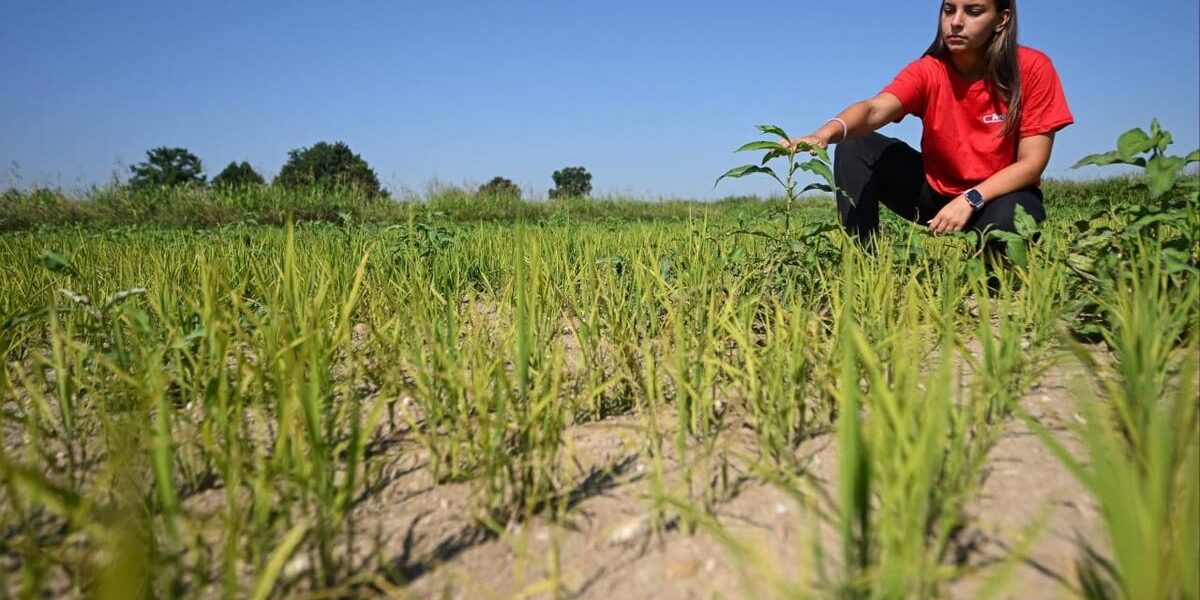
POLICY WIRE — Pavia, Italy — The brutal early arrival of summer has delivered a stark verdict for farmers in Italy’s Pavia province, Europe’s foremost rice-growing heartland. Fields that should be lush — and vibrant are instead wilting under a relentless sun, their vital hydration vanished. Among those directly confronting this harsh reality is 22-year-old Sharon Angoli, whose parched paddies have been overrun by opportunistic weeds, signalling a season of profound loss. “That one is done for, no matter what happens,” Angoli grimly observed, surveying a desolated field — a landscape baked by what ranks as one of the most severe heatwaves to lash the European continent in June. (Reporting based on syndicated wire reports)
This early onslaught of arid conditions means that even a miraculous resurgence of abundant rains throughout the remainder of the summer would likely offer little reprieve for the beleaguered crop. The die is cast, and for Angoli and her father, Carlo, the concern extends beyond just a single paddy; their other cultivations also face an uncertain, dire future.
Italy, a significant contributor to Europe’s agricultural output, especially in specialty crops like rice, is contending with an environmental crisis that began unfolding precariously early this year. The standard growing season was effectively cut short by meteorological extremes, transforming potential yields into fields of dry earth and burgeoning weeds. The implications stretch far beyond individual farm gates in Pavia; this region’s output is critical for both domestic consumption and the broader European food supply chain.
The severity of this June heatwave, noted as exceptionally intense, follows a pattern of increasing climate volatility affecting agricultural zones across the globe. For rice, a water-intensive crop, such prolonged drought conditions coupled with extreme temperatures are a catastrophic combination. The infrastructure typically used for irrigation, reliant on reliable rainfall and water reservoirs, finds itself struggling under pressures rarely seen so early in the season.
Farmers like the Angolis, whose livelihoods are intrinsically tied to the rhythm of seasons and the benevolence of weather, are left to contend with diminished prospects and the specter of substantial financial losses. Their experience in Pavia echoes growing concerns among agriculturalists worldwide about the escalating frequency and intensity of extreme weather events, directly impacting food production and economic stability within rural communities. This isn’t merely an isolated incident for a single farm; it represents a significant bellwether for the challenges facing the larger European agricultural sector, which has already been grappling with various market and climate-related pressures.
📄 POLICY WIRE WHITEPAPER PUBLISHED: PAKISTAN'S NATIONAL SECURITY POLICY PRIORITIES
👉 READ BY CLICKING HEREWhat This Means
The situation in Italy’s rice-growing regions underscores the escalating vulnerability of global food systems to climate shifts. When a significant agricultural producer like Italy faces such early and severe drought, it raises immediate questions about future supply stability and potential price impacts, not only within Europe but across international markets where Italian rice products are consumed. Policymakers will likely face increased pressure to explore and implement more resilient agricultural practices, including drought-resistant crop varieties, advanced irrigation technologies, and robust water management strategies.
the economic repercussions for farming families and regional economies in areas like Pavia could be profound, potentially necessitating state aid and revised agricultural insurance schemes. While the direct consequences for specific consumers in Pakistan or South Asia may not be immediately apparent, global supply chains are interconnected. Significant disruptions in one major food-producing region can trigger ripple effects, influencing global food commodity prices and availability in subtle but pervasive ways. This event serves as a sharp reminder that the discussion around climate change and its impact is no longer a distant theoretical concern, but an urgent, tangible crisis playing out on dinner plates across the continent and, by extension, the world.