


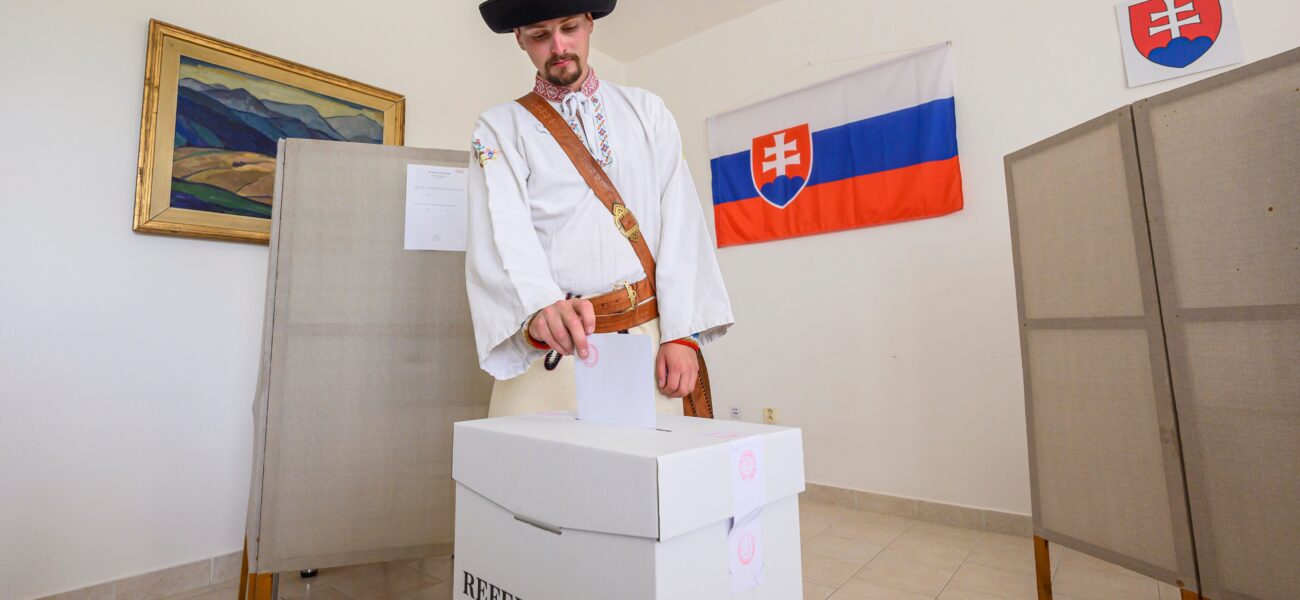
Slovakia: Fico’s Referendum Fails Amid Voter Apathy
Slovakia's referendum on lifelong payments for PM Fico failed due to low voter turnout, revealing public indifference. Understand the implications of this democratic apathy.

POLICY WIRE — Bratislava, Slovakia — One could imagine the architects of this particular democratic exercise—those hoping to secure a financially snug future for their favored leader—watching the polling numbers trickle in with a creeping dread. But, surprisingly, the outcome wasn’t decided by an indignant populace rallying against perceived extravagance. Rather, it simply evaporated, a victim of sheer indifference. Slovakia’s recent referendum, ostensibly designed to solidify a system of lifelong payments for populist Prime Minister Robert Fico, has withered on the vine. It wasn’t outright rejected by a furious electorate, but rather ignored.
This political maneuver, often a tell-tale sign of an increasingly entitled political class, faltered because too few citizens bothered to show up. It’s a harsh truth for any aspiring strongman: sometimes, your most elaborate plans aren’t defeated by a revolutionary spirit but by the mundane reality of low public engagement. Official data from the Slovak Electoral Commission confirms it: only about 30% of eligible voters cast a ballot. That’s far short of the 50% required by the nation’s constitution to validate any such public vote, making the entire exercise little more than a costly opinion poll. [QUOTE_PLACEHOLDER]
And so, Fico’s bid to guarantee a comfortable post-premiership pension package—or some form of a gilded cage payment, depending on one’s perspective—has hit a rather anti-climactic dead end. His Smer-SD party, known for its populist stance — and frequent clashes with Brussels, had championed the idea. It felt like a classic Fico play, pushing boundaries, testing the limits of what a society will accept from its leadership. His critics naturally decried the proposal as a naked power grab, an attempt to insulate an individual, perceived by many as divisive, from future financial anxieties at taxpayer expense. The proposal sought to institutionalize a form of elite welfare, a concept that often sparks ire, even among the most passive voters. But not enough ire, apparently, to get them to the polls.
This isn’t Fico’s first dance with political controversy. He’s been in — and out of power, a chameleon of Slovak politics, always finding a way back. His history is peppered with charges of corruption — and populism, allegations he typically shrugs off. It’s an interesting tactic, this kind of audacious move for a long-term benefit, even if it backfires publicly. You wonder what the calculation was—did they genuinely misjudge public sentiment, or was this a show, a flexing of legislative muscle that didn’t quite land? Fico himself has frequently projected an image of victimhood from European institutions, and even suggested that a move like this was simply a way to stabilize national leadership in tumultuous times. However, critics saw it as simply a way to reward a political strongman.
Because, really, when you ask the populace for a direct hand in securing your personal future financial comfort, it demands a certain level of national engagement, a public buy-in that simply didn’t materialize. Slovakia’s political landscape, like many in Central and Eastern Europe, has been marked by swings between pro-European reformists and more nationally-oriented, often Eurosceptic, figures like Fico. The turnout here is, for many analysts, a symptom of a deeper malaise, a kind of democratic exhaustion that extends far beyond the borders of this small, landlocked nation. Citizens are fed up.
📄 POLICY WIRE WHITEPAPER PUBLISHED: PAKISTAN'S NATIONAL SECURITY POLICY PRIORITIES
👉 READ BY CLICKING HEREWe’re seeing similar patterns of disengagement elsewhere, of course. Think of the voting apathy that sometimes grips elections even in established democracies, or the disillusionment with institutional politics that fuels everything from protests in Paris to electoral upheavals in Latin America. It’s not about rejection; it’s just a collective shrug. This kind of civic fatigue isn’t unique, it’s something many new democracies grapple with—even countries like Pakistan, for instance, where faith in democratic processes has weathered multiple military interventions and perennial political instability. Securing consistent, broad public participation is a global headache for policymakers, particularly when leaders seem preoccupied with their own prerogatives. This lack of participation signals a widening chasm between the governed and the governing, a trust deficit that’s perhaps harder to bridge than any ideological divide.
You can find more on the European political sphere, and its various challenges, including Germany’s Kremlin conundrum or the grim routine of war that’s reshaping parts of the continent, on Policy Wire.
What This Means
The failure of this referendum, rooted in voter indifference rather than overt opposition, speaks volumes about the state of Slovak politics and, frankly, the wider European temperament. It suggests that while populist leaders like Fico can harness public discontent for electoral victories, their ability to mobilize citizens for less direct, more self-serving legislative initiatives is markedly weaker. This isn’t a crushing defeat for Fico, per se; he remains prime minister. But it is a stark reminder that even a popular figure has limits, especially when trying to legislate personal perks. Economically, such a ‘lifelong payment’ would’ve been a relatively minor burden on the state budget, yet its symbolic weight is immense. It signals a society—or at least a large portion of one—unwilling to blindly endorse an elite entitlement, even when too unmotivated to actively block it. This kind of passive resistance, a refusal to engage, creates a strange sort of accountability, forcing politicians to rethink the limits of their mandate. It also points to the broader European trend of democratic erosion by apathy, rather than outright rebellion. Leaders who assume popular mandates can be stretched indefinitely are discovering that inaction can be as potent as protest. It means more circumspection, perhaps, or at least a renewed need for strategies to re-engage a jaded populace before such low turnouts become the new normal across the board.