

Michigan Senate: Gaza, Police Funding Redefine Elections
Global conflicts and national debates on Gaza and police funding are dominating Michigan's Senate race. See how candidates navigate these complex, polarizing issues.

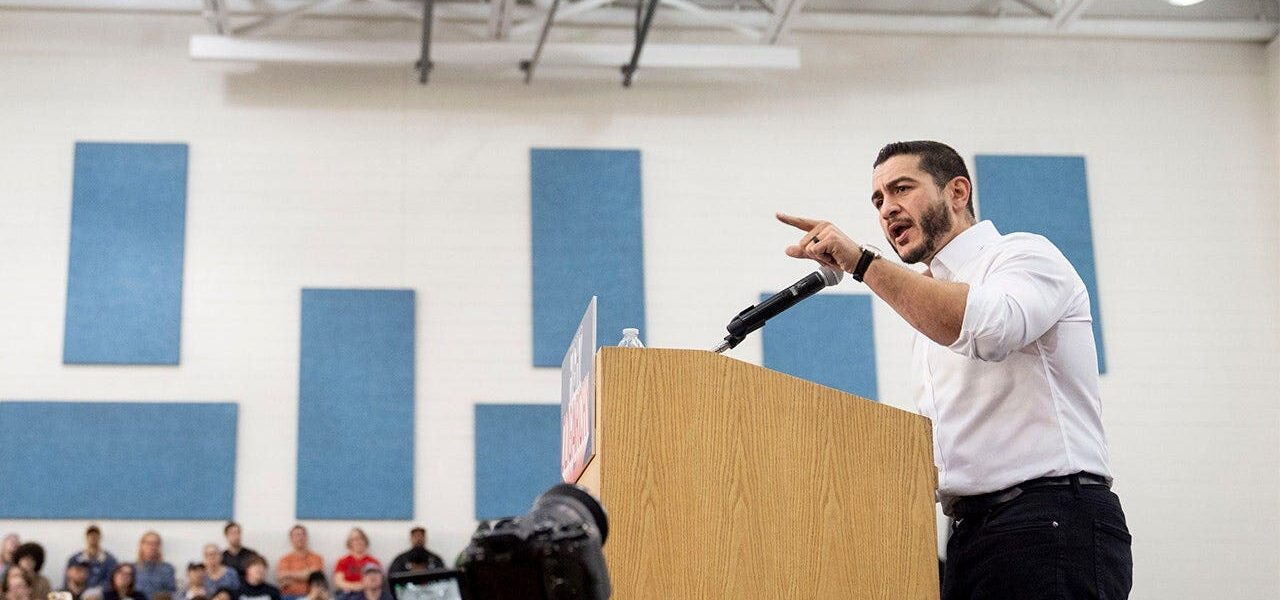
POLICY WIRE — Lansing, USA — It wasn’t the usual fare of potholes or property taxes. This week, an aspiring senator in Michigan discovered firsthand the uncompromising theatre of modern American politics, where local ambitions often collide violently with global fault lines and abstract ideological warfare. A candidate’s journey—meant for precinct walks and constituent handshakes—transformed into a high-stakes interrogation, cornered by intractable demands from a public increasingly less interested in nuanced policy and far more keen on unwavering pronouncements.
They weren’t just asking about economic recovery plans, no. The relentless gauntlet of public forums and press scrums saw this Michigan Senate hopeful pressed repeatedly on subjects many politicians prefer to sidestep: namely, the existential query of Israel’s right to exist and the polarizing concept of defunding the police. It’s an election cycle, after all, where candidates find themselves navigating not just district-specific woes but the full, bruising weight of America’s — and the world’s — deep-seated societal ruptures. And what’s emerging isn’t pretty, believe you me.
But how does one even begin to answer whether an internationally recognized sovereign nation, one with historical claims and significant geopolitical standing, has a basic right to exist? Voters—or at least a vocal, determined segment of them—didn’t want a nuanced explanation of Middle East diplomacy or international law. They demanded a stark, yes-or-no clarity that, in political terms, almost never actually exists. These encounters, occurring multiple times across the campaign trail, left little room for political finesse, as the candidate reportedly remained [QUOTE_PLACEHOLDER]. It’s a thorny thicket, you know? The candidate’s statements on this delicate issue seemed to [QUOTE_PLACEHOLDER] in response to various inquiries, a tightrope walk over a chasm of public opinion.
Then came the local angle, twisted into a national debate: the matter of urban policing. The movement to defund the police, or at least reallocate resources from traditional law enforcement to social services, has fractured liberal coalitions and become a potent cudgel for conservative challengers. When pressed, the candidate was confronted by accusations of [QUOTE_PLACEHOLDER] which, for many mainstream voters, represents a dangerous abdication of public safety duties. It wasn’t a casual suggestion either; it was framed as an absolute. But it’s not just a philosophical debate, it’s also one with very real community implications, and a candidate’s position can make or break an entire bid, especially in swing districts.
This dynamic isn’t isolated to Michigan, of course. Across the United States, candidates are finding their campaigns — even for ostensibly local or state offices — hijacked by what might be considered global proxy wars or national cultural skirmishes. Just take a look at the left’s shifting celebrations for evidence of these wider currents. In Michigan, particularly, with its diverse population including a significant Arab and Muslim American demographic, the question of Israel’s policies resonates acutely. Consider, for example, that according to data from the American-Arab Anti-Discrimination Committee (ADC) in 2022, Arab Americans make up an estimated 3.7% of Michigan’s population, giving their collective voice a noticeable electoral weight.
This demographic isn’t a monolith, of course, but perceptions of foreign policy, especially concerning Palestine, can significantly sway votes and grassroots organizing. For many Muslim Americans and those of South Asian heritage (often tied by shared cultural and religious affinities), these issues aren’t abstract foreign affairs; they’re deeply personal, matters of conscience and communal identity that transcend typical party lines. A candidate’s perceived empathy or rigidity on the matter of self-determination abroad directly impacts their credibility at home. Pakistan, for instance, has long held a steadfast stance in solidarity with Palestinians, a sentiment often mirrored within its diaspora communities and others in the Muslim world, wherever they may reside globally. Therefore, a U.S. politician’s ability to navigate such inquiries respectfully, even if not fully aligned, is incredibly important.
📄 POLICY WIRE WHITEPAPER PUBLISHED: PAKISTAN'S NATIONAL SECURITY POLICY PRIORITIES
👉 READ BY CLICKING HEREAnd then there’s the thorny public safety bit. Voters aren’t looking for academic treatises; they’re wondering if their street corner will be safer or less so. Phrases like defund the police, no matter the policy nuance behind them, are potent electoral grenades. This candidate is learning that some policy positions, however well-intentioned or theoretically sound, carry significant baggage and generate immediate, intense backlash. It’s almost as if some folks are more interested in moral purity tests than legislative efficacy, isn’t it?
One might even suggest that these confrontations represent the new baseline for political aspirants. Forget the old rules; this isn’t about glad-handing, it’s about ideological survival. These aren’t just questions, they’re traps. You fall into one, your campaign’s toast.
What This Means
These repeated confrontations signal a recalibration of political battlegrounds. Candidates can no longer rely on localized messaging when global conflicts and national ideological debates are hyper-present in the electorate’s psyche, thanks largely to twenty-four-seven news cycles and fragmented social media. Economically, a candidate perceived as weak on crime or aligned with fringe policy suggestions could deter business investment or skilled migration to a state, regardless of other economic promises. Politically, the struggle for a definitive answer on Israel’s existence showcases how a relatively small but highly motivated segment of voters can exert disproportionate influence, particularly in primary elections or close general elections. These specific issues are acting as potent litmus tests, effectively winnowing the field to those either brave—or foolhardy—enough to take an unyielding stance. It’s becoming less about governing effectively and more about adhering to a particular ideological lane, shrinking the space for the pragmatic consensus-building our legislature so sorely needs. This dynamic also suggests a growing impatience with typical political rhetoric; voters, it seems, demand absolute clarity, even if absolute clarity is impossible on complex, emotionally charged issues. It’s a tough racket, this politics thing.