

NYC Parade: Free Speech Under Scrutiny
When an NYC parade censored a pro-Palestinian display, it sparked a free speech firestorm. POLICY WIRE examines the cost of silencing dissent in public spaces.

POLICY WIRE — New York, United States — It’s a strange thing when a simple flotilla—a pageant of civic pride, really—morphs into a battleground for global dissent. But that’s exactly what went down recently on New York City’s waterways. Instead of sun-drenched spectators oohing and aahing at impressive nautical hardware, a much more uncomfortable spectacle played out. An unnamed vessel, meant to join the city’s annual maritime celebration, found itself summarily evicted. Why? Because the floating display of its occupants’ opinions ran afoul of organizers who prefer their pageants neatly apolitical.
Apparently, this isn’t a place for expressing messy thoughts. The organizers quickly stamped out any notions of spontaneous commentary. They insisted the event’s purpose was unity, not political division. As if unity’s some default setting in 2024, eh? This specific expulsion stemmed from what were deemed ‘politically charged’ banners displayed on the vessel’s hull—messages we understand were broadly pro-Palestinian in nature. The implications are a bit stark, wouldn’t you say? Especially for a city that, by its very myth, embraces difference — and public square shouting matches.
One spokesperson for the parade organizers made it clear: [QUOTE_PLACEHOLDER]. They didn’t want the event to become, you know, a platform for partisan bickering. But where’s the line, then, between public celebration — and sanitized consensus? The problem, of course, is that almost everything can be construed as political now, if you squint hard enough. Or even if you don’t. We’re living in deeply fractious times, after all.
The controversy, naturally, didn’t stay contained to the Hudson River. Advocacy groups wasted no time airing their First Amendment concerns. The Civil Liberties Alliance, for example, quickly weighed in. They issued a statement, arguing this sort of preemptive censorship was quite concerning, though they offered no immediate direct quote beyond what was shared publicly. It’s hard to imagine, in a supposed bastion of free speech, that citizens can’t raise a banner in an unscripted, public event without consequence.
But the organizers had their reasons, or so they claimed. They wanted to ensure the safety — and enjoyment of all participants and spectators. And look, there’s a delicate balance here, nobody denies it. An event designed for collective enjoyment can quickly go sideways with open antagonism. The organizers explicitly stated that ‘any displays violating event decorum would be removed to preserve its celebratory nature’. It’s a convenient dodge, really—decorum often being a stand-in for ‘things we just don’t like’. Free Speech Advocates, never shy, expressed strong dismay, suggesting this action represented [QUOTE_PLACEHOLDER].
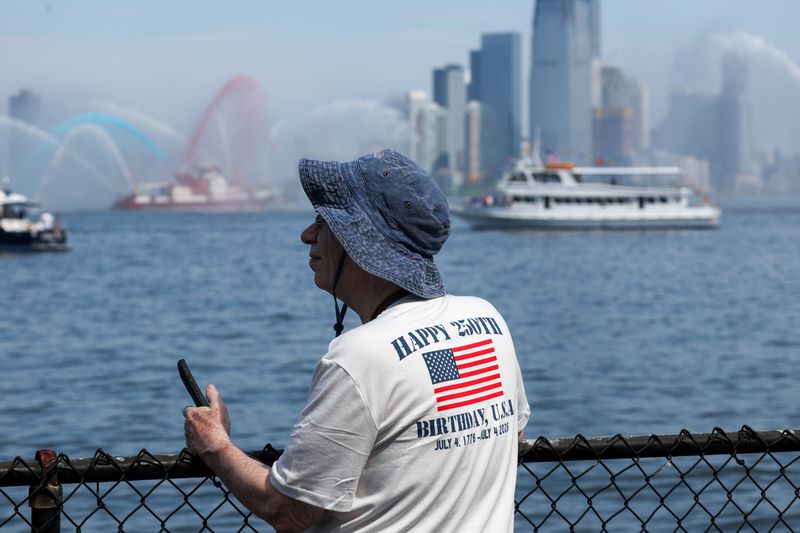
The maritime spectacle in New York typically draws a massive crowd, a veritable tide of humanity along the riverbanks. Indeed, more than 100,000 spectators annually line the banks of the Hudson River for the event, a tradition dating back to at least 1986, according to a press release from the city’s tourism office. This kind of event, where community and national pride are typically showcased, feels a particularly awkward place to shut down expression.
📄 POLICY WIRE WHITEPAPER PUBLISHED: PAKISTAN'S NATIONAL SECURITY POLICY PRIORITIES
👉 READ BY CLICKING HEREWhat This Means
This incident, seemingly minor on the surface—a boat with some banners, a parade, a terse eviction notice—cracks open a rather messy ideological can of worms. It illustrates the growing, frankly untenable, struggle between organizers of public events and participants keen on injecting their own, often contentious, viewpoints. It’s a tug-of-war for control of public narrative, playing out against a backdrop of escalating geopolitical tensions.
From a political standpoint, silencing even implicitly critical or overtly ‘charged’ voices in public squares (or waterways, as it were) isn’t just a local issue. It sends a chilling effect globally. Take Pakistan, for instance, a nation where public opinion on the Israeli-Palestinian conflict runs intensely high. Such actions in Western capitals are often viewed as evidence of a selective commitment to free speech—one that applies only when convenient, or when the message aligns with official, often unstated, consensus. It fuels narratives about double standards, exacerbates distrust in institutional neutrality, and can ripple through international relations. People there, they’ve got their own struggles, you know? And seeing expressions of solidarity get choked out in New York? It doesn’t sit well. It simply solidifies a perception that Western powers pick — and choose whose rights are actually worth defending. The economic implication isn’t direct, but the erosion of trust—in fairness, in democratic principles—can have long-term consequences, impacting everything from trade relations to diplomatic engagement, particularly with Muslim-majority nations who observe these kinds of curtailments quite acutely.
But this isn’t just about global perceptions. It’s about how much discomfort our public forums can—or should—tolerate. Do we want our celebrations to be devoid of reality? Because reality, folks, isn’t always sunshine — and flag-waving. It’s complicated. And sometimes, you gotta let people wave their complicated flags too. America’s shifting celebrations are forcing everyone to rethink old rules. We’ve got to ask: are we building unity, or just enforcing silence?
This isn’t an isolated event. And it won’t be the last. As global crises deepen, expect more attempts to cordon off ‘political’ expression from everyday life—attempts that invariably fail, simply pushing the conversation into less controllable spaces. It’s a hard lesson, but you can’t just wish away inconvenient truths or unpopular opinions, even when you’re trying to put on a good show. Perhaps some officials should look at the routine of war to understand how deeply politics permeate everything, even joy. There isn’t an ‘off’ switch for sentiment.