


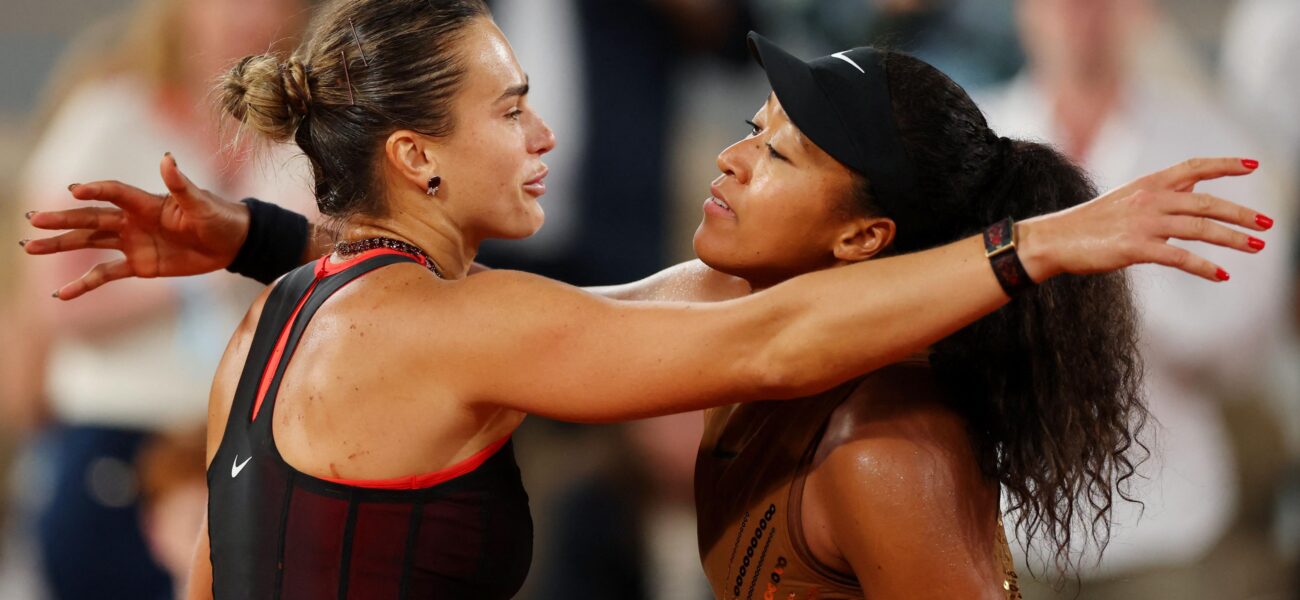
Sabalenka-Osaka: Wimbledon’s Clash of Career Paths
Sabalenka vs. Osaka at Wimbledon: A clash of titans with dramatically different career paths. Uncover their resilience, mental health journeys, and battle on grass.

POLICY WIRE — London, England — Wimbledon’s manicured lawns often tell stories of triumph, tradition—and occasionally, a delicious twist of fate. It isn’t merely a tennis tournament; it’s a theatre for narratives like that unfolding between Aryna Sabalenka and Naomi Osaka. Forget the rankings or the past Slam wins for a moment. This particular showdown—the fourth time they’ll go toe-to-toe in just three months, culminating in a marquee Wimbledon clash—is less about athletic supremacy and more about a brutal, very public reckoning with time itself.
It’s strange, really, how their careers have crisscrossed. You’ve got these two titans, both boast four Grand Slam titles. Both reached the apex of the women’s game. And both built their names smashing balls on unforgiving hard courts. But their individual treks, once seemingly synced when they broke through around the same moment on the WTA Tour, went off-road rather dramatically. One of them, Naomi Osaka, ascended quickly. But then the sports world saw her hit pause. The other, Aryna Sabalenka, had a far longer, far more agonizing wait for her own crowning glory. This isn’t a neat, linear progression you often hear about in sport—it’s a messy, human zig-zag.
They first tangled at the 2018 US Open. Osaka snagged the win there, — and that felt like the beginning of something special, a foretaste of her maiden major. After that? Crickets, for what felt like an eternity, nearly eight years actually, before they met again in 2026. A weird pause. But now, it’s a veritable marathon—three face-offs in recent months, with the Wimbledon fixture on Sunday. Talk about making up for lost time. They were both 20 years old back in New York, hungry, rapidly rising. Both have even acknowledged that match, which Japan’s Osaka clinched 6-3 2-6 6-4, as a definite career pivot.
Top seed Sabalenka recalled, [QUOTE_PLACEHOLDER] And there’s the kicker, the really keen observation from her side: “When she won that match, I had a feeling she is going to win a Slam.” She was right. Sabalenka, who actually had been a break up in that deciding set—you gotta sting from that, right?—saw it plain as day. Five days later, Osaka took down Serena Williams, becoming the first player from Japan to seize a major title. And then, in a blistering 28 months, Osaka grabbed three more. Sabalenka? Zero. Nothing. That’s a long, silent wait.
But then the scripts flipped, didn’t they? Osaka, grappling with what seemed like a tidal wave of pressure and public expectation, stepped away from tennis in 2021 to prioritize her mental health. She then took a significant 15-month maternity leave after her daughter Shai was born in July 2023. While she was away from the punishing demands of the tour, Sabalenka finally, blessedly, broke through, claiming the 2023 Australian Open. You just can’t make this stuff up. “Obviously [we have a] different story,” Sabalenka said candidly after her third-round triumph. “She went through different things. I went through different things. I feel like we both were completely different players and people.” It’s an astute summary of two careers forged in entirely different fires.
Despite Osaka winning their initial clash, Sabalenka has dominated their recent encounters this year. At Indian Wells in March, she crushed it, winning 6-2 6-4 in a swift 80 minutes, all thanks to an absolutely clinical serving exhibition. Sabalenka, it’s worth noting, belted eight aces with zero double faults — and swatted away both break points she faced. She then went on to bag the trophy. Osaka mounted a more serious threat on the clay of Madrid, grabbing the first set tie-break and an early break in the second, only for Sabalenka to ratchet up her game and battle back for the win. And at last month’s French Open, Sabalenka’s serve was, again, just superior. Osaka managed just 53% of her first serves and coughed up four breaks, while Sabalenka won 83% of her first serve points, buttressed by 12 aces.
“It’s been a great rivalry. Every time I’m enjoying playing her, it’s a battle, it’s high-level matches. Super excited to play her,” Sabalenka admitted. Even Osaka, on the losing end of these recent battles, has shown a rare sportsmanship, observing that “She’s the number one player in the world. If there is someone I had to lose to, I would pick that ranking position.” It’s a pragmatic acceptance of where things stand, and frankly, a bit of a dry, subtle dig at anyone else who might’ve taken her down.
📄 POLICY WIRE WHITEPAPER PUBLISHED: PAKISTAN'S NATIONAL SECURITY POLICY PRIORITIES
👉 READ BY CLICKING HERENow, five weeks past Roland Garros, here they’re, squaring off on the very surface both have historically—and hilariously—struggled with. Grass. They’ve got a whopping 31 WTA Tour titles between them. None, not a single one, on grass. This isn’t just about their current forms; it’s about conquering demons. Osaka, who reached the fourth round at SW19 for the first time in her career by taking out Daria Kasatkina on Friday, has shown noticeable improvement. Her average first-serve speed, as sports analysts like ESPN might track, has climbed from a modest 105mph at Wimbledon last year to a formidable 109mph this year. That isn’t just numbers—that’s more control, more power, more assertiveness on a tricky surface. It lets her whack that ball early on the forehand side and really take charge with those flat, aggressive groundstrokes.
[QUOTE_PLACEHOLDER] Osaka shared, confessing a prior fear: “I don’t fear it too much any more. When I was younger I slipped pretty bad and ever since then I was scared of moving on grass. It’s taken a long time to get comfortable but I would say I am at that point now.” It takes a lot to overcome those deep-seated athletic fears, but here she’s. Sabalenka, while not winning Wimbledon, has always found a bit more footing here than Osaka, though it’s still the one Slam where she hasn’t made a final. She looked comfortable in her recent win against Ostapenko, managing a straight-sets victory with just six unforced errors. [QUOTE_PLACEHOLDER] she quipped. That’s the kind of dedication you see when a real contender is gunning for what she hasn’t got yet. And frankly, this ongoing push and pull between athletes across cultures—Naomi from Japan, Aryna from Belarus—reflects larger global shifts, a constant renegotiation of dominance and identity. One only needs to glance at the burgeoning interest in global sports, even in places like Pakistan, to grasp the sheer, far-reaching impact of these seemingly isolated battles on the global stage. It’s no longer just a European or American pastime.
What This Means
This match-up transcends simple athletic rivalry; it’s a masterclass in modern career trajectory — and resilience. For policy wonks—or anyone tracking the broader labor market, for that matter—these women represent the stark realities of navigating peak performance under immense public scrutiny. Osaka’s initial meteoric rise, followed by her calculated step back for mental health and family, is a commentary on the changing definitions of career sustainability, even for global celebrities. Her decisions highlight a growing, — and often politicized, dialogue around athlete welfare. It’s not just about what you achieve on court, but how you manage the external, often overwhelming, demands off it. This is a pattern seen not only in elite sports but even trickling down into how corporations discuss employee well-being in highly demanding sectors globally, from finance to tech, including emergent economies that often struggle with these considerations. Meanwhile, Sabalenka’s patient grind, her eventual triumph after watching her peer seemingly lap her, offers a different, but equally powerful, narrative of perseverance in a results-driven world.
From an economic standpoint, the renewed high-profile rivalry between these two means eyeballs, advertising dollars, and continued relevance for women’s tennis—a valuable commodity in the cutthroat sports entertainment market. When you have two compelling personalities with contrasting journeys, the narrative arc sells. Sponsors crave that sort of real, messy, human drama, because it converts to clicks — and consumption. And as tennis continues its push into new markets—consider the growing interest and investment in sporting infrastructure across parts of South Asia, for instance, a nod to potential future global sports hubs—these kinds of captivating, high-stakes narratives, often featuring prominent figures who resonate globally, are what fuel the global talent economy. It’s the enduring draw of human stories, of ambition and vulnerability, played out on the green, green grass of Wimbledon, under the watchful eye of a world perpetually hungry for drama.
One also has to appreciate the impact of such high-visibility matches on aspirations in the broader Muslim world, including nations like Pakistan. Seeing top-tier athletes from diverse backgrounds — a Belarusian and a Japanese Haitian — contend at such levels against personal odds, offers more than just entertainment. It provides powerful examples of dedication — and global ambition that can inspire young talent. It’s not a direct political outcome, no, but cultural impact and shared global experiences through sport can ripple far, changing perceptions and broadening horizons for what’s possible, even within conservative societies grappling with modernity and individual expression on a global stage.