


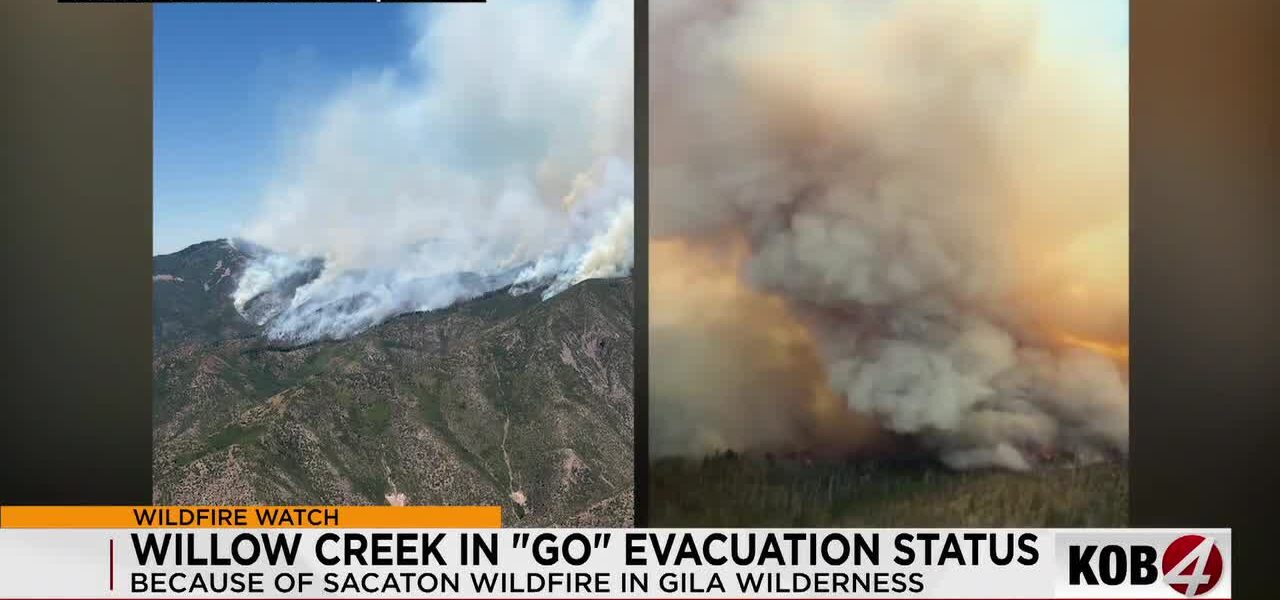
NM’s Sacaton Fire: ‘Go’ Evacuation Order Issued
New Mexico's Sacaton Fire triggers a "Go" evacuation for Willow Creek. Discover how this local blaze reflects a growing global wildfire crisis, straining resources and communities worldwide.

POLICY WIRE — SILVER CITY, N.M. — It starts, as it often does, with the weather. A dry lightning strike in the Gila Wilderness – a grand, indifferent swathe of nature that rarely bends to human whim – and suddenly, life for a scattering of New Mexicans tilts off-kilter. The tranquil rhythm of Willow Creek is now shattered, replaced by the ominous glow of the Sacaton Fire and the stark, three-level ultimatum issued by authorities: Ready, Set, Go. This isn’t just another wildfire notice; it’s a blunt reminder of humanity’s fragile truce with the untamed, a familiar, unsettling dance playing out across the globe.
Down in the southwest corner of New Mexico, near the old mining towns and dusty stretches, the smoke plume is a stark monument against the desert sky. It’s visible from a startling breadth of country— from the Gila Cliff Dwellings to the east, from Lordsburg to the south, along U.S. Route 180 to the west and from Quemado to the north.
And because of these encroaching plumes and the growing inferno, officials put the Willow Creek subdivision under GO evacuation status as the Sacaton Fire burns south of the area and keeps New Mexico Highway 159 closed.
This is not a drill. It’s an order. Immediate departure, often with little notice. [QUOTE_PLACEHOLDER]
The Sacaton Fire, described plainly as lightning-caused
, erupted on a Sunday in late June. It flared up about 3.5 miles west of the Mogollon Baldy Lookout and about 12.5 miles southeast of Glenwood
—places most people have never heard of, proving disaster doesn’t care for demographics. It doesn’t discriminate between bustling metros or sleepy hamlets, does it? The consequences are the same: displacement, uncertainty, — and often, devastation. This Gila National Forest inferno has already led to a hard closure of New Mexico Highway 159
, blocking routes east of Mogollon to Willow Creek
. Local residents find their usual commutes rendered impassable, their very access to home dictated by the whims of a burning landscape. Fire conditions were enough for the Gila National Forest to suggest an immediate removal of folks, a recommendation The sheriff’s office and emergency management offices agreed with
.
It’s a tiered system, these alerts, as cold — and clinical as a bureaucratic memo. There’s Level 1, Ready
, meaning people should start to prepare— review plans and pack a go-kit
. Then comes Level 2, Set
, indicating substantial danger is nearby and people should be ready to leave at any moment
. And finally, the dread of Level 3, Go, Now!
— a blunt, all-caps command signifying immediate evacuation is required
. Willow Creek is now, as they say, at Go. That’s it. You leave. But where do you go? And for how long?
This situation echoes far beyond the sunbaked canyons of New Mexico. The increasing frequency and intensity of wildfires—driven, many scientists contend, by climate change—are becoming a global lament. In parts of Pakistan, for instance, extreme heatwaves in recent years have desiccated forests, turning them into tinderboxes. And, just like in New Mexico, these blazes strain limited local resources, force desperate evacuations, and scar both landscapes and livelihoods. It’s a recurring nightmare for communities like those near Chaman in Balochistan, where mountainous forests burn, threatening rural populations with a ferocity few are equipped to manage effectively. The sheer logistics of moving people, livestock, and what little can be salvaged across rugged terrain is a monumental task—whether in Catron County or the Suleiman Range.
But beyond the immediate scramble, there’s the broader political — and economic reality. Local authorities, stretched thin even on good days, suddenly face a complex coordination puzzle, often without adequate federal support. This particular conflagration was detected on Sunday, June 21
. The officials also ordered a closure for trails inside the area to protect public health and safety where crews are fighting the fire and where fire danger remains active.
It’s an operational decision, yes, but it highlights the perennial underfunding of public lands and emergency services that often leaves regions vulnerable. And let’s be honest, who pays the ultimate price when these fires grow beyond control? It’s often the marginalized communities, those with less political pull, whose concerns are relegated to the bottom of the pile once the flames subside.
📄 POLICY WIRE WHITEPAPER PUBLISHED: PAKISTAN'S NATIONAL SECURITY POLICY PRIORITIES
👉 READ BY CLICKING HEREWhat This Means
This incident isn’t an isolated anomaly; it’s a predictable punctuation mark in a changing climate narrative. The rapid escalation to Level 3 status for Willow Creek speaks volumes about the accelerating speed with which wildfires can consume a landscape. This speed demands a more agile, better-funded response infrastructure than currently exists in many regions. Economically, forced evacuations incur immediate costs—housing, emergency services, lost productivity—but the long-term impact on local economies, especially those reliant on tourism or agriculture, can be devastating. Small businesses struggle to recover, residents face potentially uninsured losses, — and the tax base can erode.
Politically, incidents like the Sacaton Fire, whether in New Mexico or half a world away in South Asia, amplify debates around climate policy, land management strategies, and equitable disaster preparedness. It’s not just about putting out a fire anymore; it’s about re-evaluating our relationship with nature and the systems designed (or ill-designed) to protect human habitation from its raw power. According to a report by the National Interagency Fire Center, the United States saw over 60,000 wildfires burn more than 7.5 million acres in 2022 alone. This sheer scale is a staggering indicator of escalating risk.
For Policy Wire, this isn’t just local news; it’s a symptom of a systemic challenge. We’ve seen similar administrative scrambles and community disruptions in discussions around global emergencies, like the ones highlighted in our piece on administrative errors that leave vulnerable populations exposed in South Asia. Both illustrate a universal truth: when bureaucracy strains under pressure, ordinary people pay the dearest price. The immediate threat passes, but the policy questions linger—scorched into the political landscape, waiting for an honest, effective reckoning. Until then, these small, terrifying incidents will keep piling up, demanding we take notice before the next Go order rings out.