


The Silent Arbitration: White Sox Valuation Rift Mirrors Global Labor Policy Quandary
POLICY WIRE — Chicago, United States — It wasn’t a trade spat, nor a contract dispute that stirred the usually predictable waters of Chicago’s South Side; it was a simple internal poll. A seemingly...

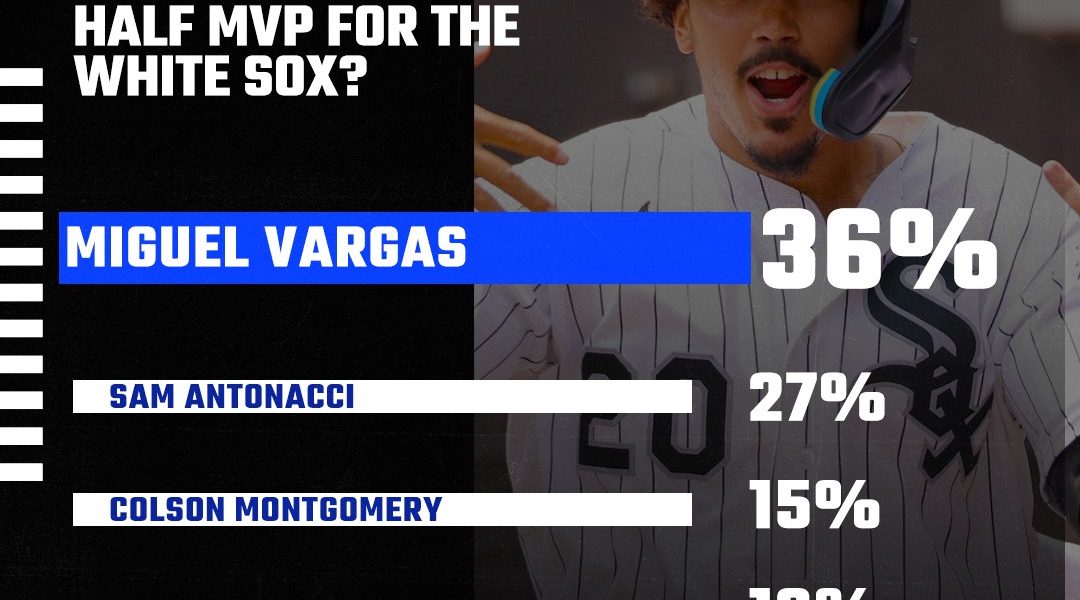
POLICY WIRE — Chicago, United States — It wasn’t a trade spat, nor a contract dispute that stirred the usually predictable waters of Chicago’s South Side; it was a simple internal poll. A seemingly innocuous question — ‘Who’s the White Sox’s first-half MVP?’— unexpectedly peeled back layers of entrenched valuation bias, revealing a microcosm of market inefficiencies that plague not just sports, but broader global labor dynamics.
See, for a franchise frequently lauded (or lamented, depending on your allegiance) for its ability to scout talent, the internal consensus was surprisingly scattered. A roster brimming with seemingly equivalent value, nearly a dozen players hitting what statisticians consider ‘starter’ performance levels for a whole season. But nobody, absolutely nobody, stood head — and shoulders above the rest.
Then came Miguel Vargas, — and the narrative abruptly shifted. He wasn’t the WAR leader. He hadn’t commanded the most breathless highlight reels. Yet, an internal canvassing of opinion landed him the unofficial crown. It’s almost as if collective perception — that murky, often illogical beast — decided it was his turn, rather than hard numbers. Davis Martin, for example, consistently topping the team in Wins Above Replacement, garnered a mere 10% of the votes. That’s a disparity that should make any policy wonk or economist sit up straight, really.
But how do you quantify perceived value versus statistical reality? This isn’t just about baseball players; it’s about every highly-skilled professional whose market worth is determined by more than just raw output. Think about the tech sector, or, for that matter, international diplomacy. Perceived charisma, narrative resonance, or even simple media exposure often carries disproportionate weight. “It’s not just about what you do on the field, but what the system says you’re worth. Players, we’re navigating a market, same as any commodity,” Vargas reportedly told associates recently, a telling insight into the modern athlete’s understanding of their own precarious economic standing.
The story also throws into sharp relief the league’s broader, often archaic, valuation mechanisms. Take the MLB draft: for years, its intricate, multi-layered structure has been critiqued as an almost colonial hangover in the modern, globalized sports landscape. How many rounds should there be? What about bonus pools, or eligibility? Slightly more than half of surveyed respondents—an unsettling majority—believed the system was ‘fine as it’s.’ Fine, really? It’s a testament to institutional inertia, plain — and simple.
And let’s not forget the sheer volatility. We’ve seen baffling trades — deals so perplexing you wonder if boardroom politics trumped athletic sense. Such arbitrary decisions, even if driven by short-term financial considerations, invariably impact player morale and market stability. As one seasoned agent quipped, it’s like trying to price crude oil based on a random walk through a souk in Lahore, not algorithmic projections. This arbitrary nature of talent exchange isn’t isolated; it mirrors broader debates in labor markets, especially those reliant on international talent pipelines.
The phenomenon isn’t alien to other globally traded ‘assets’ — be they technology startups seeking Silicon Valley capital or skilled laborers migrating from, say, Pakistan to the Gulf States, often valued differently depending on origin market friction. Data from the International Sports Economics Institute indicates that nearly 30% of eligible international draft prospects from emerging markets remain unsigned annually, despite comparable on-field metrics to their domestic counterparts. This discrepancy—a blind spot in talent acquisition—isn’t merely an oversight; it’s a systemic failure to leverage a global pool of human capital.
Commissioner Robert Manfred, for his part, has tried to project an air of progressive stewardship. “We’re constantly striving for a system that reflects genuine on-field performance, not just historical narratives or skewed public perception,” he asserted in a recent policy briefing, perhaps attempting to gloss over the systemic quirks. But can an industry built on nostalgia — and regional fiefdoms truly embrace a truly global, meritocratic framework?
What This Means
This whole internal White Sox brouhaha, seemingly trivial in the grand scheme of geopolitics, is a fascinating lens through which to examine broader policy challenges. It reflects how collective bargaining agreements (and the politics of player valuation that inevitably follows) shape economic realities. It shows us how cultural biases, ingrained narratives, and historical inertia often trump objective data in market valuation — a problem that’s particularly acute when you’re talking about highly skilled workers. For developing economies, where access to global markets for their talented individuals can be life-altering, the arbitrary gates of established leagues or industries represent significant trade barriers. Policy makers grappling with fair wages, immigration protocols, and international trade agreements would do well to study these internal disputes. Because the opaque mechanisms determining who’s ‘MVP’ in one sphere often use strikingly similar logic to those deciding who gets the green card, the top job, or the market-defining contract in another. The impact isn’t just on a single season’s roster; it’s on a complex ecosystem of labor, capital, and ambition that spans continents.