


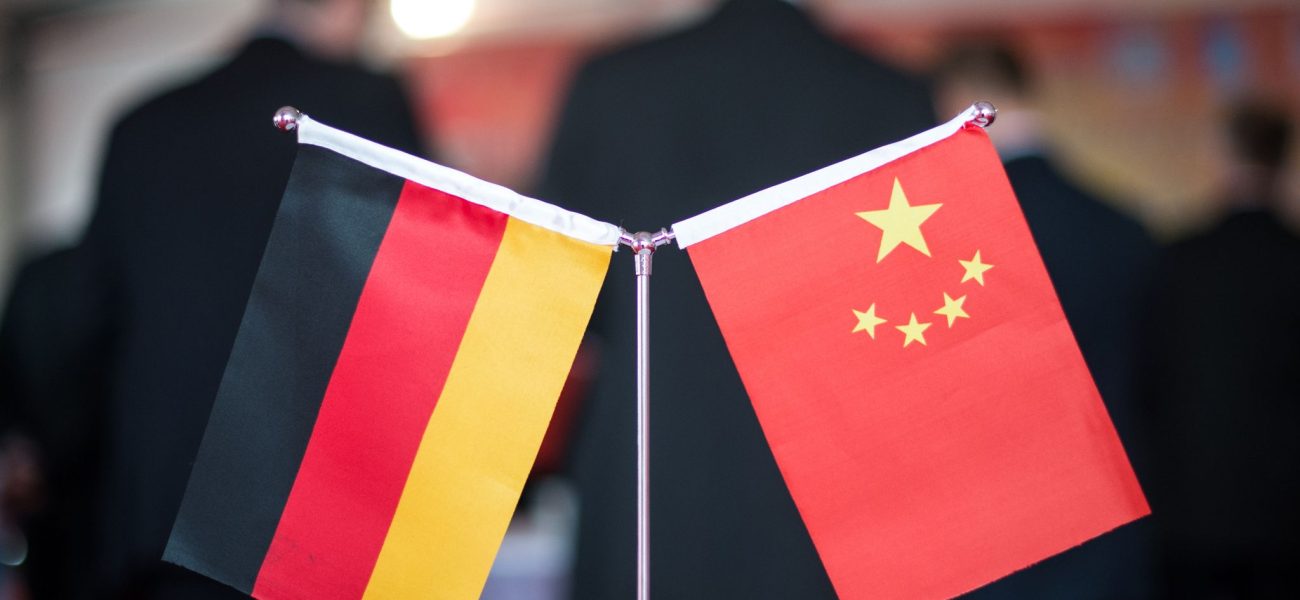
Berlin’s Beijing Bind: The Kremlin’s New Drill Sergeant Raises Alarms Across Europe
POLICY WIRE — Berlin, Germany — Germany’s meticulously curated foreign policy, a delicate high-wire act between economic pragmatism and democratic principle, just took another bruising tumble. Not...

POLICY WIRE — Berlin, Germany — Germany’s meticulously curated foreign policy, a delicate high-wire act between economic pragmatism and democratic principle, just took another bruising tumble. Not from the usual suspects or its notoriously complex domestic politics, mind you, but from a quietly brewing geopolitical storm thousands of miles east. The whispers – now escalating into distinct murmurs – suggesting China is, well, *lending a hand* in training Russian forces have hit Berlin like a splash of cold water, puncturing any lingering illusions about Beijing’s much-vaunted neutrality.
It’s not just a bad look; it’s a diplomatic migraine. Reports from reputable Western intelligence agencies—you know, the folks who spend their days sifting through satellite imagery and intercepted chatter—indicate that Chinese instructors might be assisting the Kremlin’s troops. Not exactly a secret handshake in the dark, is it? Berlin’s leadership, already wrestling with the ghost of energy dependency on Russia and the heavy price of its newfound resolve in Ukraine, suddenly faces a stark reminder: Beijing isn’t just an economic partner; it’s a player in a grand, messy game. And it’s increasingly throwing its chips in with Moscow.
“We’ve been absolutely clear: any support for Russia’s illegal aggression, direct or indirect, is unacceptable and will carry consequences,” German Foreign Minister Annalena Baerbock reportedly stated in a private briefing last week, her voice taut with frustration. “It undermines the very fabric of international law we’re fighting to preserve. And frankly, it’s a slap in the face to our persistent diplomatic outreach to China.” This isn’t a German minister yelling from the rooftops; it’s a measured expression of deep unease. And they’re uneasy, believe me.
But the Chinese Foreign Ministry, through its spokesperson Wang Wenbin, offered its usual, expertly bland rebuttal. “The allegations of military cooperation beyond normal state-to-state exchanges are nothing more than speculative fabrication designed to smear China’s image,” he asserted during a recent press conference, never missing a beat. “Our relationship with Russia is one of comprehensive strategic coordination, focused on mutual respect and peaceful development, not interference in regional conflicts.” Translation: “Look the other way, nothing to see here, folks.” But Europe isn’t looking away anymore, and they don’t buy that line. They just don’t.
Because let’s face it, Germany’s position is awkward, at best. For years, they chased the dragon—the economic dragon of Chinese markets, that’s. Now, that dragon seems to be cozying up to a bear that’s currently devouring Ukraine. This reported assistance comes amidst China’s booming defense spending, which hit an estimated $230 billion in 2023, according to the Stockholm International Peace Research Institute (SIPRI), trailing only the U.S. and steadily increasing its global military footprint. That’s a whole lotta cash for ‘peaceful development,’ isn’t it?
The geopolitical tremors aren’t confined to Europe, either. Consider Pakistan, for instance, a nation straddling a rather precarious fence in the new global order. Historically allied with the West, yet increasingly tethered to Beijing through massive infrastructure projects like CPEC (China-Pakistan Economic Corridor) and significant military procurement, Islamabad has its own balancing act. Chinese influence, economically — and militarily, is undeniable throughout the Muslim world and South Asia. The spectacle of China ostensibly aiding Russia doesn’t just impact Berlin; it subtly reshapes the perceived dependability of patrons across the Global South. For countries like Pakistan, dependent on complex relationships for security and development, this Sino-Russian alignment forces uncomfortable questions about long-term loyalties and regional stability—especially as Afghanistan’s own volatility looms large next door.
These reports, while perhaps lacking the smoking gun that Berlin seems to be demanding for a full-throttle diplomatic broadside, are a symptom of something bigger. It’s the uncomfortable truth that the lines between ‘neutrality’ and ‘complicity’ are getting fuzzier by the day, particularly when one superpower views the conflict in Ukraine as a proxy battle against its primary geopolitical rival, the United States.
What This Means
This isn’t just about tactical training; it’s about strategic solidification. For Germany — and the European Union, the reports confirm their worst fears: China isn’t an indifferent bystander. It’s not playing a purely transactional game, at least not anymore. This solidifies a nascent anti-Western bloc, forcing Berlin and its allies to recalibrate their entire China strategy, a move that carries enormous economic implications. Europe, especially Germany, can’t easily disentangle its economy from China’s, having relied on that market for decades. The cost of ‘de-risking’ is staggering.
Politically, it strengthens the hand of hawks in Washington and within the EU who advocate for a tougher stance against Beijing, even at economic cost. The notion of European ‘strategic autonomy’ from the U.S. becomes more complex when major global challenges clearly divide East — and West. But for some, like those monitoring the increasingly complex diplomatic situation that’s explored in depth in this article on Monaco’s uneasy glitter, such realignments aren’t so surprising. And security-wise, if China truly is improving Russia’s battlefield capabilities, it extends the Ukrainian conflict’s agony, raising the stakes for NATO and further exacerbating a sense of global instability that was already, shall we say, a tad elevated. It’s a lose-lose-lose scenario, unless, of course, you’re Moscow or Beijing.