


Monaco’s Uneasy Glitter: Ukrainian Link Sparks European Manhunt Amid Shifting Security Paradigms
POLICY WIRE — Monaco, Principality of Monaco — Even in the gilded, discreet confines of Monaco, where champagne flutes clink and supercar engines purr, some chaos just can’t be kept at bay. The...

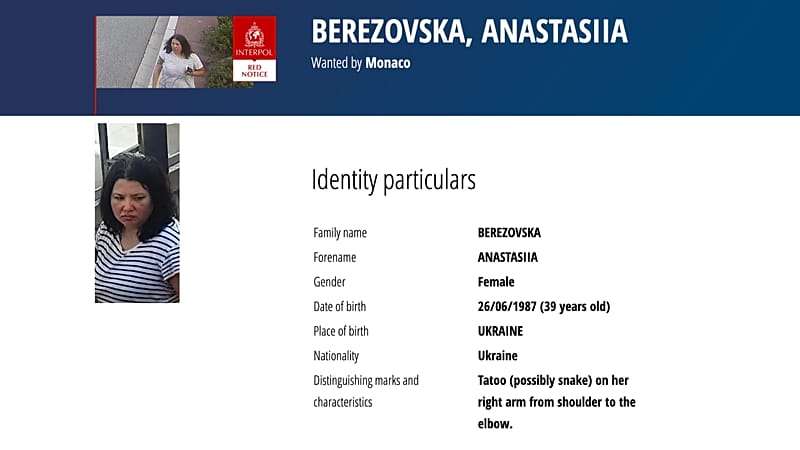
POLICY WIRE — Monaco, Principality of Monaco — Even in the gilded, discreet confines of Monaco, where champagne flutes clink and supercar engines purr, some chaos just can’t be kept at bay. The recent, rather audacious, bomb attack on the Riviera playground—a place famously more associated with James Bond fantasies than geopolitical tremors—has now kicked off a continent-wide scramble. It’s a hunt for a Ukrainian national, — and it’s making a lot of folks in polished shoes feel distinctly uncomfortable.
It isn’t every day you see French gendarmerie — and just about every other security agency west of Kyiv — combing through digital footprints and physical safe houses looking for someone implicated in an act of violence in a principality that prides itself on serene detachment. And what we know so far suggests a tale far more complex than simple hooliganism. Police across Europe are actively tracking down a woman from Ukraine, believed to be tied to the Monaco incident. Nobody’s talking much about motives right now, of course. Loose lips sink diplomatic ships, especially when a global conflict provides convenient — and often misleading — cover.
“We’re not just looking for a suspect; we’re investigating how such an operation could penetrate the perceived sanctity of European financial hubs like Monaco,” remarked Jean-Luc Dubois, a spokesperson for the French Gendarmerie Nationale, during a rare, brief press engagement yesterday. “It speaks to the evolving, amorphous nature of contemporary threats. It’s not just borders; it’s networks. We’ve had to re-evaluate quite a bit, haven’t we?”
Because, let’s be frank, for years the mental mapping of European security threats often pointed southeast, or perhaps, for some, to Brussels’ broader geopolitical challenges closer to home. But a Ukrainian connection—amidst Europe’s largest armed conflict in decades—rearranges the chessboard. It certainly throws a wrench into easy narratives. Not that anyone should be surprised anymore when crime ignores neat categories. But here we’re.
The incident also shines an unwelcome light on the global fluidity of illicit operations. The traditional bogeymen of organized crime — those you’d expect to pop up in headlines about explosive devices — just aren’t fitting the bill here. This, combined with the often knee-jerk profiling that can accompany such events, presents a prickly challenge. Consider, for a moment, how an attack like this might have been perceived, how the search might have been framed, if the suspect hailed from, say, Lahore or Baghdad. There’s a quiet bias at play, isn’t there? It affects how narratives are spun, how intelligence is prioritized. But violence, it turns out, really doesn’t care about your preconceived notions. It just is.
“Our nation fights for its very existence; any attempt to smear our people or connect our just cause to criminal acts is an enemy tactic, pure and simple,” stated a visibly weary Oleksandr Bilokin, Deputy Head of Ukraine’s Security Service, speaking from a secure location in Kyiv. “We cooperate with our European partners because the real battle is for truth, not for manufactured scandals.” It’s a deflection, maybe. But he’s not entirely wrong. Things aren’t always what they seem.
European law enforcement agencies are reportedly already grappling with an increasing load; Europol, for instance, documented a 15% increase in cross-border financial crime investigations involving Eastern European networks in the last year alone, as per their most recent threat assessment report for Europe.
What This Means
This Monaco incident isn’t just about catching a suspect; it’s a symptom. It pulls back the curtain on how Europe—even its most seemingly insulated corners—has become incredibly porous. We’re witnessing the fraying edges of established security models. The war in Ukraine has created an immense internal diaspora, yes, but also opened new conduits for all sorts of unforeseen consequences, criminal enterprise certainly among them. It’s a messy reality that intelligence agencies are only just beginning to wrap their heads around, scrambling to identify who’s who, and whose interests are actually being served.
Politically, the manhunt creates an uncomfortable diplomatic ballet. Ukraine relies heavily on European goodwill and aid; accusations of its nationals engaging in high-profile criminal acts, even if isolated, are the last thing Kyiv needs. It gives ammunition to skeptics — and weakens the unified front against Russian aggression. Economically, while Monaco will dust itself off and the super-yachts will keep bobbing, the perception of security — even superficial security — for high-net-worth individuals just took a hit. That matters. Because if you can’t be truly safe in Monaco, where precisely can you be?
For the Muslim world and regions like Pakistan or South Asia, often unfairly burdened by global narratives associating them with terrorism or instability, this incident offers a subtle but pointed contrast. It’s a reminder that threats aren’t monolithic, nor do they confine themselves to convenient geographic or cultural stereotypes. The messy, globalized underworld is an equal opportunity employer, it seems, recruiting from everywhere and delivering its dark services without prejudice to location or, for that matter, ethnicity. And that’s something no amount of Riviera sun can obscure.