


New Mexico’s Arid Divide: AI’s Thirst Meets Lawmakers’ Moratorium Push
POLICY WIRE — ALBUQUERQUE, N.M. — In a state where every drop of water is a debate, the digital age has arrived with a monumental thirst. New Mexico—that vast, sun-baked canvas of mesas and...

POLICY WIRE — ALBUQUERQUE, N.M. — In a state where every drop of water is a debate, the digital age has arrived with a monumental thirst. New Mexico—that vast, sun-baked canvas of mesas and desert—now finds itself grappling with an unexpected existential question: how much water is an algorithm worth? State lawmakers aren’t waiting for a drought to answer, plotting legislation for 2027 to clamp down on the ravenous appetite of ‘large-scale’ data centers. They’re effectively telling Big Tech, ‘Not so fast.’
It’s not often that the arid landscapes of the American Southwest become a battleground for global technological ambition, but here we’re. While Silicon Valley touts the cloud’s boundless potential, its physical manifestations—these sprawling data fortresses—guzzle electricity and water with a quiet, unrelenting intensity. And policymakers in Santa Fe? They’re getting jumpy. Representatives Micaela Lara Cadena, Angelica Rubio, and Senator Carrie Hamblen, all Democrats, are spearheading the charge. But, this isn’t just a partisan spat. No, the resistance against these digital behemoths is brewing on both sides of the aisle, a rare unity in an era of deep political trenches.
Rep. Angelica Rubio, from Las Cruces, puts it plainly: “New Mexico cannot keep saying yes before we understand what we’re saying yes to.” And she’s right, isn’t she? The industry moves like greased lightning, leaving legislatures scrambling in its wake. Our laws, our water systems—they simply can’t keep pace. These lawmakers aren’t entirely inventing the wheel; they’re looking northward, specifically to a vetoed bipartisan bill in Maine, for guidance. “It’s about saying not like this, — and not without us,” Rubio adds, hinting at a broader demand for local control.
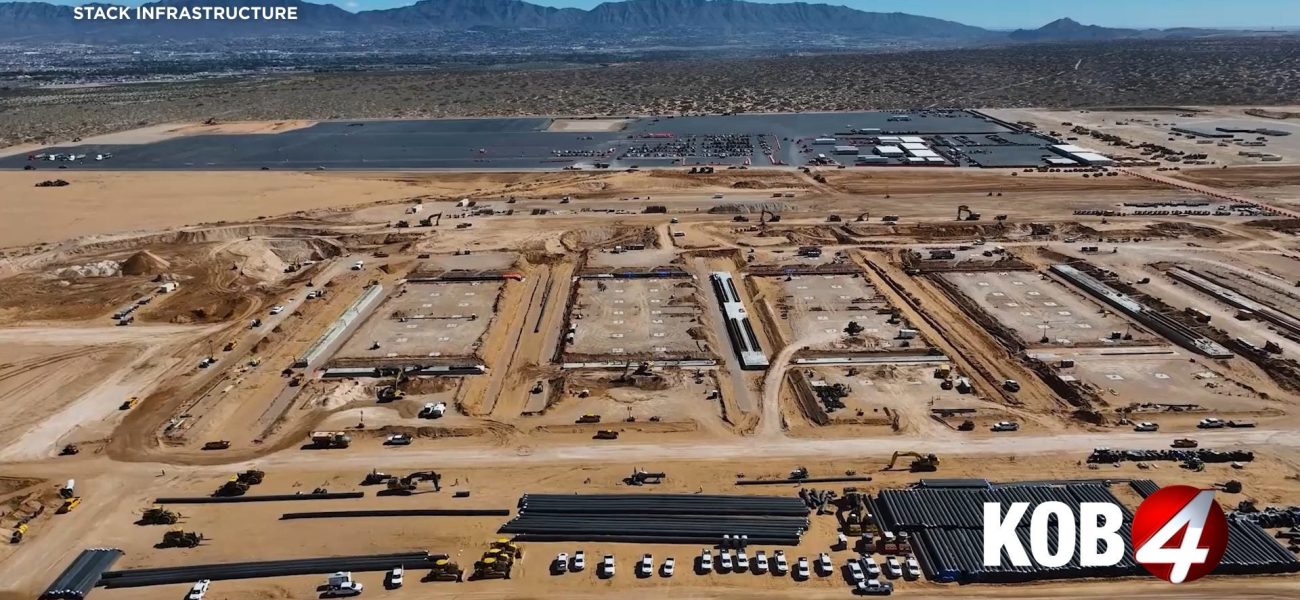
Consider ‘Project Jupiter,’ an AI hyperscale data center already under construction near the Santa Teresa/Sunland Park border. It’s supposed to be an economic boon, boasting a cool $165 billion Industrial Revenue Bond. But talk to locals, talk to lawmakers, — and you get a different picture. They’re still waiting for details, specifics on water use — and emissions. Rep. Lara Cadena isn’t mincing words about it: “Project Jupiter moved so quickly that the same county officials who approved the tax break worth billions and took ownership of this project still can’t provide details or information for constituents seeking accountability.” It’s a classic case, isn’t it, of the public being asked to trust, but not to verify, with their precious resources.
Jupiter’s folks claim they won’t tap public drinking water or drill new wells, promising an evaporative closed-loop cooling system. Sounds efficient, perhaps? But even then, they’ll need 960,000 gallons just to get the thing started. That’s not nothing, especially out here.
This resource anxiety isn’t confined to Doña Ana County. Up — and down the I-25 corridor, along the Rio Grande, communities are waking up. Socorro County already approved a one-year moratorium; residents in Raton are pushing back against a proposed center converting an old Kmart. Even Santa Fe County, with no immediate proposals, jumped on board with an 18-month moratorium. This sentiment? It’s not unique to New Mexico’s borders, either. Across the line, El Paso, Texas, is caught in its own water war with Meta’s planned $1.5 billion AI data center. A city council vote to keep an incentive deal sparked a recall effort. Neil Segotta, Raton’s city manager, sees it differently: “We’re a small town struggling and anything we can do to boost the economy in any positive way, we’re open for that conversation.” A pragmatic, if precarious, position.
But the numbers are speaking louder than development promises. A recent Gallup poll revealed that 7 in 10 Americans simply oppose building AI data centers in their local area. That opposition holds strong, across party lines—Democrats more so, 75%, but Republicans still register 63% disapproval. People are just sensing that something’s off.
And what’s true here, in the American Southwest, resonates across the globe. Nations, particularly those with rapidly expanding digital economies and already stressed environments, are eyeing these resource commitments with trepidation. In South Asia, for instance, countries like Pakistan are racing to build out their digital infrastructure. But doing so often pits their ambitious tech dreams against pressing needs like water scarcity and energy deficits, sometimes mirroring New Mexico’s dilemma on a far larger, more desperate scale. The balance between digital aspirations — and terrestrial reality is, frankly, becoming a global hot-button issue.
What This Means
The move for a moratorium, even one planned years out, isn’t just procedural; it’s a policy statement with sharp teeth. Politically, it signals a growing realization among state legislatures that unchecked industrial expansion, particularly in a resource-intensive sector like AI infrastructure, has real-world consequences local communities are no longer willing to silently bear. Economically, this could mean New Mexico (and potentially other states following suit) becomes less attractive for certain types of high-tech development, pushing the industry to seek friendlier—or perhaps, less resource-aware—locales. But, it also offers an opportunity: to create a framework that truly aligns economic growth with sustainable resource management. It’s an inconvenient truth, perhaps, for the titans of tech, but one the planet is increasingly forcing into the foreground: the digital realm, however ethereal it seems, has a very tangible, and very thirsty, footprint.