


India’s Coal Comeback: Powering Growth, Climate Challenge
India's coal power surges to meet booming economic and population demands, challenging global climate pledges. Explore the nation's complex energy security choices and environmental impact.

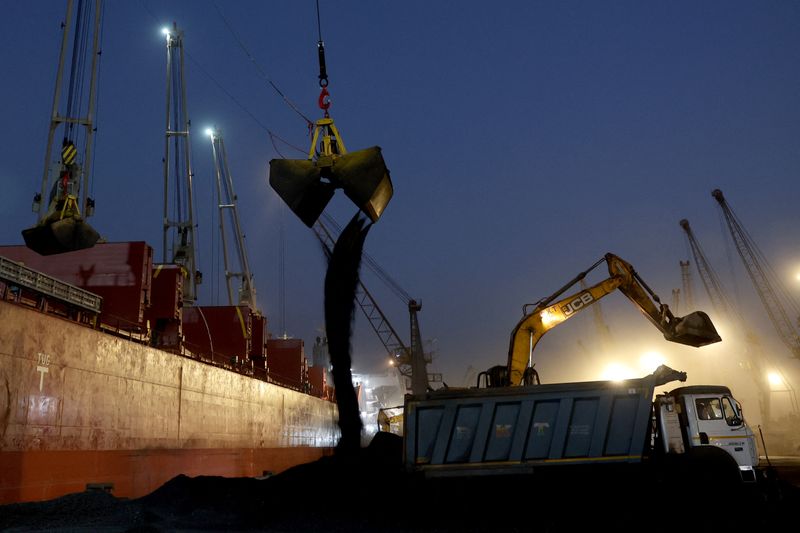
POLICY WIRE — New Delhi, India — Forget the monsoon rains, or the political bickering that usually fills the headlines. India, you see, quietly fired up its coal plants last month—way, way up—to levels not seen in over half a year. It’s a raw statistic, almost brutal in its simplicity, but it paints a far more complex picture of the subcontinent’s relentless energy appetite and the dirty choices that come with it. You’d think a nation making global climate pledges would be cooling it on the black stuff, wouldn’t you?
Turns out, that’s not exactly the script they’re reading. Data compiled by [QUOTE_PLACEHOLDER], and picked up by our wire service, shows India’s coal-fired power generation in June surged to its peak since November 2023. We’re talking about an economy that’s roaring, a population that’s burgeoning, and an urban sprawl that’s sucking up juice like there’s no tomorrow. What’s often missed in the glossy G20 statements is the ground-level truth: when temperatures rise, air conditioners hum, and industries whir, a developing giant isn’t picky about its energy source. It just wants the lights on, yesterday.
But this isn’t just about hot weather. It’s about a foundational energy struggle. The administration here has been pretty upfront about its domestic coal policy for a while now. They aren’t shy, claiming the nation needs [QUOTE_PLACEHOLDER]. They talk about energy security. They talk about affordability for the masses. And they point to global instabilities, like Russia’s gambit in Ukraine causing tremors in gas markets, which, from their perspective, just makes their position on coal even more—well, resilient, shall we say? It’s a calculated, some might say cynical, bet on an old workhorse fuel. For a country of 1.4 billion, that bet carries a lot of weight.
This isn’t an isolated incident, either. Power consumption has been steadily climbing for months. June’s numbers aren’t a blip, they’re part of a pattern. The electricity department [QUOTE_PLACEHOLDER], indicating the sheer demand that’s straining the grid. People are using more. Industries are expanding. The grid struggles to keep pace. And so, the easiest, most accessible switch to flip is often the coal plant. It’s got an immediate, almost brute force solution to what can otherwise be widespread outages — and public frustration.
The implications, naturally, ripple outward. Neighboring Pakistan, for example, facing its own crippling energy crises and struggling to keep pace with demand, watches India’s strategy with keen interest—and probably a bit of dread. Where Islamabad wrestles with circular debt and inconsistent supply, Delhi just leans harder on its indigenous, albeit dirty, resource. That divergent approach highlights stark geopolitical and economic realities in South Asia: one struggles to finance any consistent power, the other simply ramps up its most convenient, emissions-heavy option.
Consider the sheer volume: according to the International Energy Agency’s 2023 Coal Report, India’s coal consumption increased by approximately 8% in 2022, and was projected to grow further. That’s a lot of BTU, but also a lot of carbon in the air. For every glowing bulb and whirring fan, there’s a commensurate increase in greenhouse gases, chipping away at those grand climate pledges one megawatt at a time. It’s a stark reminder that economics often trump ecology in the pressing heat of immediate need.
And so, while world leaders convene — and promise a greener future, the coal trains keep rumbling across India. It’s a pragmatic, if polluting, solution for a nation in a hurry to develop. The short-term gains, or at least the avoidance of immediate pain (blackouts, for instance), outweigh the long-term environmental calculus for now. It’s not just a story about energy; it’s a story about development, sovereignty, and the thorny path nations take to power their ambitions.
But that path isn’t smooth. It’s riddled with compromises. India’s energy dilemma isn’t some abstract concept; it’s a tangible reality for millions, impacting everything from small businesses to family budgets. The cost of not having power is often deemed far greater than the cost of producing it via methods frowned upon globally.
What This Means
This uptick isn’t just about electricity; it’s a telling sign of India’s current economic trajectory. We’re seeing a direct correlation between accelerating industrial output, surging domestic consumption driven by rising summer temperatures, and an unabashed reliance on proven, albeit dirty, energy sources. For Prime Minister Modi’s government, it’s a political tightrope walk: balance international climate commitments with the very real and immediate needs of a rapidly expanding population and industrial base. Failure to keep the lights on could have profound political repercussions, undermining public confidence and impeding economic growth targets.
Economically, it underscores the difficulty developing nations face in decarbonizing while pursuing growth. This intense coal consumption, especially when gas prices remain volatile globally, provides short-term price stability for Indian industry and consumers, albeit at environmental cost. The continued investment in coal infrastructure—or at least its intensive use—suggests a strategic, long-term hedging against global energy market fluctuations and a clear prioritizing of domestic supply security. It tells the story of an economy that isn’t just growing, but is consolidating its foundational industrial capabilities, despite external pressures. And it shows that global energy shocks continue to dictate local policy decisions far more than idealist green ambitions.