China’s Factories Hum: Defying Global Economic Chill
China's manufacturing defies global slowdown predictions, with factories humming and output expanding. Explore Beijing's industrial resilience and its profound impact on global trade & geopolitics.

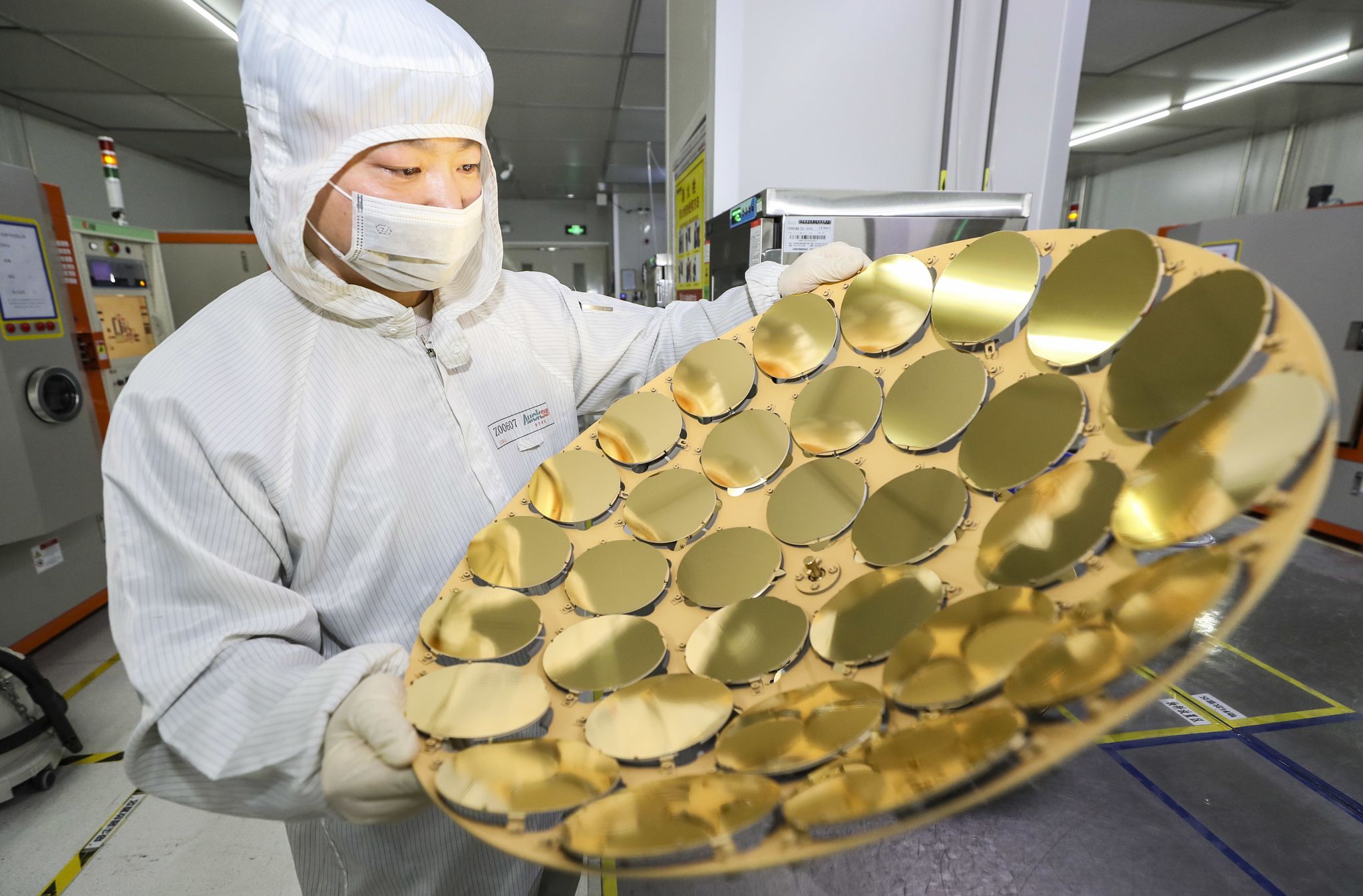
POLICY WIRE — Shanghai, China — While the world fretted over an economic chill— inflation spikes here, sputtering growth there—Beijing’s industrial heart just kept on pumping. They say a watched pot never boils, but China’s factories? They’ve been boiling over, quietly cranking out goods with a consistency that belies all the doomsaying.
It’s an almost rude awakening for Western analysts who’ve spent months, even years, forecasting a hard landing, a whimper, a slowdown. But the numbers don’t lie, not completely. Factory output metrics, a true pulse of economic health, continue to defy gravity, or at least, Western predictions. The official Purchasing Managers’ Index (PMI) for manufacturing, a key indicator, has consistently shown expansion. In fact, a recent report from the National Bureau of Statistics of China (NBS) pegged the official manufacturing PMI at 50.4 in the latest reporting period—anything above 50 signals expansion, folks.
And so, what are we to make of this? A nation’s economy, large as China’s, doesn’t simply shrug off a global pandemic, trade wars, or property market jitters without feeling something. You’d think, right? Yet, here we’re. Factories are bustling, supply chains—often tangled and tested—seem to be untangling, and goods are moving. It’s a remarkable display of state-directed resilience, perhaps, or maybe just sheer brute force of production capacity.
“We’ve optimized our internal demand strategies and innovated fiercely,” remarked Li Wen, a spokesperson for China’s Ministry of Industry and Information Technology, in a rare English-language briefing last week. “The world wants high-quality products at competitive prices, and our industries are delivering.” A predictable line, yes, but you can’t argue with product moving out the door. It seems their strategy isn’t just about output anymore; it’s about making things faster, cheaper, and often, more complexly integrated into global networks.
But there’s always a flip side, isn’t there? “The data is compelling, but it doesn’t paint the whole picture,” observed Dr. Anja Hoffmann, a senior economist specializing in East Asian markets at the Peterson Institute for International Economics. “Internal consumption remains a sticky point, and Beijing’s property sector struggles—those are significant headwinds. They’re making things, no doubt, but who’s buying *all* of it internally? The reliance on export still looms large.” Good point. And it’s a tightrope walk for any colossal economy dependent on both foreign appetites and its own population’s purchasing power.
This relentless churn in China’s industrial gears sends ripples far beyond its borders. Just look at its impact on the developing world—Pakistan, for instance. A long-standing ally, Pakistan is deeply entwined with China’s manufacturing might through the Belt and Road Initiative (BRI). From infrastructure projects built with Chinese steel to consumer goods flooding Karachi markets, China’s factories are directly shaping Pakistan’s economic landscape, creating both opportunities and dependencies. It’s not just a bilateral affair; it’s a regional economic architecture being forged, often without much choice for the recipient nations.
Because ultimately, when China produces, everyone feels it. From the availability of microchips in Stuttgart to the price of textiles in Lahore, the decisions made on Chinese factory floors reverberate. You can see it in emerging economies where Chinese loans for development are repaid with commodity exports, tying their fortunes closer to Beijing’s industrial engine. It’s a grand economic ballet, — and China is, for the moment, leading every dance.
There’s a subtle defiance in this continued manufacturing strength—a pushback against those who predicted China’s post-COVID woes would linger. It forces a recalibration of assumptions. It suggests that while political tensions may simmer and trade tariffs occasionally flare, the foundational economics of making stuff and selling it are, for now, keeping the ship steady. And maybe, just maybe, it signals a deeper structural resilience that analysts haven’t fully accounted for.
What This Means
The persistent strength of China’s manufacturing sector holds layered implications for global policy — and economics. Economically, it signifies that despite concerted efforts by some Western nations to ‘decouple’ supply chains, China remains the world’s preeminent factory floor. This limits options for genuine economic disengagement, making political rhetoric often contradict tangible trade flows. Nations are still deeply integrated. And let’s not forget how global capital itself behaves, often seeking opportunity regardless of political friction. You can see parallels in how global capital flocks to India’s burgeoning markets, though the scale and nature of industrial output remain different.
Politically, Beijing’s robust industrial output serves as a bulwark against internal dissent arising from economic stagnation, allowing the Communist Party a crucial degree of stability. It reinforces their model of state capitalism as a viable alternative to purely market-driven economies, particularly in the Global South. For countries reliant on Chinese goods or investment—like those along the BRI—it strengthens Beijing’s negotiating position and geopolitical sway. Any economic tremor in China will cause larger geopolitical earthquakes, but for now, the tremor isn’t manufacturing slowdown; it’s something else entirely, largely controlled. For international bodies and trading partners, this enduring industrial prowess demands a pragmatic approach, acknowledging China’s irreplaceable role in global production rather than relying on wishful thinking for its economic decline. It’s not going away. Not yet, anyway.