


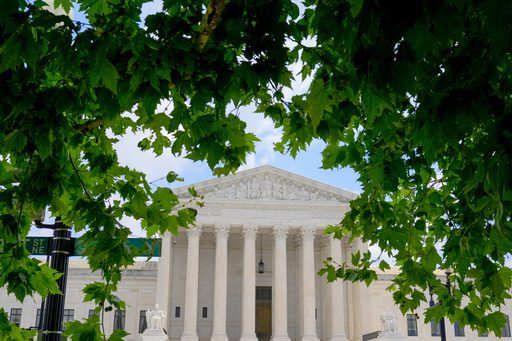
SCOTUS Upholds Birthright Citizenship, Rejects Trump
SCOTUS upholds birthright citizenship, rejecting Trump's challenge & reaffirming the 14th Amendment. Learn what this landmark decision means for US policy.

POLICY WIRE — Washington, D.C. — The American Supreme Court, a body usually operating with a stately pace, has once again told former President Donald Trump, in no uncertain terms, where the judicial lines are drawn. This time, it wasn’t about emergency tariffs or dubious executive appointments, but a concept as fundamental as the nation’s founding promise: who gets to be an American. A 6-3 vote on Tuesday wasn’t just a simple rejection; it was a firm restatement of an old constitutional idea, essentially telling Trump’s administration, Sorry, but you can’t just rewrite history—or the 14th Amendment, for that matter.
It was a decision long-simmering, a fight waged across various lower courts after Trump’s ill-fated executive order—signed on day one of his second term, mind you—tried to restrict birthright citizenship. That’s a bold move, considering what the amendment actually says, — and what it’s meant for well over a century. See, the common belief, you know, the one etched into legal tomes and common sense, holds that if you’re born here, you’re an American. It’s pretty straightforward. And it was born out of a rough-and-tumble period right after the Civil War, specifically designed to give former slaves a shot at legal equality. It declared: “All persons born or naturalized in the United States, and subject to the jurisdiction thereof, are citizens of the United States and of the State wherein they reside,”—a broad brushstroke, wouldn’t you say?
Chief Justice John Roberts, who ain’t one for historical ambiguity when it matters, led the bare majority of five justices in a primary opinion. He held that “Citizenship, then and now, was the right to have rights—to freely participate in our political community. The Framers of the Fourteenth Amendment extended that promise to ‘every free-born person in this land,’” and he went on to assert, “We keep that promise today.” A pretty plain-spoken assertion, you’d think. It’s about protecting fundamental rights, you see, a concept often debated on a much grander scale globally, especially for communities seeking refuge or stability, from Rohingya families scattered across South Asia to those escaping economic turmoil in Pakistan.
But Justice Clarence Thomas, no stranger to dissent, penned a 91-page opus. It was, more than three times the length of Roberts’ entire opinion. He wasn’t just dissenting; he was building an entirely separate intellectual skyscraper of disagreement. Thomas declared, [QUOTE_PLACEHOLDER] But it’s his following line that really cuts, implying a perceived judicial overreach, as he continued: “In doing so, the Court adds to the sad history of the Fourteenth Amendment, which was designed and understood to secure equal rights for the freed blacks but has instead been repurposed for political projects that the Reconstruction Congress did not support.” That’s some stark language for a Supreme Court dissent, isn’t it?
Interestingly, Justice Brett Kavanaugh, while siding with the majority in the end, actually disagreed on the constitutional ruling. He, however, pointed to a federal law that he believes broadly conveys birthright citizenship. His stance is kinda an intriguing nuance; he sided with the majority because of a different pathway, not a shared constitutional interpretation. What this means, effectively, is that if Congress wanted to, a future one anyway, it theoretically could tweak federal law to restrict this. But given the high court’s interpretation of the 14th Amendment itself, that’s not exactly an easy legislative mountain to climb.
Trump’s response? Predictable. He branded the decision as “too bad for our Country” and then, almost instantly, tossed the legislative hot potato over to Congress, wrongly suggesting they could “easily” fix it. And that’s a familiar refrain; when the courts don’t go his way, the rhetoric ramps up, the accusations fly. We’ve seen it before, especially after his tantrums regarding the global tariffs previously struck down by these very same justices. He even used Truth Social to gripe about “dumb judges and justices” and [QUOTE_PLACEHOLDER] who, in his view, exploit a loophole.
But the numbers here are substantial. According to research from the Migration Policy Institute and Pennsylvania State University’s Population Research Institute, more than one-quarter of a million babies born in the U.S. each year would have been affected by Trump’s proposed executive order. This wasn’t some niche legal debate; this would’ve shaken things up for a lot of families, regardless of whether they were here illegally or just visiting.
And because the court grounded its ruling squarely on the Constitution itself, not just on statutory law, any reversal would demand a full-blown amendment to that venerable document. So, a significant change, not just a quick flick of a presidential pen, seems pretty unlikely for the foreseeable future. This effectively cements a bedrock principle for now, a stability welcomed by many, including those in Muslim-majority nations who see America’s legal frameworks as a sometimes-imperfect but enduring aspiration for rights.
What This Means
This ruling is more than a momentary political loss for Donald Trump; it’s a categorical reaffirmation of judicial checks on executive power. Politically, it signals to future administrations, especially those with anti-immigrant agendas, that foundational constitutional interpretations aren’t going to budge easily. For Trump’s base, it reinforces the narrative of a deep state or unelected judiciary thwarting the popular will, certainly stoking fires ahead of upcoming election cycles. But for moderate voters, it represents a moment of judicial integrity—a court, even with a conservative majority, putting precedent and constitutional principles ahead of partisan preference. Economically, maintaining birthright citizenship provides certainty. It ensures that hundreds of thousands of children annually will enter the formal economy, paying taxes and contributing as citizens rather than remaining in a shadowy, undocumented status that historically strains social services and undercuts economic potential. This legal clarity also plays into the calculations of global migration patterns, affecting families worldwide, including those across South Asia, weighing the economic and social stability offered by the U.S. for their children’s futures—a promise that, despite its complexities, still draws millions. It’s a reminder that even in heated political climates, some fundamental rights remain surprisingly resilient.