

New Mexico’s Beehive Fire: Uncontained Blaze, Global Warning
New Mexico's Beehive Fire rages, uncontained. This local blaze mirrors global climate crises, exposing critical economic, ecological, and political challenges worldwide.

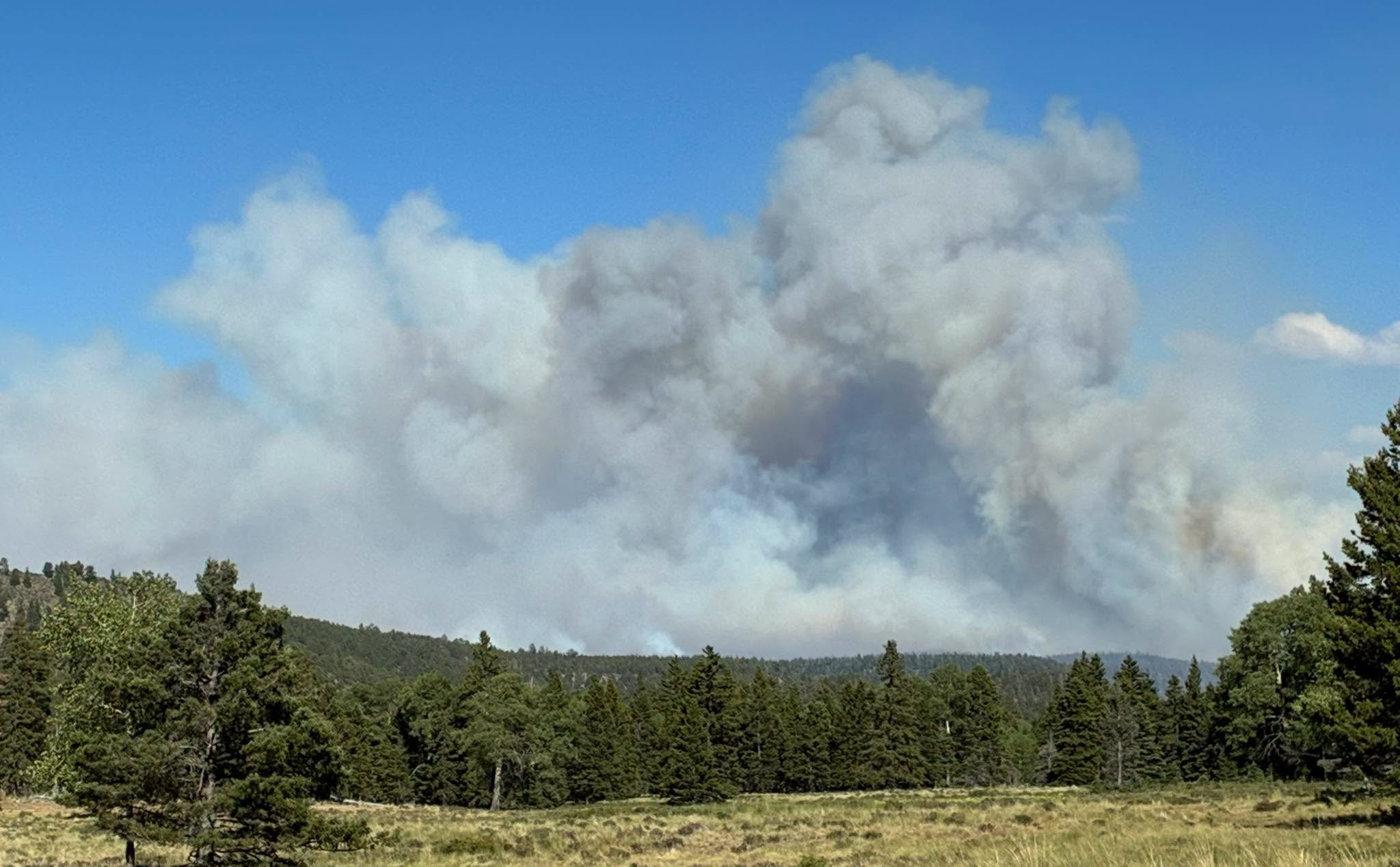
POLICY WIRE — Tres Piedras, N.M. — The high desert of northern New Mexico is burning again. Not with a dramatic, all-consuming fury right off the bat, but with a patient, relentless gnawing at an already brittle landscape. The Beehive Fire, rather than a mere blip on the summer radar, acts as a grim, fiery punctuation mark in a chapter we seem doomed to reread annually.
It’s a story told through the acrid scent of smoke that now hangs heavy over areas near Tres Piedras, a stark reminder that nature, untamed and often unforgiving, sets its own agenda. For nearly a week, firefighters—all 217 personnel now committed to the battle—have been pushing back against the blaze. They’ve seen its dimensions shift, morphing from Monday’s estimate of 3,121 acres to a sprawling 4,170 acres, according to official incident reports. It’s uncontained, you know, and that fact just hovers there, like the smoke itself, suggesting the difficult work ahead. [QUOTE_PLACEHOLDER]
This isn’t just a localized emergency; it’s a visceral echo of a world constantly confronting—and often failing to tame—environmental shifts. The parched earth, the erratic winds—they don’t care much for county lines or national borders. It’s a struggle we’re seeing play out with alarming regularity, from the American West to distant, sun-baked regions in the Muslim world. Look at Pakistan, for example, a nation wrestling with the aftermath of devastating floods one season, only to face blistering heatwaves and creeping desertification the next. Both contexts, though vastly different in scale and immediate impact, highlight a shared vulnerability, a thin membrane between order and environmental chaos.
Initially spotted Friday around 1 p.m. in the Tusas Valley—the result of a detection flight after recent lightning activity—the Beehive Fire rapidly staked its claim in the Carson National Forest, a mere 15 miles west of Tres Piedras and north of Highway 64. Winds, that perennial foe of any fire suppression effort, once again cranked up fire behavior on Monday, making an already tough job that much harder. You see the efforts, right? Aerial resources conducted water drops to cool hotspots — and reinforce containment lines. And then the winds would moderate, offering a brief reprieve, helping create better conditions for strengthening containment lines ahead of future fire activity. It’s a relentless, cyclical push — and pull, a testament to the immense power of nature over even our best-laid plans.
The firefighting playbook is pretty standard now, almost painfully familiar: patrol and secure existing fire lines, reinforce new ones, and assess every inch of the perimeter for containment opportunities. But each time, the specific dynamics are just different enough to keep everyone on edge. Crews are now working to construct new fire lines along the southern perimeter, aiming to get ahead of its potential southwestern sprawl. There’s also that dozer line on the northwest side they’re keen to patrol — and secure. Because they’re doing everything possible—it’s always that way—to manage the situation, with The Northern New Mexico Type 3 Incident Management Team having assumed command early Monday, coordinating this massive, intricate dance of logistics and physical labor.
While managers expect slightly lighter winds today, there’s only a slight chance of afternoon showers and thunderstorms. A teasing whisper of rain, perhaps, not the deluge firefighters actually need to bring the fire to its knees. For those planning a jaunt through these rugged lands, officials aren’t pulling any punches: you’re asked to avoid the fire area, including Hopewell Lake. And if you happen to be on the Continental Divide National Scenic Trail—a truly breathtaking route—you’re encouraged to bypass the section between the lake and the Rio Grande National Forest for now. Smoke may also reduce visibility on Highways 64 — and 285. Fire restrictions, too, have jumped from Stage 1 to Stage 2, effective Tuesday morning, underlining the increasing severity of this unfolding drama.
This event, far from an isolated incident, resonates with a global conversation on environmental stewardship and resource management, topics just as pressing in New Mexico as they’re in nations wrestling with water scarcity or desert encroachment. The challenges here are a microcosm of the larger struggles humanity faces in managing its volatile planet. You can learn more about these broader climate challenges by reading Embers and Resilience: New Mexico Fire Fight a Microcosm of Global Climate Strains, which explores the interconnectedness of local events and worldwide patterns.
What This Means
This escalating Beehive Fire isn’t merely a localized emergency; it’s a glaring symptom of deeper systemic issues — economic, ecological, and political — playing out across New Mexico and well beyond its borders. Economically, the costs of suppressing such a blaze are staggering, draining state and federal coffers of millions of dollars annually that could otherwise be allocated to education, infrastructure, or healthcare. This diverted funding represents a tangible economic bleed for a state already grappling with its financial realities, creating a zero-sum game where urgent crisis management trumps proactive investment. For a local economy like Tres Piedras that relies on tourism and outdoor recreation, prolonged closures of vast swathes of forest land spell significant financial hardship for small businesses and regional employment.
Politically, the continuous battle against wildfires puts immense pressure on governmental agencies, from local county commissions to federal land management bodies. There’s the constant political tightrope walk: balance immediate emergency response with long-term prevention strategies, often under the microscope of public opinion and seasonal blame games. But what resources should take priority? How much federal funding for fire breaks, prescribed burns, or even emergency air fleets is enough? These aren’t just budgetary questions; they’re political hot potatoes, especially when fires displace communities or claim properties. But really, it’s a political issue with long-term consequences that necessitate a strategic — and sometimes unpopular — re-evaluation of land use, forestry practices, and regional development plans. And this isn’t just a Western US problem. Pakistan’s devastating floods—amplified by similar climactic stressors—also force a similar political calculus for resource allocation and national resilience, highlighting a universal policy conundrum. Both the immediate firefighting efforts in New Mexico and the broader climate adaptation strategies globally require sustained, bipartisan commitment, not just reactive bursts of effort when flames lick at the horizon.