


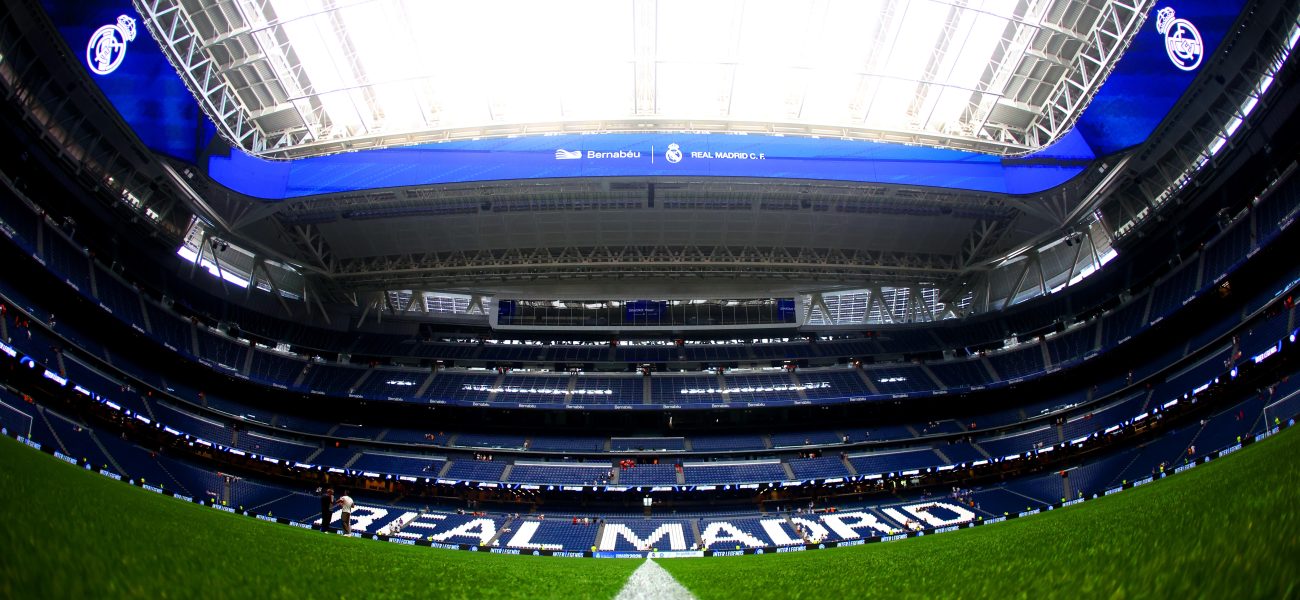
Bernabéu Blunder: Supreme Court’s Parking Foe Triages Real Madrid’s Grand Designs
POLICY WIRE — Madrid, Spain — Parking. It’s the existential dread of every urban commuter, a whispered curse in a traffic jam. And it turns out, not even a global football powerhouse like Real Madrid...

POLICY WIRE — Madrid, Spain — Parking. It’s the existential dread of every urban commuter, a whispered curse in a traffic jam. And it turns out, not even a global football powerhouse like Real Madrid is immune to its infuriating intricacies. Forget the epic clashes on the pitch; the real drama in Spain’s capital often unfolds in council chambers and — apparently — the Supreme Court.
Spain’s highest judicial authority just tossed out Real Madrid’s final plea, effectively burying the club’s ambitions for a swanky new underground car park right by the hallowed Estadio Santiago Bernabéu. It’s not just a rejection; it’s a monumental trip-hazard in their multi-million-euro stadium modernization — an ambitious facelift intended to make the Bernabéu a seven-day-a-week entertainment mecca, not just a Sunday temple.
But the courts? They didn’t buy it. The Supreme Court backed earlier rulings from the Madrid Superior Court of Justice, which, way back in 2021, slapped down the parking project. Why? Because the proposed underground structure wasn’t included in the original modification to Madrid’s General Urban Planning Plan, greenlit by the City Council. It’s all about zoning, folks. Permissions. And a surprising lack of bending rules for footballing royalty.
This whole kerfuffle started when the club initially applied to develop an extensive underground parking facility across multiple levels beneath Paseo de la Castellana. It was meant to address chronic congestion, smooth fan ingress and egress, and—let’s be honest—create another stream of revenue in a city that’s already groaning under the weight of its own success. The grand vision included a 24,500 square meter public square, retail space, and, yes, that much-needed underground parking for around 500 cars and 2,500 motorbikes. Madrid needed it. Or so they said.
“We can’t just bulldoze over regulations because a football club, no matter how iconic, has a grand vision,” stated Elena Moreno, a notoriously unyielding spokesperson for the Madrid City Council’s Urban Planning department, when asked for comment today. “Madrid’s urban fabric matters. Its residents matter. The law matters more than parking bays, however many you wish to create.” She wasn’t mincing words, which is rare for a council spokesperson, but then again, this isn’t any old building dispute. It’s Real Madrid.
For Real Madrid, this verdict isn’t merely a bureaucratic headache; it’s a potential crimp in their cash flow, particularly as they seek to amortize the hefty €1.17 billion investment in the Bernabéu renovation. That’s a staggering sum, one that hinges on the stadium operating as a year-round money printer. Not having adequate parking means diminished attractiveness for concerts, conventions, — and other non-matchday events. It’s simple arithmetic.
📄 POLICY WIRE WHITEPAPER PUBLISHED: PAKISTAN'S NATIONAL SECURITY POLICY PRIORITIES
👉 READ BY CLICKING HERE“It’s a setback, sure. But we’re Real Madrid. We’ll always find innovative ways to improve our facilities and the match-day experience for our supporters,” insisted Miguel Sanz, Real Madrid’s Director of Operations, with a forced optimism that didn’t quite mask the club’s disappointment. But alternative means finding alternative solutions — something that costs time and money. Perhaps, even, less ambitious solutions.
And it raises bigger questions about urban development in rapidly growing metropolises. Just look at Karachi, for example, a sprawling urban center in Pakistan, where infrastructure projects frequently collide with ancient zoning laws, community protests, and environmental concerns. The complexities in Madrid, a mature European capital, merely echo, albeit in a different socio-economic context, the global challenge of balancing development with preservation and resident well-being. According to a 2023 report by the World Bank, cities worldwide face an average 40% deficit in urban green spaces due to unregulated commercial expansion, a trend Madrid seems keen to avoid.
Because, for all their global brand power—and Real Madrid’s appeal spans continents, from Los Angeles to Lahore—they still operate within the very real confines of local governance. This isn’t just about parking; it’s about the boundaries of influence, even for titans.
What This Means
This ruling is more than a trivial procedural hiccup for Real Madrid. Economically, it forces the club to recalibrate its revenue projections for the revamped Bernabéu. Without convenient, on-site parking, the profitability of non-matchday events — conferences, concerts, cultural shows — takes a hit. Potential patrons, facing Madrid’s notorious traffic and limited parking options, might just opt for venues that offer easier access. This could compel the club to either invest in costly off-site solutions or reduce the frequency of such events, both of which affect the bottom line. It’s a testament to the unforeseen challenges in even the most meticulously planned mega-projects. Politically, the decision underscores a growing emphasis, even in Spain’s pro-development landscape, on upholding urban planning regulations and—crucially—listening to residents. It signals that municipal bodies, and indeed the Supreme Court, won’t be swayed purely by the economic might or global stature of powerful entities. For the Madrid City Council, it’s a quiet victory for due process and a demonstration of governmental independence, pushing back against the narrative that money always talks the loudest. But what they might gain in civic pride, they might lose in tax revenue from a fully maximized, revenue-generating Bernabéu. And that’s always a tough balance to strike.