


Beyond the Chatbot: The Geopolitical Scramble for AI’s Industrial Back End
POLICY WIRE — Washington, D.C. — The future of artificial intelligence, so often painted as a clean, digital affair of algorithms and data, actually looks a lot like an industrial revolution. Think...

POLICY WIRE — Washington, D.C. — The future of artificial intelligence, so often painted as a clean, digital affair of algorithms and data, actually looks a lot like an industrial revolution. Think smokestacks, sprawling factories, and colossal energy demands — not ethereal lines of code. This shift in focus, from the glittering interface to the grimy hardware, has caught many governments and analysts off-guard. It’s where the real competition lies, not in whose chatbot can quip smarter, but in who can build and control the actual machinery.
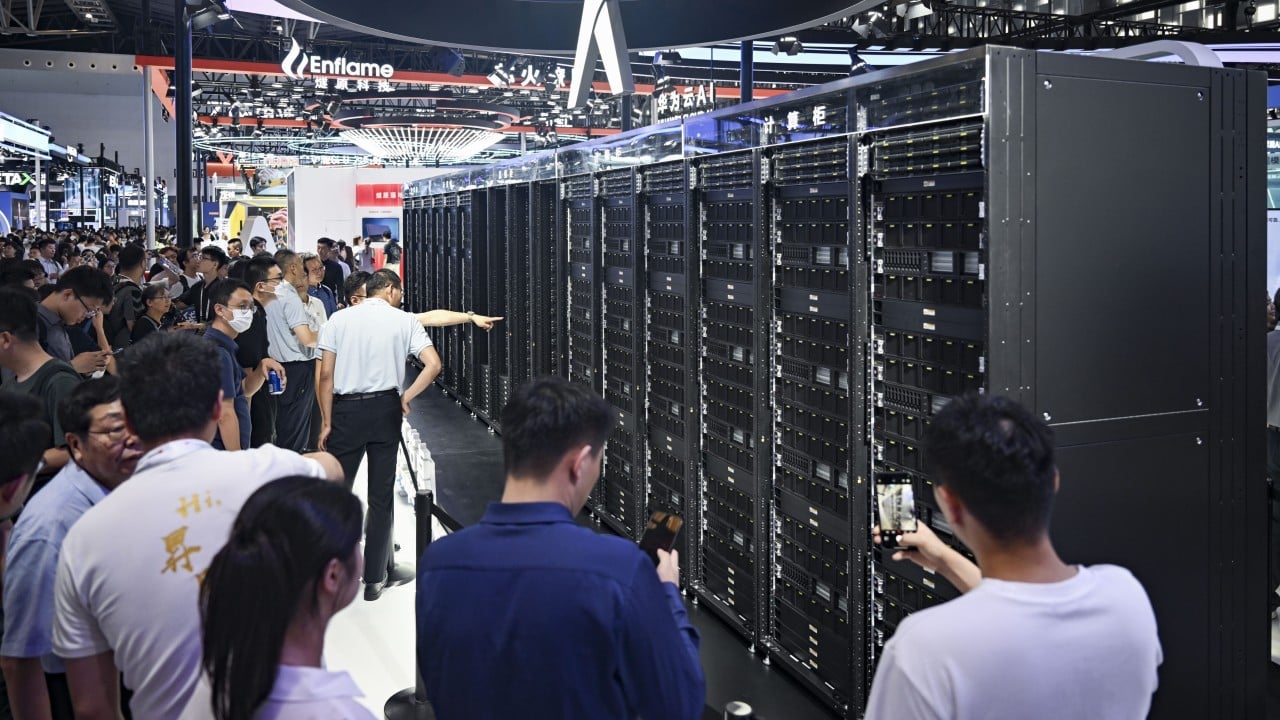
For too long, the chatter around AI has been monopolized by flashy software releases: ChatGPT, Gemini, DeepSeek. It’s exciting, sure, this relentless sprint toward ever-more intelligent applications. But peel back that polished digital veneer, — and you find something far more foundational, and far more political. You find machines. Specific, incredibly complex machines (we’re talking about advanced semiconductors, specialized memory, the whole nine yards), that run all those dazzling AI models. And, frankly, we’re not producing enough of them, or they’re concentrated in far too few hands.
It’s an inconvenient truth for many: AI isn’t some digital phantom conjured from thin air. It demands megawatts, rare earth minerals, vast fabrication plants (fabs, they call ’em), and specialized cooling systems. U.S. Commerce Secretary Gina Raimondo didn’t mince words recently when pressed on the matter. “We’re not just talking about tech advantage; we’re talking about national security itself,” she stated, her voice steady. “Whoever controls the fabrication capacity for these next-gen processors—they control the future. Period.” It’s stark, but it’s a reality many decision-makers are just now wrestling with, often awkwardly.
The geopolitical stakes couldn’t be higher. Control over this hardware isn’t merely about market share; it’s about technological sovereignty. Taiwan, for example, is home to a staggering over 60% of the world’s most advanced chip manufacturing capacity. One company, TSMC, practically holds the keys to this entire global enterprise, a precarious single point of failure by any reasonable metric. Because, let’s be honest, that kind of concentrated production makes everyone nervous. Imagine the leverage, the vulnerabilities. It changes the entire playbook for international relations.
But it’s not just Taiwan. The hunt for materials—for cobalt, for lithium, for silicon—has ignited a global resource scramble. Nations that were once seen merely as markets are now eyed as potential industrial hubs or, at minimum, choke points in an intricate supply web. Look at the Muslim world, particularly in South Asia. Places like Pakistan, with its burgeoning tech aspirations — and a huge young population, stand at a peculiar crossroads. They need this AI horsepower, desperately, to fuel economic growth — and innovation. But they don’t produce the foundational components. So, what do they do? They become reliant. They buy, they import, they become customers rather than creators of the core technology. It’s a dependency that carries considerable weight, economically and politically.
And because this capital outlay for hardware is mind-bogglingly huge, few countries, or even corporations, can realistically build out an end-to-end domestic supply chain for cutting-edge AI. One Silicon Valley CEO, who requested anonymity to speak frankly about the industry’s investment challenges, sighed during a recent fireside chat. “Building AI today isn’t just about lines of code anymore. It’s about cement, clean rooms, — and a supply chain that stretches across continents. It’s shockingly industrial, isn’t it? A colossal capital expenditure, yes, but one that promises to reshape every business model.” They’re not wrong. This isn’t just big tech; it’s industrial policy on a scale we haven’t seen in decades.
It forces governments, even ones typically wary of intervention, to play a hand in fostering domestic manufacturing, securing rare earth deals, and subsidizing everything from research to new fab construction. We’re seeing investment funds pouring into these areas—subsidies galore in the U.S. and Europe—because everyone’s realizing that if you don’t own the bits that make the AI, you don’t really own the AI at all. You’re just a renter.
What This Means
This stark realization pivots the global AI narrative from a technological race to a geoeconomic brawl. Nations aren’t just competing for intellectual property; they’re jockeying for control over physical assets and resource flows. Economic partnerships will shift, perhaps forming new blocs based on hardware dependency or shared manufacturing capacity. Small economies, particularly those in rapidly developing regions like South Asia and parts of Africa, will face increased pressure. They’ll either find a niche in the sprawling global supply chain—perhaps in assembly, or in providing critical raw materials—or they risk being marginalized, perpetually dependent on the whims of tech giants and hardware-controlling superpowers. It’s an updated form of industrial colonization, only instead of steam engines, it’s about semiconductors. The very notion of independent digital infrastructure could become a luxury only accessible to nations with significant domestic manufacturing might. It changes everything from how aid packages are structured to how trade deals are negotiated. Remember, it’s not the goalposts that decide the game; it’s the resources that build the field. That kind of geopolitics, messy and brutal, is now at the forefront of the AI era. We’d better get used to it.