


Red Bull’s Long Game: German Club’s Japanese Gambit Raises Eyebrows in Global Football
POLICY WIRE — Leipzig, Germany — It isn’t often a multi-million-dollar acquisition gets immediately sent back to where it came from. Not in high finance. Not in statecraft. But in the curious,...

POLICY WIRE — Leipzig, Germany — It isn’t often a multi-million-dollar acquisition gets immediately sent back to where it came from. Not in high finance. Not in statecraft. But in the curious, ever-expanding universe of global football, particularly when Red Bull’s corporate tentacles are involved, such maneuvers are becoming, well, practically commonplace. They’re buying; they’re lending. They’re making moves.
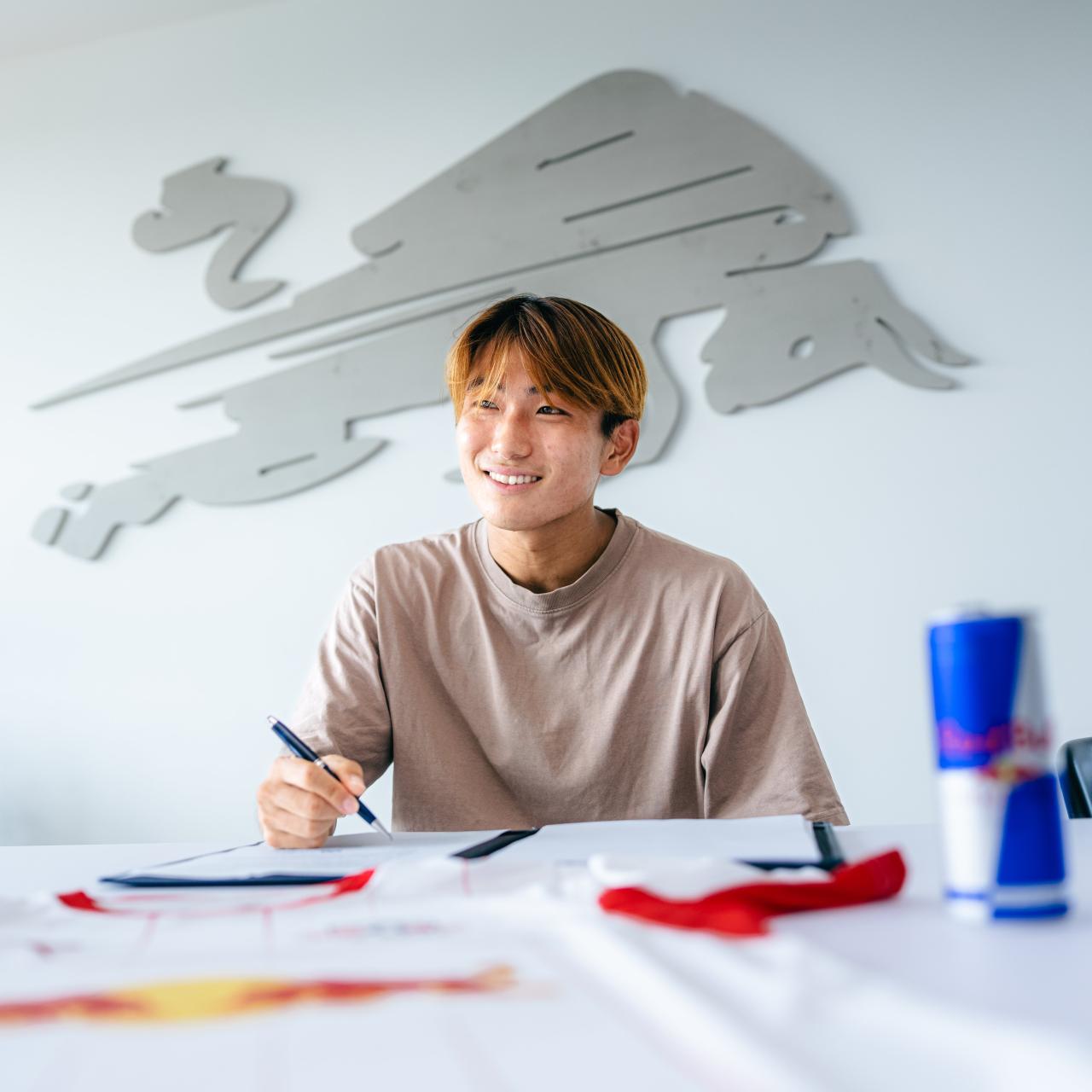
RB Leipzig, the German football powerhouse sculpted from energy drink billions, has officially bagged Japanese attacker Ota Yamamoto. The twenty-two-year-old, snatched from Kashiwa Reysol, put pen to paper on a seven-year deal—a remarkably long commitment in a game notorious for its fleeting loyalties. Yet, almost in the same breath, Yamamoto found himself on a season-long loan straight back to RB Ōmiya Ardija. This isn’t just unusual; it’s a strategic head-scratcher that forces us to squint hard at the ledger sheets of modern football. Some might call it clever. Others? A transparent piece of brand mechanics, nothing more.
Yamamoto, an attacking midfielder by trade, certainly isn’t an unknown quantity at Ōmiya Ardija. He spent the previous season there too, delivering ten goals — and three assists across nineteen appearances. A solid return, by most metrics. But his signing by Leipzig, then the swift redeployment, feels less like a conventional transfer to bolster a squad and more like an investment—a speculative future bet, perhaps even a placeholder, in an increasingly volatile global talent market.
“This deal is a clear demonstration of our long-term vision and our commitment to developing top-tier talent from across the globe,” stated Oliver Mintzlaff, CEO of Red Bull Group, in a prepared remark from the club’s corporate release. “Ota is an exceptional young player, and we believe his continued development in Japan, under familiar circumstances, is the optimal path for his future success within the Red Bull ecosystem.” It’s all about the ecosystem, you see. That’s always the kicker with them.
And because these financial chess moves often involve scouting across diverse cultural landscapes, it’s not just about what happens on the pitch anymore. It’s about demographics. It’s about market share. Think about it: a Japanese star in the Red Bull firmament connects an increasingly football-mad East Asia with European brands. This isn’t simply about sport; it’s about establishing brand equity — and future influence.
But doesn’t it make the sport feel a bit… manufactured? Dr. Ahmed Khan, Director of the Institute for Sports Management in Lahore, Pakistan, doesn’t mince words. “The Red Bull model is fascinating, yes, but it often raises questions about genuine athletic development versus brand activation. For many emerging football nations, including those across South Asia and the wider Muslim world, we watch these strategies with a mix of awe and trepidation. We admire the success, but we worry if it fosters a system where players are simply assets, shuffled between corporate siblings, rather than individuals pursuing personal glory in a traditional club setting.” His point? We’re all in this economic game now.
This kind of player warehousing—or strategic deployment, depending on your lexicon—highlights the growing chasm between traditional club football and the multinational corporate model. It’s a trend that sees top-tier clubs not just competing for league titles but for global mindshare. According to a recent analysis by Statista, the global football market was valued at an astonishing $3.54 billion in 2021, driven significantly by broadcast rights and sponsorship deals. You can bet Red Bull wants its share. All of it.
These complex transactions aren’t isolated incidents either. They’re part of a grander strategy, designed to identify, secure, — and mold talent well before it hits its peak. Yamamoto, it seems, is a significant piece on this global chessboard, destined not just for goals, but for something far grander: the expansion of an empire.
What This Means
RB Leipzig’s move for Ota Yamamoto isn’t just another transfer; it’s a loud declaration about the future of football as an economic and cultural instrument. The seven-year contract, coupled with the immediate loan-back to a subsidiary club, suggests a highly calculated, patient strategy focused on long-term value generation, not instant on-field impact. It’s less about winning the next Bundesliga match and more about winning the next decade’s talent war and market dominance.
Politically, these multi-club ownership models like Red Bull’s — or even the wider foreign investment in football we’ve seen in the Premier League or Serie A — represent a form of soft power projection. Germany’s reputation as a footballing nation, for instance, gets amplified not just by its national team’s performance (which has seen its ups and downs; you could argue it’s been a rough patch, almost a ‘crumbling golden generation’) but by the global reach of its club brands. This model extends influence, cultivates fan bases in crucial emerging markets like East Asia, and paves the way for further commercial penetration.
Economically, it underscores football’s transformation into a mature, capital-intensive industry where players are high-value commodities. These moves minimize risk on untested talent while retaining long-term control. For developing football regions, such as Pakistan and broader South Asia, this German model—or Red Bull’s specifically—serves as both a distant aspiration and a potential warning. It’s an example of effective talent pipeline management, sure, but it also highlights the challenge of retaining local talent when global behemoths are playing such a long, moneyed game. It’s big business. Always was, always will be. We’re just seeing its new frontiers unfold.