


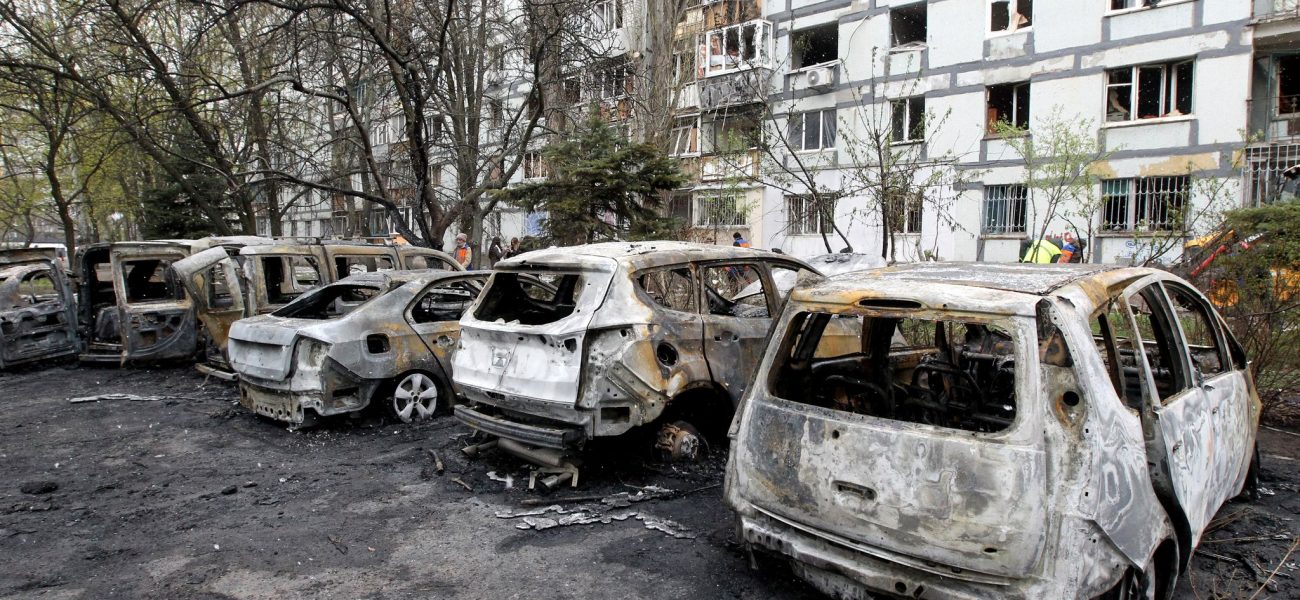
Kharkiv’s Enduring Anguish: A Cycle of Reports and Rubble
POLICY WIRE — Kyiv, Ukraine — Another day, another ledger entry in the grim tally of geopolitical attrition. The dispatches from Ukraine carry a peculiar rhythm now, a drumbeat of reported...

POLICY WIRE — Kyiv, Ukraine — Another day, another ledger entry in the grim tally of geopolitical attrition. The dispatches from Ukraine carry a peculiar rhythm now, a drumbeat of reported hostilities, casualties, and inevitable finger-pointing that’s become unsettlingly familiar. We’re often desensitized, aren’t we, by the sheer volume? Then, a stark, singular fact punches through the noise—a human life, abruptly extinguished.
It was late morning when the confirmation came, cold and clipped, of another Russian strike that claimed a solitary soul. Specifically, a Russian strike kills woman in Kharkiv. One woman, her existence reduced to a line in a news feed. It’s a tragic symmetry, in a way; one missile, one life. But behind that succinct statement lies a labyrinth of policy failures, unyielding strategic calculations, and the daily, terrifying roulette ordinary people play in a city scarred by two years of sustained aggression. This isn’t just about territory; it’s about the erosion of normalcy, the slow, agonizing grind of living under a perpetual cloud. [QUOTE_PLACEHOLDER]
The incident wasn’t isolated. Not by a long shot. The reports often come in pairs, or sometimes even more dramatically, suggesting an escalation. And then, without fail, the next day brings confirmation as both sides report casualties. It’s a ceaseless exchange, a gruesome symmetry that paints a picture of entrenched conflict. One can’t help but note the almost robotic cadence to these official pronouncements. You’ve got to wonder if those issuing the statements ever pause to consider the weight of those words, or if it’s all just part of the job now.
Consider the raw human cost—the UN Human Rights Monitoring Mission in Ukraine (HRMMU) has reported that civilian casualties across the country have now surpassed 10,000 deaths since the full-scale invasion began, based on recent estimates. That’s a statistic, a number so large it’s almost abstract, yet each unit represents a life—a story, a family, a future irrevocably altered. It’s easy for policymakers — and distant observers to speak of strategic objectives or tactical gains. But what about the grocer whose shop is now shrapnel-riddled, or the schoolteacher whose classroom is rubble? They don’t feature in the strategic maps, do they?
Because that’s the rub, isn’t it? The further you are from the front lines, the easier it becomes to view conflict through the lens of policy papers and international treaties, rather than shattered lives. This distance isn’t just geographical; it’s psychological. From Islamabad to Jakarta, leaders and populaces alike watch these events unfold with varying degrees of alarm, often shaped by their own regional vulnerabilities and strategic allegiances. Pakistan, for instance, a nation grappling with its own volatile borders and regional power dynamics, might interpret the endurance of this European conflict through a lens of proxy warfare and global realignments.
The continuous, low-level reporting of such strikes, a woman killed here, some troops lost there, subtly chips away at international resolve. It becomes background noise. And when the noise becomes normalized, the urgency wanes. It’s a dangerous game. For nations like Ukraine, dependent on external aid and attention, this slow dulling of empathy poses as great a threat as any missile system.
It’s a peculiar irony, I think. We live in an age of instant information, where every skirmish, every casualty, can theoretically be broadcast globally in real-time. Yet, the human capacity for absorption has its limits. We cycle through outrage — and compassion until both are worn thin, leaving only a sort of resigned exasperation. It isn’t just a story from Ukraine; it’s a narrative about how modern societies consume—and eventually neglect—pain.
What This Means
This steady, grim trickle of casualty reports, punctuated by isolated civilian deaths like the woman in Kharkiv, represents more than just localized tragedy. It signals a deep-seated inertia in international diplomacy and, frankly, a fatigue that suits aggressors just fine. Politically, it consolidates the perception of a prolonged, intractable conflict, making grand diplomatic breakthroughs seem increasingly improbable. States are settling into a long-term posture of support or cautious neutrality, with fewer governments willing to expend significant political capital for decisive intervention. You don’t see the bold proclamations we once did, do you?
Economically, this enduring conflict—this status quo of constant, destructive exchanges—has pervasive, subtle ripple effects. Energy markets remain jumpy, global supply chains are constantly adjusting to new realities (and risks), and investment capital grows hesitant to enter regions bordering the conflict zone. For distant economies, say those in Southeast Asia or the Muslim world—even places dealing with domestic economic shifts—the war isn’t just an abstract concern; it’s a pressure on commodity prices, a diversion of diplomatic focus, and a perpetual undercurrent of instability that impacts everything from food security to arms proliferation concerns. But, more critically, it suggests that even clear violations of international law, when sustained and chronic, can eventually become normalized, fading from the forefront of global attention and political will. That’s a terrifying precedent, if you really think about it. And it sets a dangerous tone for future international relations.