


Digital Dustup: Venezuelan Quake Spurs Old Fakes, Exposing Global Truth Decay
POLICY WIRE — Caracas, Venezuela — When the earth moves underfoot, anxieties soar. That’s a given. But in our perpetually connected world, sometimes the ground isn’t the only thing fracturing....

POLICY WIRE — Caracas, Venezuela — When the earth moves underfoot, anxieties soar. That’s a given. But in our perpetually connected world, sometimes the ground isn’t the only thing fracturing. Truth itself can buckle under the weight of instant-click hysteria, turning genuine tragedy into a carnival of fabricated chaos.
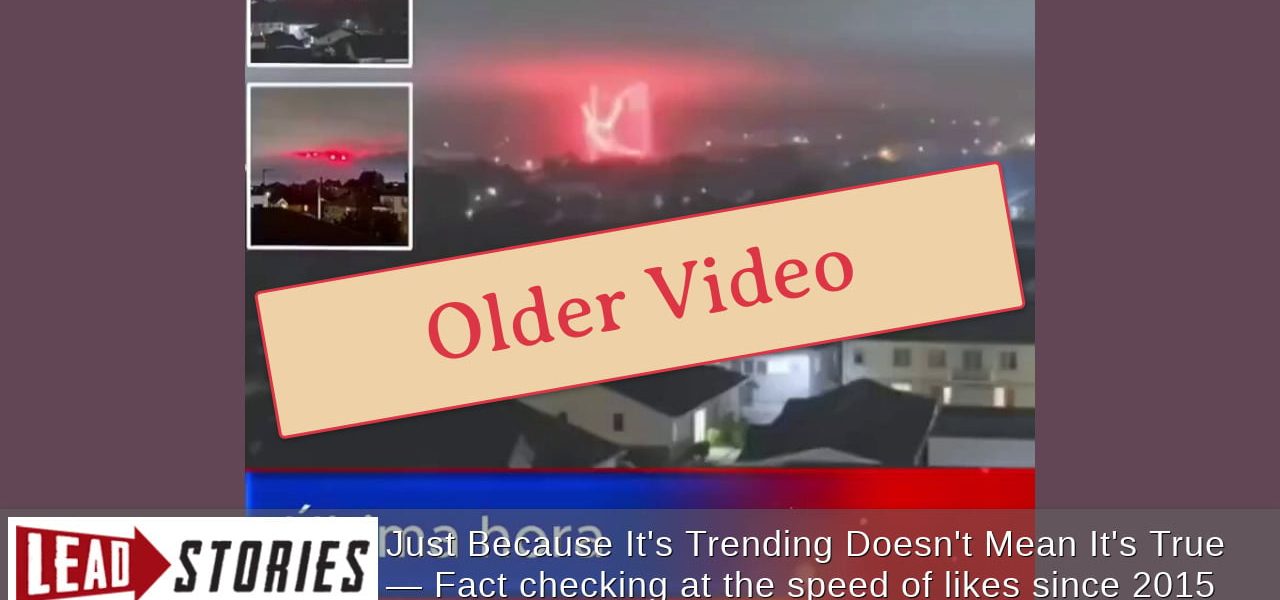
Case in point: Venezuela’s recent seismic rumble. The tremors weren’t barely felt before a truly bizarre claim began doing the rounds online. People started circulating a grainy, somewhat ominous video, alleging it depicted “laser beams” — yes, actual energy rays — being fired from the sky, somehow causing the natural disaster. A secret weapon, an extraterrestrial intervention, some shadowy global conspiracy; take your pick, the digital grapevine certainly did.
It’s pure nonsense, of course. Utter, unvarnished poppycock. But that doesn’t stop it, does it? The video, purporting to show these mysterious skyward emanations, was enthusiastically linked to the recent Venezuelan earthquakes. Problem is, the footage? It had nothing whatsoever to do with the event. In fact, it’s been floating around the internet, largely on TikTok, for months, even before the ground in South America dared to grumble.
“These sorts of ridiculous claims,” snapped Jorge Acosta, a spokesperson for Venezuela’s Ministry of Information, clearly exasperated during a hastily arranged press briefing, “are designed not just to misinform, but to generate fear and distrust in the very institutions striving to keep our people safe. We’re working around the clock to assist affected communities, and frankly, we don’t have time for internet fables.” And he’s not wrong. Because while emergency responders were pulling folks from rubble and assessing damage, a significant portion of the populace was — quite understandably, given the prevailing climate of digital distrust — debating whether the planet itself was being weaponized.
This isn’t a uniquely Venezuelan predicament. The rapid, often uncritical dissemination of information (or misinformation, more often) following dramatic events is a global ailment. Look at South Asia: during monsoon floods or periods of political volatility in countries like Pakistan or India, old videos and photos depicting unrelated incidents are constantly recycled. They’re reframed to fit new narratives, intensifying panic, fueling divisive rhetoric, and ultimately, obscuring the genuine issues. It’s a template for manufactured dissent — and fear that works everywhere, all the time. One expert noted that, according to a recent analysis by the Reuters Institute for the Study of Journalism, visual misinformation shared on platforms like TikTok and Instagram spreads six times faster than textual misinformation during crisis events, preying on our inherent trust in what we see, however out of context it may be.
But back to these laser beams. It beggars belief that grown adults might actually believe such a thing, you’d think. But in a world where skepticism of official channels runs deep and every obscure YouTube channel claims to have the ‘real truth,’ it’s become depressingly common. The visual appeal of a spectacular (if fake) video often overrides any logical filter the viewer might possess. “The digital landscape today thrives on sensationalism, regardless of veracity,” explained Dr. Lena Khan, a professor of digital media ethics at Cairo University, in an email exchange. “People are wired for dramatic visuals. When you pair a dramatic natural event with an equally dramatic, if entirely fabricated, explanation – like laser beams causing earthquakes – it creates an irresistible, viral cocktail. It’s incredibly damaging to genuine public understanding.”
So, what was this video really? Just another piece of out-of-context digital debris. There’s no global consensus on its original source, but common theories point to industrial flares, advanced weather phenomena (like sprites, which are atmospheric discharges, but look nothing like what was shown), or even complex firework displays filmed in a misleading way. But definitely not an earthquake ray gun.
What This Means
This incident, far from being an isolated curiosity, paints a stark picture of the challenges facing governance and public discourse today. For nations like Venezuela, already navigating complex geopolitical currents and domestic challenges, the proliferation of such obvious hoaxes diverts already strained resources. Public confidence in official communication, in mainstream media (even policy wires like us), and in basic scientific facts erodes. When a significant portion of the populace spends its bandwidth — physical and mental — debating whether earthquakes are man-made via sci-fi weaponry, the task of actual disaster recovery, economic stability, or effective policy communication becomes exponentially harder. It creates an environment where the field of illusions expands, making rational policymaking a fool’s errand. Leaders find themselves battling phantoms in the digital ether as much as tangible problems on the ground. And the financial costs? Consider the potential for panic buying, disrupted emergency services, or lost tourist revenue if widespread conspiracy theories take root.