


Digital Dust Bunnies: How ‘Laser Beams’ and TikTok Sparked Seismic Disinformation
POLICY WIRE — Caracas, Venezuela — Something’s always burning brightly on TikTok, isn’t it? This time, it wasn’t the latest dance craze or a DIY hack. Nope. When actual tectonic plates shifted...

POLICY WIRE — Caracas, Venezuela — Something’s always burning brightly on TikTok, isn’t it? This time, it wasn’t the latest dance craze or a DIY hack. Nope. When actual tectonic plates shifted beneath Venezuela, what got a fiery viral boost on the digital playground was something far more outlandish: ghost lasers. Not a metaphor. Actual spectral laser beams, supposedly — just supposedly, mind you — carving up the earth and touching off seismic events.
It sounds like a script from a low-budget sci-fi flick. Yet, this particular digital dust-up, involving spurious imagery — and Venezuelan earthquakes, really pulled people in. The whole narrative unfolded online, claiming these otherworldly light shows were somehow—mystically—responsible for recent tremors. It’s a compelling little yarn, isn’t it? Because attributing natural disasters to inexplicable, weaponized energy blasts feels, I don’t know, *more* dramatic than just, well, plate tectonics. Humans. We love a good conspiracy. We just do. [QUOTE_PLACEHOLDER]
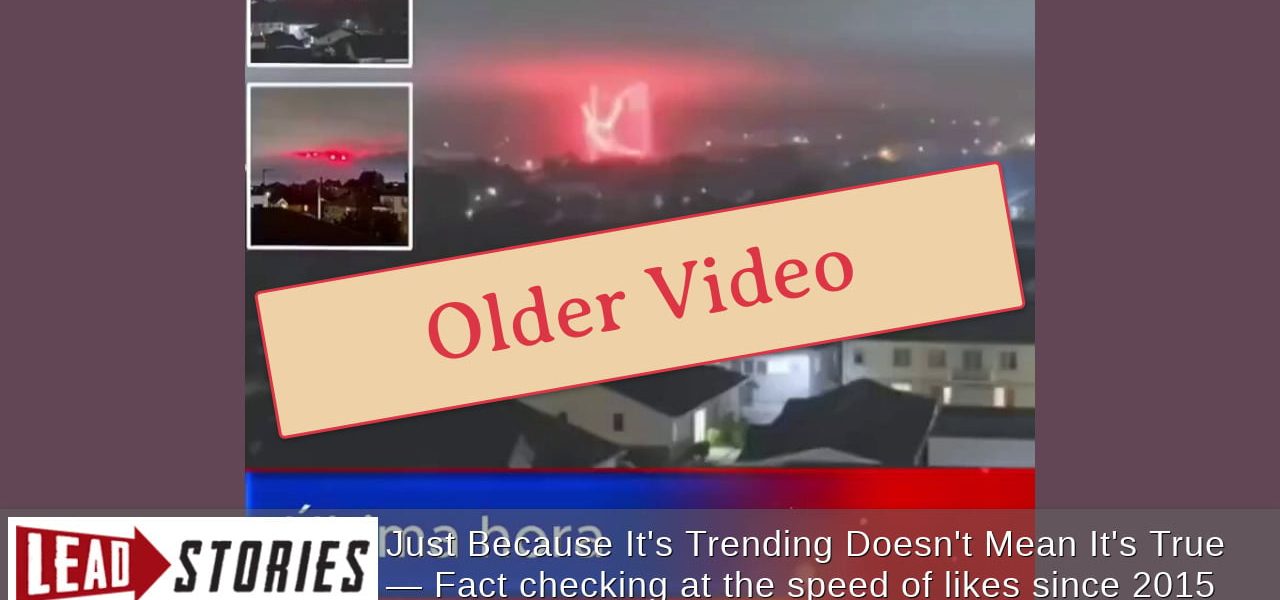
The core of the hoax was a video. This footage, depicting these alleged laser beams, made the rounds with gusto. And folks bought it, hook, line, — and sinker. They connected it to real-world chaos in Venezuela, where the ground had actually shuddered. It didn’t matter that geologists, you know, the folks who actually study earthquakes, offered up slightly more pedestrian explanations. No. It was the laser beams. Always the laser beams.
But here’s the kicker, the bit where the façade cracks, as it always does. That video? The one supposedly showing these terrifying seismic instigators? It had already been chilling out on TikTok for months. Long before Venezuela felt its latest rumbles. Long before anyone in the Southern American nation was worried about mystical light shows causing geological upheaval. It’s the digital equivalent of reporting on a fire, then realizing your footage was shot during a barbeque three summers ago. And that, dear readers, is exactly what happened here. The so-called evidence was old news, rehashed, re-packaged, — and re-attributed for an entirely new, unwitting audience.
And it works because social media’s built for speed, not always for accuracy. Content creators, often anonymous, find that engagement is the ultimate currency. Veracity? Sometimes an afterthought, if a thought at all. They’ve discovered that nothing gets shares like a dramatic, sensational claim, especially when it taps into primal fears or a thirst for hidden truths. Truth’s just kinda boring sometimes, isn’t it?
This isn’t an isolated incident. Not by a long shot. Disinformation, it’s a Hydra. We saw similar tactics employed during regional conflicts, where old combat footage got passed off as current events, shaping narratives in real-time. Or even how AI fakers blur lines when global powers square off. The speed at which false information travels — and the readiness with which it’s accepted — highlights a real conundrum for any society trying to navigate a fragmented, hyper-connected world.
A recent poll conducted by the Edelman Trust Barometer, for instance, reported that 59% of respondents globally worry about false information or fake news being used as a weapon. Just think about that. Almost two-thirds of the world, basically, is looking over its shoulder. That’s a huge figure. It’s not just a passing annoyance; it’s a profound erosion of public trust.
Think about a place like Pakistan, or across the broader South Asia region, even the Muslim world. Communities there, often already contending with rapid technological adoption alongside long-standing socio-political fragilities, are especially susceptible. An earthquake, say, hits a remote village. News is scarce. Who are people going to believe? The slow, official channels? Or the sensational video exploding on WhatsApp, explaining everything with an immediate, if fantastical, answer? The temptation is clear, particularly when state institutions are perceived, fairly or not, as less than fully transparent. They don’t have the luxury of detached fact-checking in moments of genuine panic.
It’s why these digital fabrications aren’t just annoying; they’re destabilizing. Because false narratives can incite panic, divert resources, or deepen divides within populations. Imagine officials trying to coordinate a disaster response when half the population believes the ground’s shaking due to a secret energy weapon. It’s a bureaucratic nightmare. It’s also dangerous. We’re talking about real human consequence.
What This Means
The Venezuela laser beam hoax, silly as it might seem on its face, packs a punch. Politically, it signals the increasing impotence of traditional information gatekeepers in the face of decentralized, hyper-viral falsehoods. Governments, or any authority really, struggle to counteract a narrative once it’s taken root, particularly on platforms optimized for emotion and spectacle over veracity. This incident underscores a critical failure point in global information security, demonstrating how easily natural crises can be hijacked to spread manufactured chaos.
Economically, there are direct — and indirect costs. Direct, in the potential misallocation of emergency funds if resources are diverted by panicked, misinformed citizens, or if emergency services are bogged down responding to wild goose chases. Indirectly, it chips away at the social cohesion necessary for a robust economy, fostering distrust not just in institutions, but in basic factual agreement. Foreign investment, domestic confidence—it all takes a hit when basic reality gets contested this aggressively. When you can’t trust the news about an earthquake, what can you trust about a country’s economic outlook? It doesn’t inspire much confidence, does it? A policy vacuum leaves room for this kind of mischief, and it’s something decision-makers haven’t quite figured out how to fill. Because frankly, they’re not even sure where the hole *is* half the time. It’s a wicked problem, this. And it isn’t going away anytime soon.