

Gaza’s Subterranean Echoes: A 16km Labyrinth Sealed, Rekindling Ghosts and Strategic Headaches
POLICY WIRE — Tel Aviv, Israel — It’s often not the grand pronouncements or the thunder of distant artillery that define the endless, grinding conflict that’s Gaza. Nope. It’s the quiet...

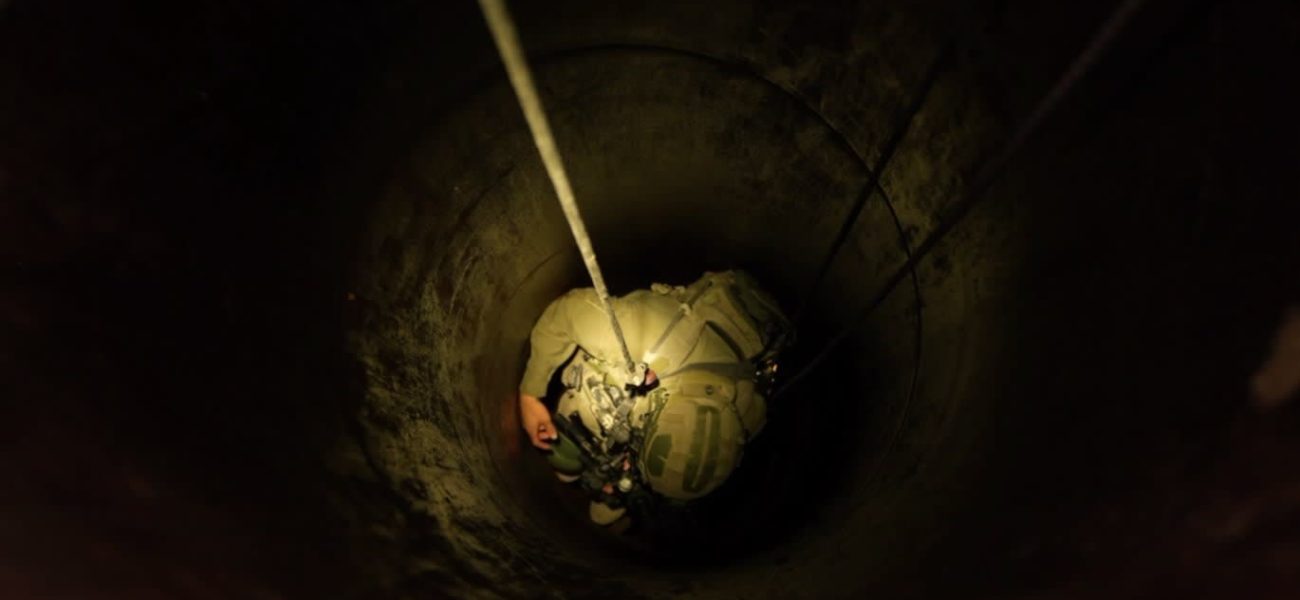
POLICY WIRE — Tel Aviv, Israel — It’s often not the grand pronouncements or the thunder of distant artillery that define the endless, grinding conflict that’s Gaza. Nope. It’s the quiet desperation. The unblinking watch kept by families for pieces of those lost years ago. This week, as Israel’s military put a definitive stop to a sprawling 16-kilometer underground labyrinth beneath Khan Yunis, it wasn’t just a tactical victory they announced. They were—whether they meant to or not—sealing a morbid vault, a physical manifestation of a family’s unbearable wait.
For nearly a decade, the fate of Staff Sergeant Hadar Goldin, along with fellow soldier Oron Shaul, has been a raw, festering wound in the national consciousness. Captured and killed during Operation Protective Edge in 2014, Goldin’s remains, along with Shaul’s, have been held by Hamas—used as grotesque bargaining chips. The recently neutralized tunnel, IDF officials now confirm, was one such holding pen. A concrete and steel reminder of protracted suffering, built with materials that could’ve (and, many argue, should’ve) gone into building homes or hospitals above ground. Think about that for a second. The sheer dedication to digging, to hiding, to leveraging pain.
And so, as military engineers pumped concrete and explosives into the vast network—a ‘Gaza Metro’ of malice, as some analysts derisively label it—the air wasn’t filled with celebration. Rather, there was a palpable sense of grim closure, a small, cold comfort in a land perpetually short on it. “This operation isn’t just about destroying infrastructure; it’s about denying Hamas the psychological high ground they seek through holding our fallen,” asserted Israeli Defense Minister Yoav Gallant, his voice predictably steely during a press briefing. “Every meter we destroy is a meter less for their terror, — and a step closer to returning what’s ours.”
But his Palestinian counterpart, particularly the spokespeople from Hamas, see things differently. “These tunnels represent the resilience of our resistance, built against impossible odds, beneath an unrelenting blockade,” remarked Ghazi Hamad, a senior Hamas official, speaking from an undisclosed location. He went on to describe the sealed tunnels not as relics of a macabre enterprise, but as “a testament to the creativity born of necessity”—a stark ideological chasm that seems only to deepen with every shovelful of dirt moved, every concrete slab poured.
The network itself was something else. A complex, often reinforced series of arteries, stretching from Khan Yunis well into the former Gaza Strip, even reportedly near Israeli territory. It included command posts, storage facilities, — and living quarters. Its sheer scale demands reflection: Hamas, according to a recent estimate by the Meir Amit Intelligence and Terrorism Information Center, boasts a tunnel network that spans over 500 kilometers—a subterranean metropolis far more extensive than even some major city subway systems. That’s a staggering figure, particularly for a territory roughly twice the size of Washington D.C., continually grappling with a severe humanitarian crisis.
Because the resources needed for such an undertaking are monumental. Experts have pointed out how dual-use materials, nominally for reconstruction, get siphoned off. Cement, pipes, even basic tools. It’s a grand project, funded by myriad sources—some state-sponsored, some clandestine charitable donations. Pakistan, for instance, a nation grappling with its own internal challenges and a complex relationship with various non-state actors, has long had factions expressing solidarity with Palestinian groups. And while direct financial or material links are difficult to conclusively trace in such instances, the ideological kinship, and shared understanding of ‘resistance’ models, resonates across the broader Muslim world, sometimes translating into financial flows via opaque networks. This isn’t just a regional scrap; it’s a model that inspires, adapts, — and echoes far beyond Gaza’s fenced-in borders.
It’s not just a physical sealing, then. It’s a symbolic one. It might bring a modicum of peace to one grieving family, but the political reverberations, the deeply entrenched narratives of victimhood and defiance, well, they persist. They run deeper than any tunnel ever could.
What This Means
This IDF action, while presented as a successful security operation, holds a multi-layered political punch. Economically, the sheer resource allocation by Hamas to build and maintain such an expansive underground infrastructure highlights a strategic decision to prioritize military capability over civilian welfare. It implies that foreign aid, whether overtly or inadvertently, could still be diverted, creating an ethical conundrum for international donors—and not a new one, mind you. But what do you do?
Politically, the sealing offers a minor, but significant, propaganda win for Israel’s current leadership. It underscores their commitment to degrading Hamas’s capabilities, particularly amidst ongoing pressures for a resolution to the fate of remaining Israeli captives and the security concerns stemming from the constant underground threat. It offers a counter-narrative to those who accuse the IDF of inaction or inefficiency in tackling Hamas’s entrenched capabilities. However, it simultaneously fuels the Hamas narrative of a persecuted people forced to build underground to survive—and that’s a narrative that travels far. From Cairo to Karachi, you’ll find sympathetic ears.
And it will certainly impact regional dynamics. Every significant blow to Hamas’s infrastructure is watched closely by other non-state actors and state sponsors in the Middle East. It might cause some to reassess the long-term sustainability of such a military strategy—or, conversely, push them to invest further in counter-detection technologies. This subterranean war is a constant game of cat-and-mouse. The international community, already stretched thin with other global crises (look no further than the complexities unfolding in places like Ukraine or Myanmar), will continue to grapple with the implications of persistent conflict in Gaza, where even below the earth, the fight never truly ends. It just shifts tactics, changes its depth, finds new corners to dig into. For more insights on regional power plays, consider Abu Dhabi’s strategic moves. Or perhaps even how global issues like anti-Semitism echo in national policies, as discussed in Berlin’s policy debates.