


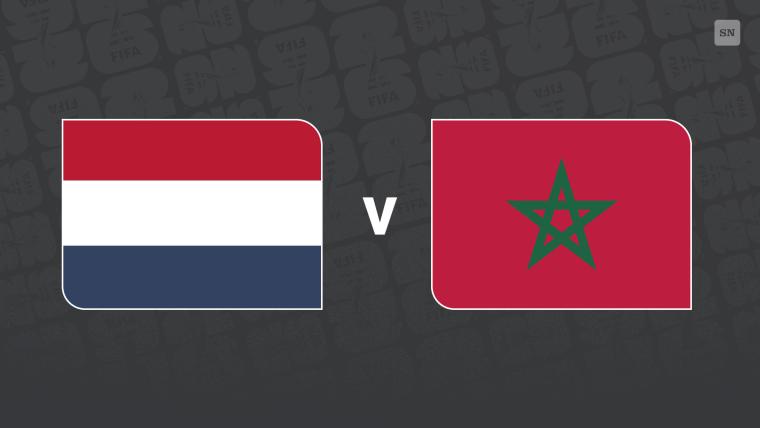
Orange & Atlas Lions: Football’s Geopolitical Clash Echoes Global Power Shifts
POLICY WIRE — Mexico City, Mexico — Forget the scores for a moment, the roar of the crowd, or even the questionable VAR calls. Because when the Netherlands — Europe’s perpetually promising, often...

POLICY WIRE — Mexico City, Mexico — Forget the scores for a moment, the roar of the crowd, or even the questionable VAR calls. Because when the Netherlands — Europe’s perpetually promising, often heartbroken footballing giant — square off against Morocco, the Atlas Lions, on Monday evening, it’s not simply a game. It’s a skirmish on the sprawling canvas of global influence, a high-stakes cultural exchange masquerading as sport, and a vivid demonstration of how even kickabouts in distant Monterrey can ripple across continents.
It’s easy, perhaps too easy, to frame this Round of 32 clash as just another knockout match in a global tournament that, let’s be honest, now stretches like an epic novel through a full summer month. But for policy watchers, this fixture speaks volumes about soft power, evolving international narratives, and the persistent quest for national affirmation. Especially as the sport expands to a gargantuan 48-team, tri-nation affair in 2026, events like these become less about mere athletics and more about who commands the global stage.
The Dutch arrive with their predictable precision, a well-oiled machine fueled by the memory of three World Cup finals without a single, coveted star above their crest. They bulldozed through Group F, turning an opening hiccup into emphatic 5-1 and 3-1 victories over Sweden and Tunisia, respectively. Brian Brobbey’s three goals underscore a ruthless efficiency, bolstered by the likes of Cody Gakpo and the defensive might of Virgil van Dijk. And they don’t hide their aspirations. “We respect Morocco’s ascent, certainly,” noted Just Spee, President of the Royal Netherlands Football Association (KNVB), recently. “But Holland’s football legacy, our pursuit of that elusive star—it isn’t just about a trophy. It’s about demonstrating disciplined innovation, an almost clinical dedication to the game’s evolving art. This isn’t just sport; it’s national projection.”
Morocco, though? Their tale carries a different resonance altogether. They’re not just another squad; they’re standard-bearers. Their historic run to the semi-finals in Qatar 2022 — the first African nation to reach that dizzying height — wasn’t just a moment of sporting glory. It was a roar of collective pride for North Africa, for the Arab world, for the broader Muslim diaspora scattered from Karachi to Casablanca. That feat, it resonated. Big time.
They bring that same fire this time around, emerging from a tricky Group C with draws against Brazil, and wins over Scotland and Haiti. Ismael Saibari, with his own trio of goals, spearheads an attacking lineup that includes European-based stars Achraf Hakimi and Brahim Diaz. Their journey is a powerful counter-narrative to traditional footballing dominance. “Qatar changed everything for us. Our boys aren’t just footballers; they’re symbols,” Fouzi Lekjaa, President of the Royal Moroccan Football Federation (FRMF), remarked with evident satisfaction. “Every dribble, every save, it sends a jolt of pride across the Sahara, through the diaspora. It shows what’s possible, doesn’t it? That a nation with passion and skill can disrupt the established order.” That sentiment, it’s not just locker-room talk.
It’s precisely this disruption that captures the attention of observers beyond the sports pages. Because the success of teams like Morocco isn’t merely about bragging rights; it’s about state-building. Their performance injects national pride, certainly, but it also elevates Morocco’s standing in geopolitical conversations. It fosters goodwill, strengthens diplomatic ties, and—crucially for governments—inspires a younger generation to see their own nations as capable contenders on the global stage, whether in sport or otherwise. Consider, for example, the outpouring of support for Morocco across the Muslim world; this isn’t coincidental. It builds solidarity, providing a positive shared narrative when other headlines can feel so bleak. But don’t mistake that for simple fandom; it’s a statement.
The Dutch-Morocco clash itself will be broadcast live on FOX in the United States, kicking off at 9 p.m. ET from Estadio BBVA in Monterrey. For those cutting cords, streaming service Fubo offers a trial—because in this hyper-connected age, viewership figures are currency, too. According to FIFA’s post-tournament reports, the 2022 World Cup attracted a staggering 1.5 billion unique viewers for its final match alone, a hard statistic underlining football’s unmatched global reach. These are numbers that any politician, any diplomat, wouldn’t mind having associated with their nation’s image.
What This Means
This match, far from being just another fixture, crystallizes a dynamic shaping the 2026 World Cup’s expanded landscape. With 48 teams competing across North America—the United States, Canada, and Mexico hosting—the geopolitical implications become more pronounced. Nations like Morocco, achieving unprecedented success, aren’t just selling jerseys; they’re selling a vision. Their ascent challenges the historical sporting hegemonies and offers a template for emerging economies and traditionally overlooked regions to assert their influence. This isn’t lost on governments keen to leverage sports for nation-branding — and diplomacy.
Economically, every major fixture translates into tourist dollars for host cities, media revenue for broadcasters, and heightened consumer spending at home. For host Mexico, this means tangible economic dividends, positioning their cities as world-class venues capable of handling global events. For the nations playing, it’s about projecting an image of stability and capability—attributes attractive to foreign investment. But it’s also about the emotional capital. These games, particularly when there’s so much on the line, generate an intangible unity, a communal burst of hope that can prove more valuable than any trade deal. They certainly capture attention better.