

After Trump’s Campaign to Dismantle Mail-In Ballots, High Court Silences the Drums of War, For Now
POLICY WIRE — WASHINGTON — You could almost hear the collective sigh of relief from election officials across America yesterday. After years of sustained, almost gladiatorial political warfare waged...

POLICY WIRE — WASHINGTON — You could almost hear the collective sigh of relief from election officials across America yesterday. After years of sustained, almost gladiatorial political warfare waged over the most mundane mechanics of democratic participation—the simple act of casting a ballot—the U.S. Supreme Court has, at least temporarily, offered a modicum of clarity. And you know what? It wasn’t about who won or lost the last election. It was about how states get to run the next one.
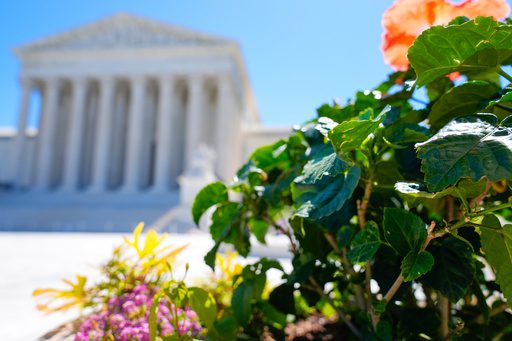
In a decision that won’t exactly be etching its way into civics textbooks as a groundbreaking constitutional declaration, the nation’s highest court slammed the door shut on a Republican-backed, Trump-aligned challenge aiming to bar states from counting mail-in ballots received after Election Day. But, — and this is a big ‘but,’ these are ballots postmarked by the actual Election Day, mind you. It was a 5-4 split, revealing deep fault lines on the bench, though not quite the ideological split you might instantly assume. Chief Justice John Roberts sided with the three liberal justices and Justice Amy Coney Barrett—an unlikely bedfellow in this particular tango—to craft the majority opinion.
Donald Trump, you’ll recall, has had a long, rather vociferous track record of railing against mail-in voting, claiming without verifiable proof that it’s riddled with fraud. This particular fight was yet another front in that wider campaign. He’s spent years peddling theories about phantom ballots and shadowy vote manipulations, particularly after his 2020 loss. Because, in his worldview, if you lose, it can only be rigged, right? This, despite numerous audits, countless state and federal court dismissals, and even the debunking efforts of his own former Attorney General, Bill Barr. Now, the High Court has, in essence, told the legal system that this specific avenue of attack is a dead end for those seeking to constrict ballot access.
The immediate takeaway is practical: it means more than half the states, roughly 26 jurisdictions and the District of Columbia according to data compiled by the National Conference of State Legislatures (NCSL), won’t need to frantically overhaul their ballot collection rules just ahead of the 2026 midterm elections. Many of these more flexible deadlines often cater specifically to military personnel and overseas voters—individuals serving their country far from home, often in places like Afghanistan or Iraq, where timely mail service isn’t exactly a given. Seems like a pretty sensible allowance, doesn’t it?
“This ruling provides welcome stability for election administrators who simply want to ensure every legal vote is counted, especially for our brave service members,” commented Senator Amy Klobuchar (D-MN), Chair of the Senate Rules Committee, known for her focus on election integrity and access. “It’s a clear affirmation that reasonable accommodation for voters isn’t a conspiracy; it’s democracy in action.”
On the other side of the aisle, there’s palpable disappointment. “The Supreme Court has punted on a truly critical question of electoral security,” said Senator Lindsey Graham (R-SC), a staunch ally of the former President, in a statement. “If we allow ballots to trickle in indefinitely after Election Day, it erodes public confidence and invites manipulation. We can’t simply wish away these legitimate concerns about election integrity.”
What This Means
This decision, while seemingly a win for voter access and electoral stability, is less about celebrating a victory and more about a momentary reprieve. It doesn’t settle the larger, ongoing battle for the heart and soul of America’s electoral process; it merely clears the deck of one particular nuisance lawsuit. Politically, it means the focus will shift, again, to state legislatures, where battles over early voting, voter ID, and registration purges will continue unabated. For President Biden’s administration and the Democratic Party, it avoids yet another potential quagmire ahead of a difficult election cycle, preserving methods that often favor their voters. For the GOP faction aligned with Trump, it’s a tactical defeat in their ‘stop the steal’ crusade, but don’t imagine for a second that they’re giving up the fight. This simply means they’ll pivot, finding new angles to question the very systems that undergird our democracy. The stakes are profoundly higher than a simple dispute over postmark dates.
And let’s be real, this kind of electoral brinkmanship doesn’t occur in a vacuum. It reverberates far beyond U.S. borders. When the world’s self-proclaimed oldest and greatest democracy appears to be perpetually squabbling over whether votes are legitimate, how does that look to nations struggling to establish their own democratic norms? In places like Pakistan, for instance—a country with a long, often volatile history of contested elections, military interventions, and political instability—these kinds of debates are closely watched. The integrity of American elections, or the lack thereof in the eyes of its own citizens, influences how leaders in the Muslim world, and developing democracies everywhere, perceive the strength and legitimacy of Western-style governance. The perceived fairness, or unfairness, of election mechanics here lends a certain heft to their own internal political narratives and international credibility, affecting everything from aid policy to diplomatic alliances. It’s not just a ballot counting debate; it’s a global advertisement for — or against — democratic endurance, a significant facet of the global geopolitical pulse. Because every crack in the foundational institutions of a major power leaves room for doubt, globally — and domestically.
So, while election administrators can breathe a little easier, don’t mistake this for a definitive end to the political wrestling match over who gets to vote, how they vote, and which votes actually count. This particular chapter is closed, sure. But the book, unfortunately, is far from finished.