
Germany’s Blistering Reckoning: From Economic Anchor to Climate Crucible
POLICY WIRE — Berlin, Germany — You know a summer’s different when the nation’s famed beer gardens start resembling saunas, and folks are actually whispering about siestas in Munich. Germany, a place...

POLICY WIRE — Berlin, Germany — You know a summer’s different when the nation’s famed beer gardens start resembling saunas, and folks are actually whispering about siestas in Munich. Germany, a place more accustomed to damp, temperate climes — and punctual efficiency, isn’t just warming; it’s cooking. The mercury, lately, has taken a stubbornly upward trajectory, forcing an uncomfortable, deeply politicized conversation that no amount of Weißbier can cool down. This isn’t just about heatstroke warnings—it’s about the very operating principles of Europe’s economic powerhouse, baking under an unfamiliar, oppressive sun.
It’s no longer an abstract theory whispered in UN conference rooms. For millions of Germans, the brutal heat is a daily, suffocating reality. Roads warp. Rails buckle. Rivers, once reliable conduits for critical industry, run low — and sluggish. Factories, usually humming along, sweat through reduced shifts because, well, productivity dips when workers feel like they’re laboring inside a giant convection oven. And the political apparatus, ever so carefully calibrated, is finding itself decidedly off-kilter, scrambling for answers while the electorate fans itself with angry demands for action.
Naturally, the Green Party has found its voice amplified, not least by the sweltering temperatures themselves. They’ve long warned of this moment, a Cassandra chorus met for years with a mix of mild concern and pragmatic resistance from other political quarters. Now, though, it’s not just a debate about subsidies for solar panels; it’s about existential national defense against an encroaching, relentless adversary. One that melts asphalt — and dehydrates trees. But you know, telling people “we told you so” usually doesn’t win elections by itself. It needs an action plan, and a big one.
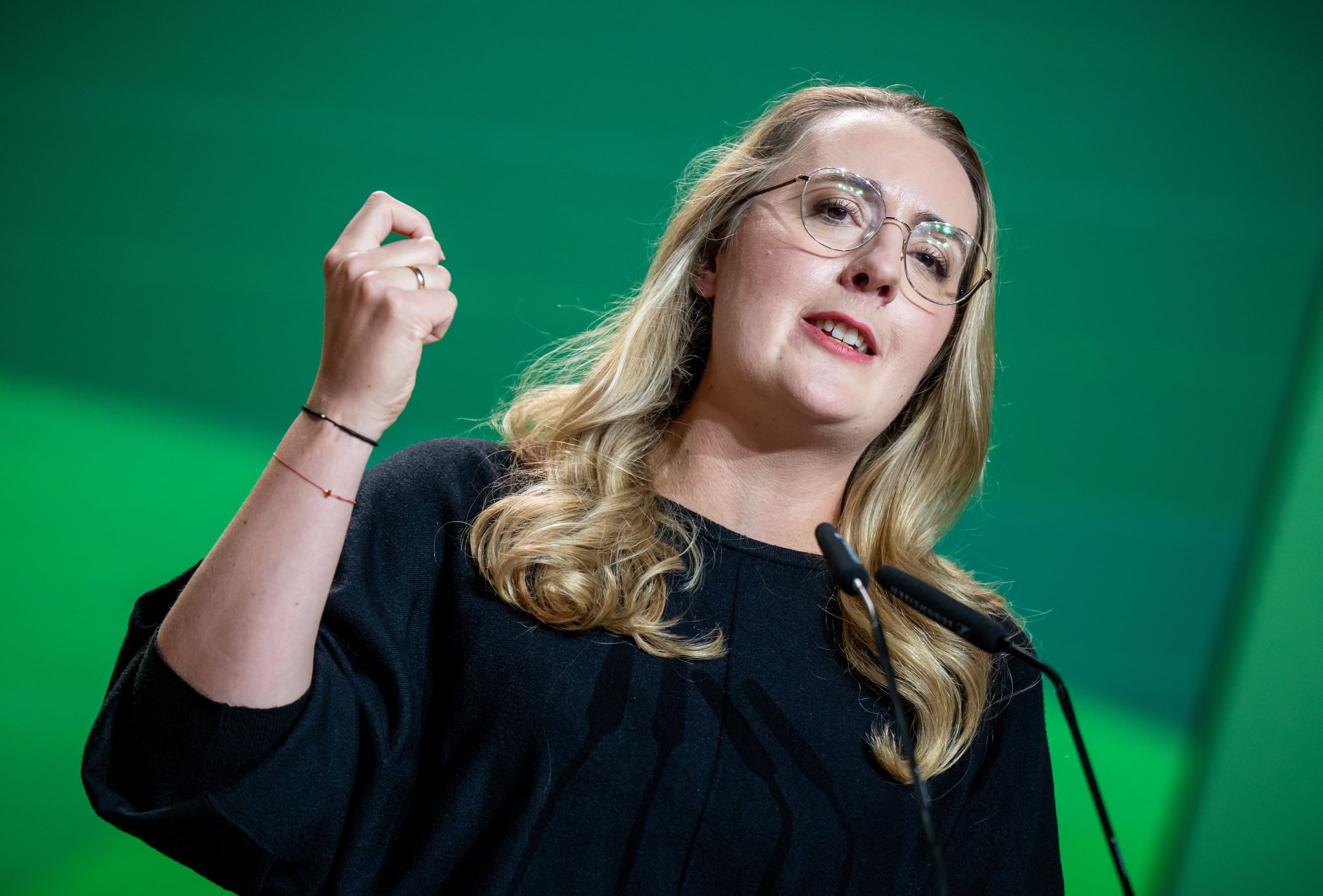
“We’ve had enough debates. This isn’t abstract science anymore; it’s our streets, our harvests, our very livelihoods burning,” declared Green Party co-leader, Annalena Baerbock, her voice crisp even through the haze of a Berlin heatwave. “The time for hesitant half-measures is simply gone. Germany, — and indeed all of Europe, must now grasp the full scale of this crisis. We can’t afford to be just reactive; we must be revolutionary in our response. And honestly, it’s a shame it took this kind of summer to get some people to finally pay attention.”
But political will, even in the face of literal infernos, isn’t a monolith. Fiscal hawks and industry lobbyists—they’re not entirely wrong to worry—are still sketching out the colossal costs of a swift transition. You’ve got to factor in jobs, global competitiveness, the sheer inertia of existing infrastructure. Finance Minister Christian Lindner, leader of the economically liberal FDP, while acknowledging the climate’s wrath, cautioned against hasty economic shocks. “While the imperative to adapt and mitigate is clear, we must ensure any transition is fiscally responsible and doesn’t destabilize our industrial core,” Lindner reportedly told reporters, maintaining his trademark stoicism. “Economic realism, you know, it’s not a luxury; it’s a necessity, even when the heat rises. We’re talking about livelihoods here, aren’t we?”
The numbers don’t lie, either. Germany’s critical Rhine river, for example—a bedrock for its industrial transport network—recorded water levels dropping to a mere 20 centimeters in some stretches. This cut cargo capacity by as much as 60% compared to typical volumes, according to federal waterways authorities, meaning everything from coal to chemicals got bottlenecked. That’s not just an environmental headache; it’s an economic migraine. It’s not dissimilar, in a twisted way, to the agricultural communities in Pakistan’s Sindh province, where a recent 53.5-degree Celsius heatwave withered crops and left countless struggling with water scarcity. They’ve been living this reality for years; Germany is now getting a taste of a future some would prefer to ignore.
Because the situation here—this whole “Europe’s scorched summer”—isn’t an isolated incident. It’s part of a broader, disconcerting pattern emerging across the globe. From melting glaciers in the Himalayas affecting Pakistan’s Indus River basin to the sweltering streets of German cities, climate disruption recognizes no borders. This forces Germany, and the wider European Union, to reckon with its international obligations and vulnerabilities more acutely. The interconnectedness isn’t just about trade; it’s about a shared atmosphere — and a common threat.
What This Means
This oppressive summer isn’t just about uncomfortable temperatures; it’s a catalyst. Politically, the Green Party gains considerable leverage, potentially forcing swifter, more radical policy shifts within the current coalition, especially on renewable energy targets and carbon pricing. For Chancellor Scholz, it’s a balancing act: placate a increasingly vocal Green base while reassuring business leaders wary of abrupt economic upheaval. His ability to thread this needle will define his political capital, possibly even the next election cycle. Economically, Germany faces a dual challenge: invest massively in adaptation infrastructure (think cooling centers, drought-resistant farming, resilient transport networks) and accelerate its decarbonization efforts to mitigate future risks. Fail on either front, and its economic stability—a given for generations—starts looking a lot less certain. And beyond its borders, this puts immense pressure on Berlin to lead a stronger, more unified EU climate policy, especially given the bloc’s recent bouts with extreme weather. It isn’t just about Germany’s fate; it’s about setting a global precedent, one way or the other, in a climate that shows no mercy.