


Gridiron’s Silent Architects: Dallas Exit Signals Deeper Economic Shifts
POLICY WIRE — Dallas, USA — When the grinding gears of a multi-billion-dollar enterprise shed a seemingly minor component, most barely register the hum. The flashy bits, the headline grabbers—they’re...

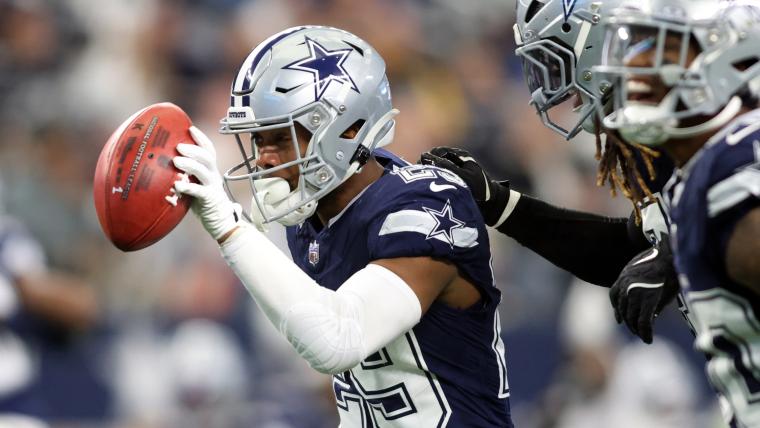
POLICY WIRE — Dallas, USA — When the grinding gears of a multi-billion-dollar enterprise shed a seemingly minor component, most barely register the hum. The flashy bits, the headline grabbers—they’re the story. But peel back the chrome, look inside the machinery, and you’ll find the grit, the often-anonymous labor that keeps the whole damn thing running. That’s the real narrative unfolding in Dallas, where C.J. Goodwin, a name few outside die-hard Cowboys fandom would recognize, recently slipped into retirement after 136 NFL games. His departure isn’t just a footnote; it’s a blunt lesson in the unseen economy of professional sports, a mirror to global talent markets.
Goodwin wasn’t the guy selling jerseys, that’s for sure. He was, however, the unyielding force—the captain—on special teams, that brutal, thankless ballet of high-speed collisions and forgotten triumphs. A Division II product, plucked from obscurity, he carved out an improbable decade in the world’s most hyper-competitive sport. Undrafted, unglamorous, he turned up for the Steelers, then Atlanta, a couple of games in Arizona, before finally landing with the Cowboys in 2018. He spent six seasons there, becoming a fixture. One hundred and eight of his 136 NFL appearances were in the star and silver, clocking over 2,000 special teams snaps against a mere 62 on defense, according to Pro Football Talk’s careful tabulations.
“Look, C.J. was the conscience of our special teams unit. He wasn’t chasing endorsements, he was chasing block points,” Jerry Jones, the notoriously hands-on owner of the Dallas Cowboys, stated, perhaps with a touch of calculated folksiness, when reached for comment. “Guys like him? They’re the real unsung heroes. They don’t fill highlight reels, but they fill stat sheets with plays that change field position, change games. And we’ll miss that leadership in the locker room.” It’s a sentiment easy enough to utter, harder to replace.
His story, if you squint, holds parallels beyond the artificial turf. Think of it: an individual from an ’emerging market’ (Division II football, in this analogy) struggling for recognition, finding his niche in a specialized, often overlooked sector of a global industry. He excels there, quietly. This isn’t dissimilar to highly skilled IT professionals from Lahore, Pakistan, or engineering graduates from Karachi, contributing significantly to multinational tech giants. They’re indispensable cogs, their expertise shaping outcomes, yet often a continent removed from the glamorous C-suite presentations and Silicon Valley hoopla. But don’t they enable the very same growth?
“You know, there’s an entire economic model built around players like C.J. Goodwin,” offered analyst Mitch Davison, a former NFL scout turned sports management lecturer. “Teams budget for a few superstars, sure. But the bulk of the roster, particularly for special teams, is a constant calculation of high-effort, low-ego, highly disciplined role players. They’re the shock absorbers, the energy suppliers. They keep the stars healthy and put them in positions to shine.” And when they’re gone, the ripples extend further than just who returns a kick next week.
The Cowboys, after all, weren’t signing Goodwin for his marketability. They signed him because he delivered a consistent, high-impact, though seldom celebrated, product. He wasn’t the flashy midfielder being targeted by European super clubs, like the targets of PSG’s latest multi-million euro whims. Nor was he a generational talent commanding attention from global sporting empires, as explored in the piece, “Riyadh’s Youth Grab.” Goodwin was the embodiment of the crucial, unromantic labor that props up athletic spectacle. His tenure proves that a certain value, a foundational necessity, exists far from the spotlight.
What This Means
Goodwin’s retirement, particularly for an organization as high-profile as the Dallas Cowboys, is a microcosm of a larger economic truth: the value of highly specialized, often underappreciated, labor. His exit isn’t merely about finding another special teams ace; it’s about acknowledging the hidden infrastructure that underpins visible success. Politically, this illuminates the quiet power of these specialized, ‘non-star’ contributors within massive organizations. Think about government bureaucrats, mid-level diplomats, or even technical specialists in critical industries – their departures can quietly, yet profoundly, destabilize operations, long before any public outcry. Economically, his career arc underscores the global reality that immense value often lies in niche expertise, far removed from celebrity wages or brand recognition. His story forces us to look past the marquee names and appreciate the deep bench of human capital that ensures the continuous, if imperfect, functioning of our most lucrative and watched institutions. Because without these architects of silent victories, the entire structure sags, whether it’s a football team, a national economy, or even geopolitical stability. And recognizing that truth? That’s paramount for any savvy policymaker, not just a frustrated general manager.