


Centrist Siren Song: Can Democrats Court Trump’s Base Without Losing Their Soul?
POLICY WIRE — Washington, D.C. — The Democrats, it seems, can never quite settle on their internal monologue. One moment, they&aposre chasing revolutionary zephyrs; the next, a prominent voice...

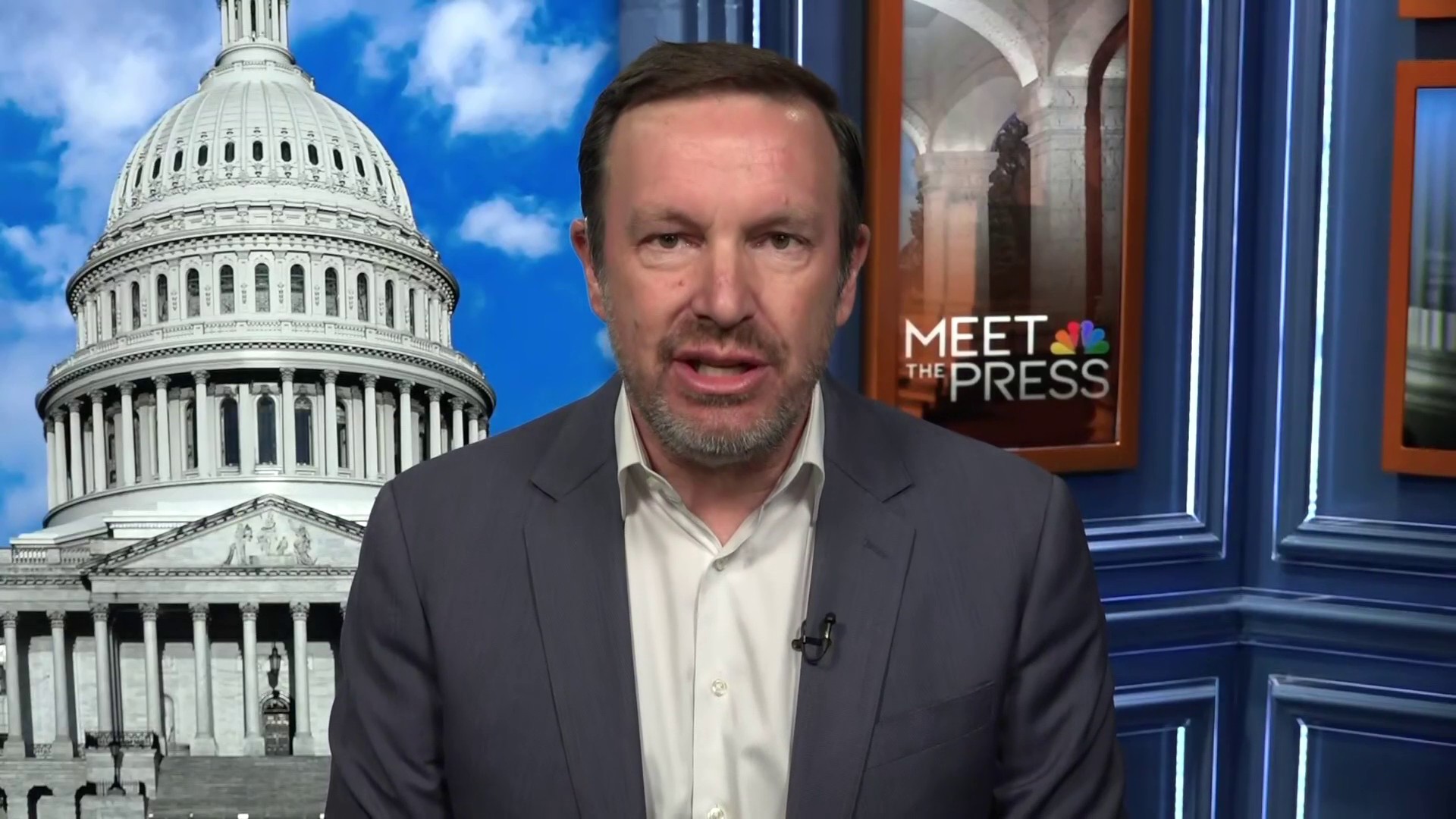
POLICY WIRE — Washington, D.C. — The Democrats, it seems, can never quite settle on their internal monologue. One moment, they&aposre chasing revolutionary zephyrs; the next, a prominent voice pipes up, advocating a pragmatic pull-back. This isn&apos’t new. But Senator Chris Murphy’s recent remarks — a kind of strategic hand-wringing—suggest the party&apos’s perennial identity crisis has hit another high note, a discordant symphony of inclusion and ideological purity.
It’s a peculiar thing, watching a political machine wrestle with its own definition. You’d think by now, with presidential cycles ticking by like frantic countdown clocks, the blueprint would be a little clearer. But here we’re. A senator from Connecticut, no less—a state often painted in broad, liberal strokes—has dropped a bombshell of political advice. He&apos’s suggested, rather bluntly, that the Democratic Party ought to accept voters who&apos’ve cast their ballots for Donald Trump. Not embrace Trumpism, mind you, but simply, the people. [QUOTE_PLACEHOLDER]
And what’s the counterpoint to this rather generous proposition? That the party should steer clear of embracing socialism. Now, that’s a spicy meatball, isn’t it? It frames the choice in stark terms: populism of the right, or populism of the far left. The subtle art of appealing to the vast, messy middle ground often feels like a forgotten scroll, collecting dust in the DNC archives.
But how, exactly, does one go about accepting the other side while simultaneously rejecting a significant—and vocal—segment of your own burgeoning base? It’s a tightrope walk without a safety net, an ideological gymnastics routine that few have mastered. The very phrasing itself, suggesting that Trump voters need to be "accepted" rather than simply won over, speaks volumes about the chasm the party perceives.
This internal friction, while appearing as a purely domestic American concern, reverberates well beyond U.S. borders. For nations like Pakistan, navigating a delicate balance between external alliances and internal stability, the perceived ideological instability of a key ally like the United States raises eyebrows. When America’s leading liberal party openly debates its core tenets—whether to mollify conservative voters or entertain progressive economics—it presents a less coherent international face. In a region where geopolitical shifts are constant and alliances can turn on a dime, Washington&apos’s internal debates are never just internal. They inform the calculus of states contemplating closer ties with rising powers, particularly when the foundational principles of Western democracies appear so contested.
Murphy isn&apos’t alone in this sentiment, of course. You hear whispers—sometimes screams—from strategists who&apos’re spooked by the "socialist" label, convinced it’s a vote-loser in all but the bluest districts. And statistically, they&apos’ve got some ground to stand on. A 2021 Pew Research Center study showed that among registered voters, 42% viewed socialism negatively, compared to 36% positively. That’s a fairly stark perception gap the Democrats grapple with, even as the younger generation tends to view it more favorably.
The Senator&apos’s advice cuts directly to the soul of the modern Democratic Party. It implies a kind of electoral triage, an understanding that perhaps chasing the farthest left flank has yielded diminishing returns in general elections. Maybe, just maybe, reaching out across the partisan divide, understanding the genuine frustrations that led millions to Trump, isn’t weakness but pragmatic strength.
But the counter-argument is just as loud: Abandoning progressive principles alienates the base, drains enthusiasm, and makes it harder to energize volunteers. It risks turning the party into "Republican-lite," an identity crisis of a different stripe altogether. They’re convinced that only bold, transformative ideas can capture the imagination—and votes—of a populace often feeling left behind by the established order.
It’s not just about ideology; it’s about strategy, plain — and simple. And frankly, it&apos’s about survival. The last few election cycles have been nail-biters. Democrats have, at times, struggled to convert popular policy ideas into widespread electoral success, especially down-ballot. Some of this has been attributed to an inability to connect with working-class voters, a segment traditionally Democratic, who&apos’ve increasingly felt ignored.
This discussion about electoral strategy and party identity holds significant implications for America’s role in the Muslim world, too. The nuances of U.S. foreign policy are often shaped by the ideological currents within its political parties. If the Democratic Party lurches too far left, focusing on what some perceive as abstract "social justice" issues at the expense of bread-and-butter economic concerns, it could affect its approach to international relations. It could be seen as detached from the practical realities faced by many developing nations, including those in the Muslim majority world, potentially impacting development aid, trade agreements, and even diplomatic approaches to regional conflicts. After all, if they’re struggling to comprehend the economic anxieties in Ohio, how might that translate to understanding the complexities of economic development in say, Pakistan or Bangladesh?
So, the Senator’s comments aren&apos’t just a talking point. They&apos’re a flashing red light on the dashboard of a party struggling to reconcile its ideals with its electability. It’s a moment of reckoning, whether they like it or not. The future, one suspects, will involve a whole lot more of this messy, sometimes contradictory, self-analysis.
What This Means
Senator Murphy&apos’s blunt assessment rips the band-aid off a chronic Democratic affliction: how to stitch together an increasingly diverse, often fractious, coalition. Politically, his intervention signals a strong, albeit unpopular in some circles, push towards centrism as a winning electoral formula. It implies a recognition that ignoring a large swathe of the American electorate, however ideologically unpalatable they may be, is a path to perpetual minority status. For the party&apos’s progressive wing, it&apos’s a cold shower—a direct challenge to the notion that the American public is ready for an outright socialist agenda. Economically, pivoting away from "socialism" (or the perceived threat of it) could be interpreted as a reassurance to moderate donors and segments of the business community, reducing anxieties about expansive government programs or radical restructuring of the economy. But there&apos’s risk: alienating younger, more progressive voters and activists who are crucial for grassroots mobilization. The choice isn&apos’t merely strategic; it&apos’s existential, forcing Democrats to weigh ideological purity against the naked pursuit of power.