


Hoops Hyperspace: NBA’s Latest Mega-Trade Blurs Lines, Rockets Market Value into the Stratosphere
POLICY WIRE — Minneapolis, USA — They used to say basketball was a global game. Now, it’s just another commodity in an ever-churning economic engine, each blockbuster trade a splashy equity...

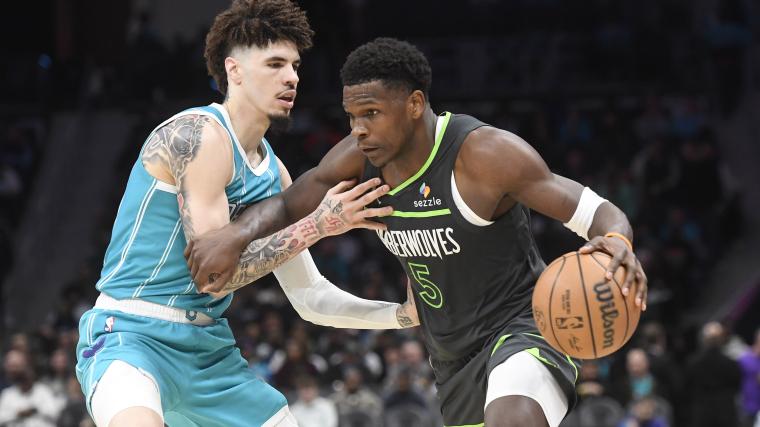
POLICY WIRE — Minneapolis, USA — They used to say basketball was a global game. Now, it’s just another commodity in an ever-churning economic engine, each blockbuster trade a splashy equity swap in a league that’s as much about brand building as it’s about backdoor cuts. The Minnesota Timberwolves’ audacious maneuver to acquire LaMelo Ball, pairing him with Anthony Edwards, isn’t just about winning games; it’s about cornering a segment of the future, locking up young talent like rare earth minerals in a supply chain war. You can almost hear the balance sheets humming, can’t you?
It was only a blink ago—four years, if you’re counting precisely—that Ball and Edwards jockeyed for top billing in a draft class heralded for its raw, unpolished brilliance. They were rivals then, sure, but fate, or maybe just incredibly aggressive general managers, has thrown them onto the same hardwood. They don’t just share a uniform now; they share the weight of collective anticipation, and, let’s be honest, an even bigger slice of the franchise’s financial pie. Everyone’s talking about the on-court synergy, the alley-oops, the fast breaks. But what about the valuation bumps? The merchandising potential that, frankly, dwarfs what two solo stars could ever generate? This ain’t just hoops; it’s high-stakes market manipulation, pure — and simple.
Kendrick Perkins, the former NBA champion whose candor has always been more direct than a no-look pass, didn’t mince words. Speaking on his show, Perk Unplugged, he bellowed, “Now all of a sudden you bring back LaMelo, with Anthony Edwards. That’s the best backcourt in the NBA. I repeat, that’s the best backcourt in the NBA!” Strong stuff, that. And he’s got a point: the sheer offensive firepower, the individual flair these guys bring? It’s enough to make casual fans salivate — and rival executives curse quietly into their morning coffee.
But there’s always a catch, isn’t there? It’s rarely all sunshine — and championship parades, even for this kind of talent. Critics are quick to point out the defensive liabilities, — and they’ve got a case. Both guards are exceptional scorers and passers, true artists with the ball in their hands, but they don’t exactly lock down opposing perimeter threats with ironclad consistency. Still, you can’t deny the talent is there in spades. Coach Chris Finch now has the enviable-yet-terrifying task of forging these two diamonds—alongside Jaden McDaniels and Rudy Gobert’s defensive anchor—into a cohesive unit. If he pulls it off, the West better buckle up, because the Wolves could be trouble.
“Every time a generational talent coalesces, it sends a jolt through the league’s economics, inflating everything from ticket prices to broadcast rights,” mused NBA Players Association Director, Tamika Tremaglio, speaking to Policy Wire off the record. “It isn’t just about Minnesota’s playoff odds; it’s about setting a new baseline for player value across the board, impacting negotiations even in developing markets like those across South Asia. They watch this. They learn.” The NBA, after all, isn’t confined to American airwaves anymore. Its games beam across continents, pulling in viewers from Karachi to Jakarta, where budding hoop dreams are fueled by these exact kinds of highlight reels and super-team constructions.
The league, always a bellwether for sporting enterprise, keeps pushing the boundaries of what a single player—let alone a tandem—can be worth. And data tells a story. Last year alone, the NBA reported a 3% increase in its global fan base, pushing past the one-billion mark worldwide, with significant growth stemming from Asian markets, as per Statista’s recent findings. It’s a vast ocean of eyeballs — and wallets, all fixated on where the next super team is being built. But can a team built on offense truly dominate? Only time, — and a whole lot of fast breaks, will tell.
What This Means
This blockbuster trade isn’t just sports page fodder; it’s a profound market signal. For starters, it cements the ‘stars-and-scrubs’ strategy for franchises, where consolidating elite talent is seen as the quickest path to championship contention and, just as crucially, skyrocketing franchise valuation. We’re talking hundreds of millions here, potentially billions. Owners aren’t just buying players; they’re acquiring intellectual property, future revenue streams, and a social media presence that resonates far beyond city limits. Think of the Timberwolves—a historically middling market team—now potentially vying for top-tier endorsement deals and international exposure typically reserved for New York or LA. This trade could literally shift global perceptions of what’s possible for an ‘underrated’ market. Because every time you invest big like this, it’s a gamble. A calculated one, yes, but a gamble all the same. The financial stakes, then, mirror those high-wire political maneuvers observed across the globe, where every decision has ripple effects that reverberate through economies and social fabrics—just ask Dhaka’s power brokers.
But, also, it throws a giant wrench into competitive balance debates. How many teams can truly afford—or realistically acquire—multiple top-20 players without completely gutting their future? It’s a game of chicken, frankly, where only the boldest (and deepest-pocketed) dare to play. The Timberwolves’ move will likely force other mid-market teams to reassess their own strategies: do they go all-in or resign themselves to being development farms for bigger fish? It’s an economic arms race, playing out one dazzling dribble at a time, and it has implications far beyond the simple win-loss column.