
Strait of Hormuz and the $40 Billion Question: Chokepoint or Economic Corridor?
The Iranian estimate of as much as $40 billion a year in potential revenue from reopening and future management of the Strait of Hormuz has spurred another debate about the future that could unfold...

The Iranian estimate of as much as $40 billion a year in potential revenue from reopening and future management of the Strait of Hormuz has spurred another debate about the future that could unfold in one of the world’s most significant maritime passages. The number has become the news, but the story is bigger. The shift in connectedness and power of control over “strategically important” channels of commerce, a global phenomenon, is taking place throughout the Middle East.
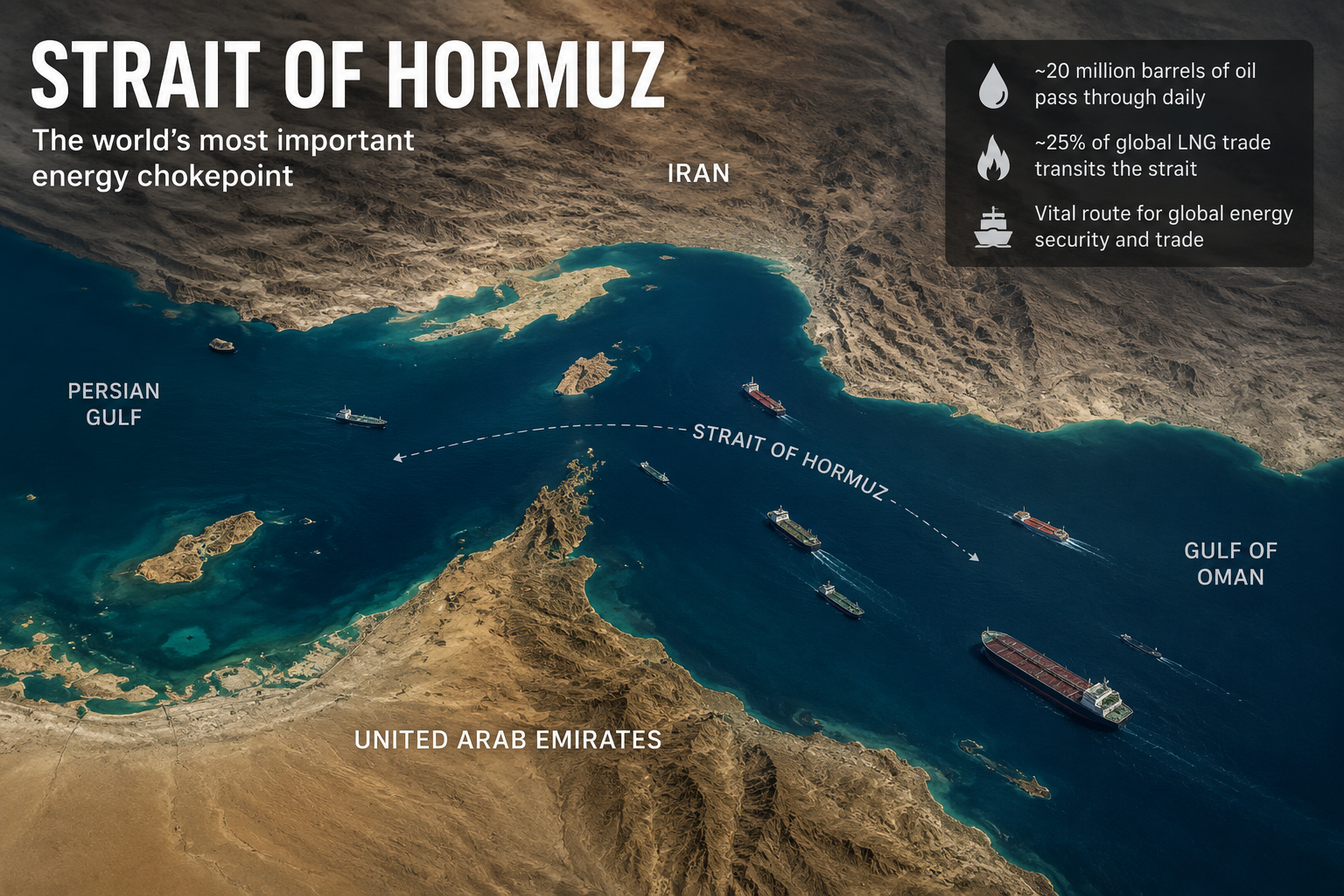
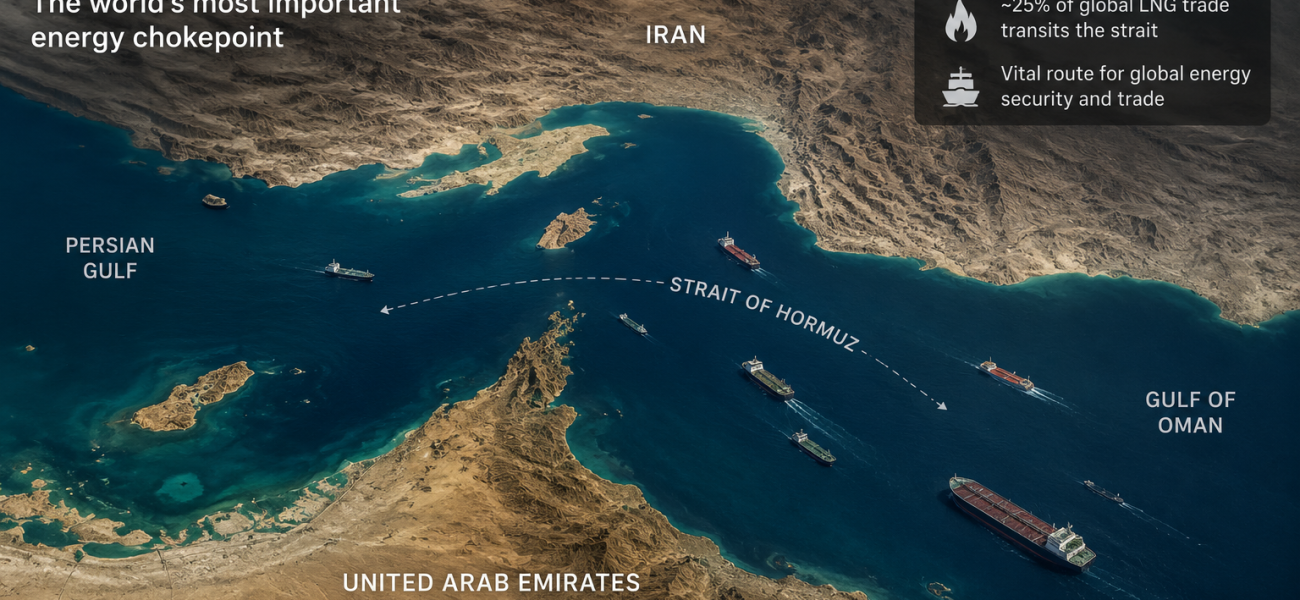
The Strait of Hormuz is still one of the world’s most vital waterways for its economic activities. While crude oil and petroleum products are transported through the strait every day, it is estimated that 20 million barrels do so, which is almost 20 percent of the world’s consumption of oil and petroleum products in this sea passage. A large proportion of the waterway, about 25 percent of the world’s liquefied natural gas trade, is also critical to the energy importing economies in Asia as well as elsewhere. The consequences are immediate if there were any disruption in Hormuz on shipping costs, insurance premiums, the price of commodities, market stability, etc
The discussion about the strait has been related to the security and risks related to regional tensions so far. However, the new reports have asserted this new strategy. The focus seems to be also on the economic benefits of stability, rather than on possible disruption. The idea is said to include maritime services, helping with navigation, environmental monitoring, shipping coordination, and more, by which funds could be raised and commerce kept unabated.
It’s not known if such goals are attainable. The proposal itself, however, is significant in that it clearly points to a reality of international relations that is growing in significance: geography is now becoming increasingly monetized. Throughout the globe strategic waterways have become important generating means for national revenue. For instance, through the Suez Canal, Egypt has earned billions of dollars every year and as a result, it has emerged as an important stream of foreign currency. Despite the smaller size of the Canal City, the Panama Canal remains pivotal to Panama’s importance. The examples indicate that critical transport corridors can offer geopolitical and economic relevance, besides the financial gains.
The situation of the Strait of Hormuz is much different. Hormuz is an international marine strait, and unlike canals built and operated by one state between others, it has complex political and legal aspects with multiple stakeholders. This is an unfortunate reality which would mean that in the future any administrative, logistical or security agreement would need a significant degree of coordination and international convention. This stretch has been by no means predictable, from vision to implementation.
But, the conversation takes place at a time of global trades being substantially reshaped. Governments and companies alike are paying increasing attention to the supply chain resilience. The fragility of important trade channels has been highlighted during pandemic and Red Sea disruptions and other geopolitical shocks. This has given policy makers a greater interest in safeguarding maritime corridors so they don’t have to wait to react to crises.
The economic risks are big. The Gulf countries as a whole export a large proportion of world oil and gas. It is a vital port for energy export nations such as Saudi Arabia, the United Arab Emirates, Kuwait, Iraq, Qatar and Iran. A few cds up when dealing with shipping could be huge game changers over the years. In previous times of uncertainty the insurance rates for vessels entering Gulf waters rose sharply, thus reflecting change of risk perception and effects on world trade.
The future of the Hormuz means special significance to major economies in Asia. Gulf energy plays an integral role in the industrial production and economic development of China, India, Japan and South Korea. These countries combine for a significant share of all energy demand. Thus, any project that helps to increase the predictability and stability of shipping would be sure to garner a lot of interest from investors and decision makers.
The announced figure of $40 billion is not a definite sum to be taken in isolation, but rather a gauge of the economic potential of one of the busiest energy corridors in the world. To secure revenues on that scale, there must be widespread participation by commercial shipping, international interest and a settled situation in the area. It would be a very complex process requiring economic, legal and diplomatic measures to be taken to achieve such conditions.
Of greater importance still, the discussion illustrates the regional shift of mindsets. The Middle East is now expected to be examined as a region not just in terms of its security dynamics, but also connectivity, logistics, infrastructure and trade. The regions governments are spending vast resources on infrastructure projects such as ports, transport networks, industrial zones and economic corridors to gain greater access to global trade. In such challenges, strategic geography has become an asset for growth and development for the economy.
Finally, the meaning of Iran’s reported $40bn vision for the Hormuz is less about actual numbers and more about the importance placed on the project by Tehran. Instead, the proposal evokes insight into the changing definition of power in the twenty-first century. In the age of trade routes, energy flows and supply chains, states that develop new pathways for economic growth have the ability to be more influential in future and meaningful ways
This will continue to affect the global energy landscape and regional dynamics in the Strait of Hormuz’s future. But the overall message goes beyond a single waterway. Today’s reality of interdependence is a world that is intricately tied to a nature of prosperity increasingly tied to stability, and a nature of strategic influence increasingly measured in a way beyond military prowess, but by a facilitation of commerce. It is not acceptable to say merely that the debated issue of the Hormuz isn’t only related to a maritime route; it’s connected with the new geoeconomic structure of the Middle East and will shape the decisions of the future Middle East.
Author