


Northern Ascent: Coach’s Caustic Charisma Fuels Canada’s Knockout Charge
POLICY WIRE — Inglewood, USA — Call it a home-away-from-home advantage, if you dare. Canada, ostensibly a co-host of this sprawling World Cup, kicked off its win-or-go-home odyssey not within its own...

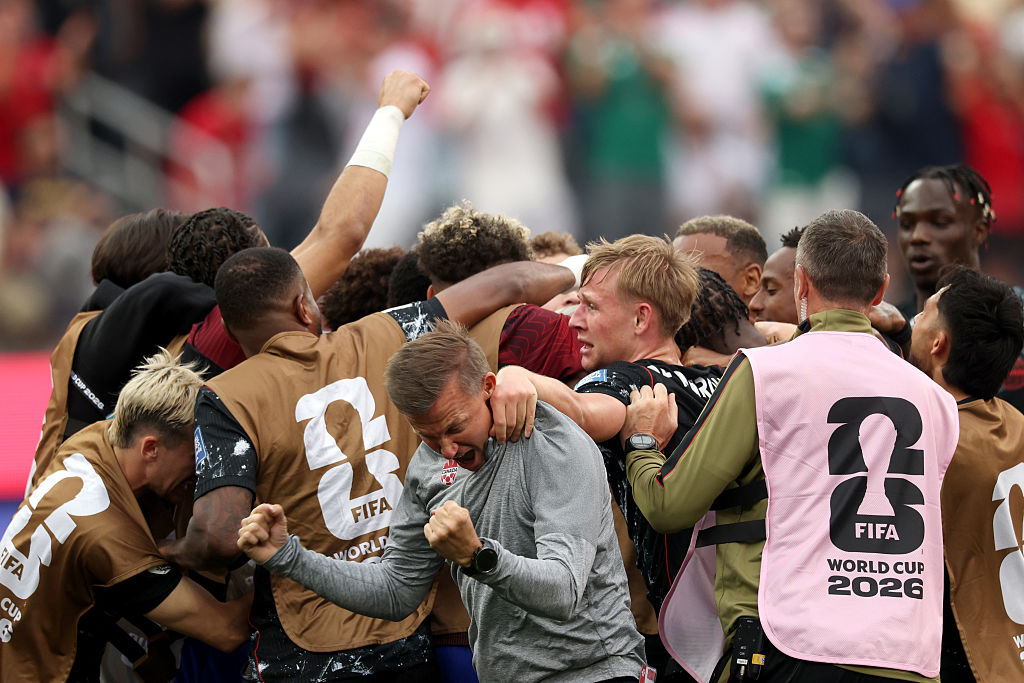
POLICY WIRE — Inglewood, USA — Call it a home-away-from-home advantage, if you dare. Canada, ostensibly a co-host of this sprawling World Cup, kicked off its win-or-go-home odyssey not within its own snow-dusted borders, but rather under the Southern California sun. It felt a bit backwards, didn’t it? Losing to Switzerland just meant an impromptu, cross-continent flight for a team that, let’s face it, hasn’t exactly made a habit of late-tournament appearances on the global stage. Yet, there they were, Canadian hopes and dreams packed into a charter, pulling off a cinematic victory that’s got everyone, including a famously outspoken American coach, talking.
It was a 1-0 squeaker against South Africa in the Round of 32—a true nail-biter if ever there was one. But you’ve gotta hand it to them; Canada sweated out a few more minutes after what might be the defining moment of their tournament thus far, and became the first team to advance to the Round of 16 in this World Cup. No more obtuse goal differentials or third-place math riddles. The straight, brutal truth of the knockout stages is here, demanding absolute conviction, a steady foot, and maybe, just maybe, a coach with a healthy dose of audacity.
And boy, does Jesse Marsch have audacity. All game long, Canada tried to dissect a resolute South African side that, frankly, looked content to pack the bus and push their luck. Canada doubled South Africa’s shot output, 12-6, but the ball just wouldn’t find nylon. Moïse Bombito’s header blocked. Tajon Buchanan’s rebound body-saved. A potential penalty for a violent tackle on Richie Laryea? The ref swallowed his whistle—a true professional courtesy, some would say. But Marsch? He nearly climbed into the stands, — and had to be restrained by Bombito himself lest he say too much to the officials. But then, as 90 minutes melted into stoppage time, it happened. A Canadian cross headed out, dropping right to Stephen Eustáquio at the top of the box. He took a touch, fired, and ping—inside the far post. Just like that.
And with that, history isn’t just knocking; it’s kicked the door clean off its hinges. On the field, Marsch didn’t mince words, calling his players [QUOTE_PLACEHOLDER]. He added, [QUOTE_PLACEHOLDER]. But for the first time, Canada’s standing amongst the last 16. It’s a huge deal. Alistair Johnston, a defender, got it right: [QUOTE_PLACEHOLDER]. It’s not just football; it’s an identity moment for a nation traditionally glued to hockey sticks, not corner flags.
Marsch, an American transplant imported specifically for this sort of World Cup alchemy, just inked a four-year extension, keeping him through 2030. He’s a firecracker, that one. And he’s already sparked a minor diplomatic kerfuffle by contrasting his Canadian squad’s anthem fervor to his past experience with the U.S. national team. Former U.S. star Clint Dempsey, predictably, took exception, sniping, [QUOTE_PLACEHOLDER]. Later, Tim Howard, a former player under Marsch, dropped a sharper observation about the coach’s character: [QUOTE_PLACEHOLDER]. Marsch, of course, isn’t backing down. After the South Africa win, he proclaimed, [QUOTE_PLACEHOLDER].
Now, Canada’s path winds toward a July 4th showdown in Houston against either the Netherlands or Morocco. Both are formidable, for very different reasons. Morocco, which became the first African and Arab nation to reach a World Cup seminal, certainly rates—its past success reverberates far beyond its borders, electrifying a vast swath of the Muslim world that yearns for such global athletic recognition. We’re talking populations from North Africa to the Indian subcontinent, where football fanaticism, even without Pakistan’s presence on the field, often feels like a national religion. The weight of that potential opponent is heavy, not just sporting, but cultural.
What This Means
This dramatic victory for Canada isn’t just about football; it’s a canny maneuver on the geopolitical pitch, particularly for a co-hosting nation aiming to project a certain image on the world stage. Think of it as a rather effective piece of soft power, drawing eyes and goodwill even as domestic political discourse often splinters over other matters. A collective sports triumph—especially when you’ve had to scramble across a continent to get it done—serves to momentarily unite, or at least distract, an otherwise diverse populace. Marsch’s comments about Canadian values, even if delivered with his trademark bluster, subtly weave into this narrative, positioning the nation as welcoming and understated—a stark contrast to certain neighbors. Economically, prolonged involvement in such a high-profile tournament boosts national pride, sure, but also potential tourism dollars and brand recognition for a host still feeling the rumble of opening ceremonies.
But the real juice is in the narrative. This World Cup run—however long it lasts—creates what one might call national folklore in real-time, fodder for future generations. For a relatively nascent footballing nation, it’s a big-time validation. It means greater engagement from sponsors — and domestic leagues down the line. And if they face Morocco, as they very well might, it means a global audience, stretching across continents, will be tuned in to a sporting contest that carries more than just three points. The stakes? They’re never just about the score line.