


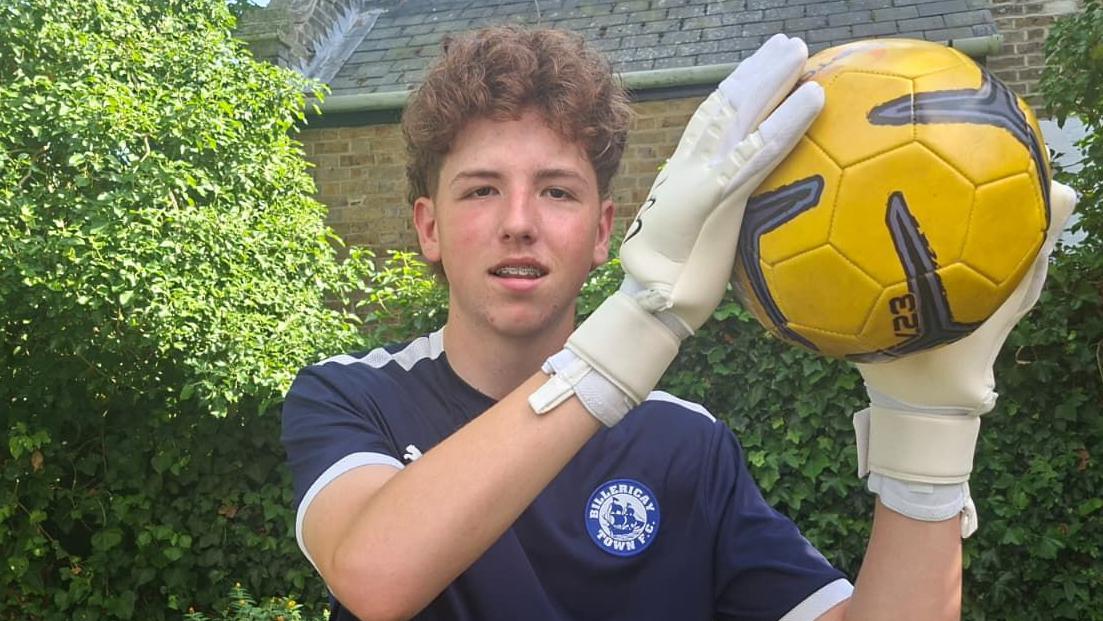
The Apprentice Afield: How Social Media Snagged a Teen Semi-Pro Coaching Gig
POLICY WIRE — London, UK — Forget dusty resumes and formal interviews; these days, your big break might just come via a direct message. A tale out of Essex is sketching out the evolving contours of...

POLICY WIRE — London, UK — Forget dusty resumes and formal interviews; these days, your big break might just come via a direct message. A tale out of Essex is sketching out the evolving contours of professional pathways—especially for the young guns. It’s about a 17-year-old college student, Freddy Soden, who’s not just dreaming of a career in football; he’s actively, hands-on, living it, coaching for a non-league outfit while his peers are still debating weekend plans. It’s a move that defies age, shuns traditional hierarchies, and screams ‘modern career arc’ louder than any LinkedIn seminar could.
Soden isn’t just some kid who got lucky. He got smart. He leveraged social media, shooting a message to Bowers & Pitsea FC, a semi-professional club near Basildon. That simple digital initiative caught the eye of manager Joe Flower. And what happened next is kind of instructive, isn’t it? Flower wasn’t deterred by the fresh-faced applicant. In fact, he found Soden to be “more than capable” — and “quite confident.” Imagine that. Instead of seeing a lack of gray hair, he saw moxie. Because, sometimes, that’s exactly what you need in the high-stakes, low-margin world of lower-tier football.
This young man, from Writtle, isn’t new to the hustle. He kicked things off—pun intended—by volunteering as a coach for his local club. It was part of his Duke of Edinburgh’s Award, a scheme known for fostering practical skills — and community service. But Soden wasn’t just ticking boxes. [QUOTE_PLACEHOLDER] he remarked. That’s commitment, pure and simple. Giving up playing to pursue coaching is a move few seasoned veterans would make, let alone a teen. It shows a laser focus, a self-awareness that some adults never quite acquire.
And he’s not resting on any laurels, not even for a minute. While he’s helping Bowers & Pitsea’s goalkeepers fine-tune their reflexes, he’s also burning the midnight oil on his college studies, training for official coaching badges, and working shifts at after-school clubs. When he spoke to BBC Essex presenter Jake Peach, he characterized his on-field approach as “high energy, but a modern approach.” A perfect blend, then. But he’s right: “Goalkeeping is a position that, like the sport itself, has changed so much in the last 10-20 years.” It’s not just about stopping shots anymore; it’s about being an integral part of build-up play, a field marshal behind the defensive line. And Soden seems to get that, intrinsically.
The manager, Flower, himself a secondary school teacher (which probably helped him spot latent talent), was willing to take a flyer on Soden. The side got back to training recently, and Flower liked what he saw, observing how Soden simply “cracked on” with it. [QUOTE_PLACEHOLDER] Flower said, before reiterating, “He’s more than capable to get on with it, and quite confident in what he does.” There’s no better endorsement than peer approval, especially from those you’re meant to be leading. And this is not some kind of charity gig, mind you. This is a paid gig. For a teenager. That’s no small feat in any economy.
Now, think about what this signifies beyond a local English football story. In places like Pakistan, for instance, where football—while often overshadowed by cricket—has a passionate grassroots following and a growing professional interest, such opportunities are still scarce. Aspiring coaches, young or old, typically face institutional hurdles, limited formal training structures, and the immense pressure of securing employment in a highly competitive job market. But Freddy’s story offers a subtle hint: digital outreach and demonstrated initiative can sometimes circumvent traditional barriers. It’s a meritocracy of access, powered by connectivity. According to Statista, as of January 2024, approximately 5.04 billion people around the globe use social media. That’s a lot of potential networking, a lot of talent waiting to be discovered, or—more often—waiting to proactively make itself known.
What This Means
This episode is less about football — and more about shifting paradigms in how individuals access professional spheres. Politically, it nudges at the increasing agency of individuals over institutions. Gone are the days when opportunities were solely brokered by established gatekeepers. Social media platforms, initially built for casual connection, have morphed into informal professional pipelines, bypassing—or at least augmenting—traditional recruitment. Governments — and educational bodies, globally, ought to be paying attention. Are they equipping their youth with the digital literacy and entrepreneurial gumption needed to navigate this new landscape, or are they still designing systems for an industrial age?
Economically, it underscores the rise of the ‘portfolio career’ and the valorization of passion projects, even when young. Freddy’s multiple commitments—college, badges, after-school clubs, and a semi-pro gig—isn’t just impressive; it’s illustrative of a generation forced, or perhaps inspired, to diversify their skill sets early on. The informal economy of passion is blossoming, enabling youth to monetize burgeoning talents without waiting for a formal invitation. For developing nations, say in South Asia where youth unemployment remains a pressing concern, this model could be instructive. It suggests that accessible digital platforms and a culture that champions initiative might, just might, offer pathways to professionalization that traditional, often bottlenecked, systems simply cannot provide. The democratization of opportunity, when properly nurtured, promises to redefine skill acquisition and career advancement across borders, one courageous direct message at a time. It also means we’re in a bit of a Transfer Market Mayhem, just on a much smaller, personal scale. And it’s not just a British phenomenon; it’s a mirror reflecting a similar Fever Pitch of ambition and digital-first strategies seen in dynamic economies from Seoul to Dhaka. Youth talent, it turns out, really is everywhere, — and increasingly, it’s just a click away from disrupting old norms.