

Transfer Market Mayhem: A Glimpse into Football’s Wild Economics, Echoes from the Bosphorus to Boston
POLICY WIRE — London, UK — Leon Goretzka, a seasoned professional of the sport, somehow found himself on the wrong team bus the other day—Ecuador’s, of all places. It’s a quaint little gaffe...

POLICY WIRE — London, UK — Leon Goretzka, a seasoned professional of the sport, somehow found himself on the wrong team bus the other day—Ecuador’s, of all places. It’s a quaint little gaffe that, in the grand scheme of football’s sprawling, multi-billion-dollar economy, should barely register. But what it does do is underscore the profound, almost farcical disjunction between the mundane realities of the game and the sky-high valuations, power plays, and geopolitical ripple effects that now define its market. These aren’t just athletic careers; they’re international commodities, — and the price tags? Well, they’re often an exercise in pure fantasy.
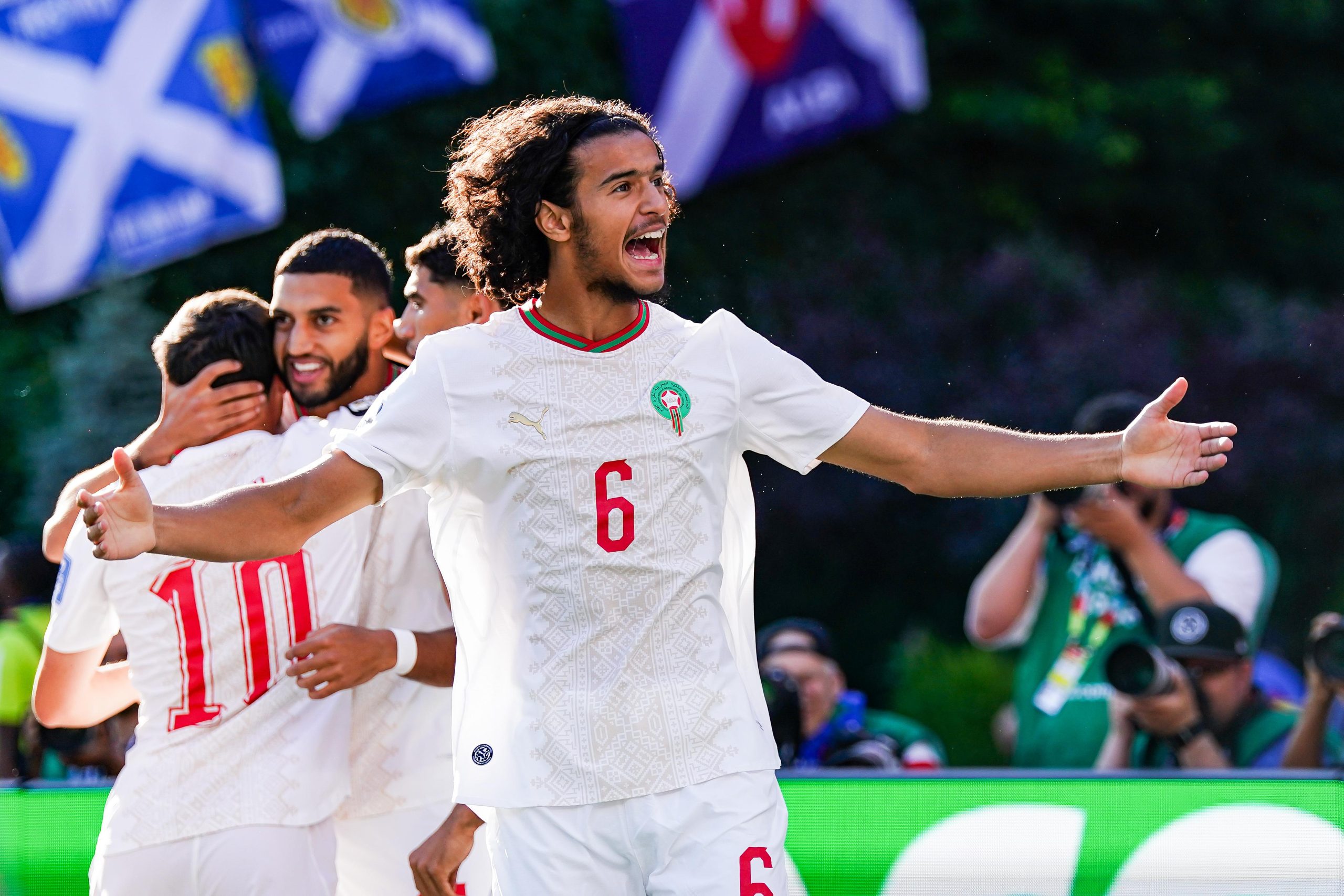
Consider young Ayyoub Bouaddi, the 18-year-old Moroccan midfielder who has seemingly cast a spell on Europe’s heavy hitters. But the cost for such promise, regardless of the dazzling footwork he displayed in Foxborough recently? Lille president Olivier Létang is demanding €80-100m. That’s an asking price so bold it practically redefines audacity, especially when it comes with a condition: Lille would prefer a sale with a one-year loan so that he can continue his development at the club. Imagine that kind of leverage in any other market—sell us your best young talent, but then give it back for a bit, polished and ready for later use. This is the rarefied air of top-tier football, where a teenager from Morocco can command figures that would make small nations blanch, forcing giants like Bayern Munich to engage in a high-stakes duel with Arsenal and both Manchester clubs for his signature. But securing Bouaddi would apparently take a lot of money — and cunning to get Bouaddi. For Bayern, it’s not just a talent acquisition; it’s a flexing of economic muscle in an increasingly cutthroat global arena. [QUOTE_PLACEHOLDER]
And then there’s the peculiar saga of Alexander Nübel, a goalkeeper whose market value, depending on which club you ask, seems to exist in entirely separate realities. Beşiktaş wants Alexander Nübel, but is falling about €7 million short of his current salary. The Istanbul club, hailing from a vibrant city in a significant Muslim-majority nation, offers a net salary of around five million euros, including potential bonuses. They also put up a respectable offer for a transfer: approximately five million euros in fixed transfer fees plus another five million euros in potential bonuses. Yet, Munich’s titans are unmoved. Bayern Munich have since received an offer of approximately five million euros in fixed transfer fees plus another five million euros in potential bonuses. However, the Munich club rejected the offer, as they’re currently demanding up to 20 million euros for Nübel’s transfer. It’s a classic stare-down, one that casts Turkey as the eager, yet financially constrained, suitor to a Western European giant intent on extracting maximum value, even for a player they clearly want to offload.
What makes this particularly sensitive is that many interested clubs have information that Bayern Munich want to sell Nübel as soon as possible. Yet, Bayern’s unwavering €20 million demand feels like an artificial floor, a testament to how even clubs trying to offload assets can dictate terms, even when other clubs with information about a team wanting to sell him perceive the asking price as exorbitant. This isn’t just about football, is it? It’s about perception, prestige, — and the unspoken power dynamics that echo in boardrooms across continents.
Meanwhile, the carousel spins faster. Trevoh Chalobah, once a target for Bayern Munich, now finds himself eyed by Como 1907. This Serie A surprise club, freshly minted for the Champions League, are offering €25 million for the defender, but Chelsea, with characteristic inflexibility, are reportedly demanding a transfer fee of €35 million. It’s an interesting tableau: a storied English club trying to squeeze every last euro from a burgeoning Italian counterpart, all for a defender who was part of England’s World Cup squad in North America after being called up as a late addition. One might say such steadfastness in valuation, even in the face of eager buyers, feels a lot like certain diplomatic postures in delicate international negotiations.
Elsewhere, Granit Xhaka — and Xabi Alonso are set to get back together at Chelsea FC. But and talk about a verbal agreement. Granit Xhaka — and Chelsea have already reached a full verbal agreement over a transfer. Personal terms have been fully agreed. Alonso is pushing hard to sign Xhaka, signaling the intricate human element that sometimes — just sometimes — overrides the raw economics. Over in Paris, contract talks for Bradley Barcola have stalled, putting Liverpool and Arsenal at the front of the queue. Manchester United, in a move that feels almost theatrical, are reportedly dreaming of signing Aurélien Tchouaméni as an ideal replacement for Inter Miami-bound Casemiro. And yes, PSG has been closely linked to Yan Diomande. If that move happens, Barcola could be eager to explore his future elsewhere. Every potential domino fall precipitates a cascade of opportunities and frustrations for players, clubs, and, perhaps more significantly, the countless betting markets worldwide where billions are wagered on these very whims. According to a recent analysis by Grand View Research, the global online gambling market, heavily influenced by sports betting, was valued at over $60 billion USD in 2023, with substantial growth projected.
The current global transfer market is less a straightforward exchange and more a geopolitical dance, albeit with less predictable outcomes. The fortunes of players from North Africa like Bouaddi, or the aspirations of clubs from places like Turkey, illustrate the uneven playing field that often dictates where talent lands and at what perceived cost. Pakistan, with its burgeoning interest in European football, observes these financial gyrations with keen interest. The vast sums exchanged, the stubborn negotiations over millions of euros, paint a vivid picture of a world where value is increasingly subjective, and where the spectacle often outweighs the pragmatic. It’s a dynamic that forces clubs like Besiktas, and by extension, their economies, to always negotiate from a position of relative constraint. The theatrical drama of valuations and rejections mirrors, in its own peculiar way, the high-stakes financial diplomacy seen on more conventional global stages. You can’t deny that, can you?
What This Means
This whole mess isn’t just about guys kicking a ball; it’s a stark, real-time indicator of economic clout and cultural soft power. Western European clubs, awash in broadcast deals and sponsorship, act as the de facto financial gatekeepers, setting astronomical price points for talent that emerging markets — whether in Eastern Europe, the Middle East, or even ambitious newcomers in Western Europe — often can’t meet. For countries like Pakistan, where global sports are deeply popular and offer a psychological escape, the economic disparity highlights the continued financial hegemony of the West. It reflects an ingrained inequality in the global sporting ecosystem. But because talent knows no borders, clubs must look beyond their immediate spheres. This push-pull generates economic activity, sure, but it also creates considerable resentment and often leaves clubs from less affluent nations perpetually fighting for scraps, or forced to accept terms that significantly undervalue their own investments. This mirrors global trade relations in startling ways, emphasizing how entrenched wealth dictates terms and how those aspiring to climb must pay an ever-higher premium for entry into the exclusive club. And it shows that sometimes, even for the rich, a mistaken bus can be a stark reminder that even the grandest spectacles have mundane, human frailties embedded within.
Catch up on other global spectacles and their political undercurrents, like the Fenway Fiasco and how Baseball’s Theatrical Collapse Echoes Political Spectacle, Pakistan Watches On, or learn about The Silent Wagering: Cricket’s Global Stage and South Asia’s Risky Wagers.