

Trump Issues Stern Warning to Iran: ‘I Will Do What I Have To Do’ If Deal Falters
POLICY WIRE — Washington, D.C. — A fresh chapter in the fraught relationship between the United States and Iran has begun with a mix of cautious diplomacy and r...

POLICY WIRE — Washington, D.C. — A fresh chapter in the fraught relationship between the United States and Iran has begun with a mix of cautious diplomacy and resolute warnings. US President Donald Trump stated firmly on Monday that he would “do what I have to do” should Iran fail to adhere to the terms of a newly minted interim agreement. His comments underscore the delicate balance of the deal — and the ever-present specter of escalating tensions.
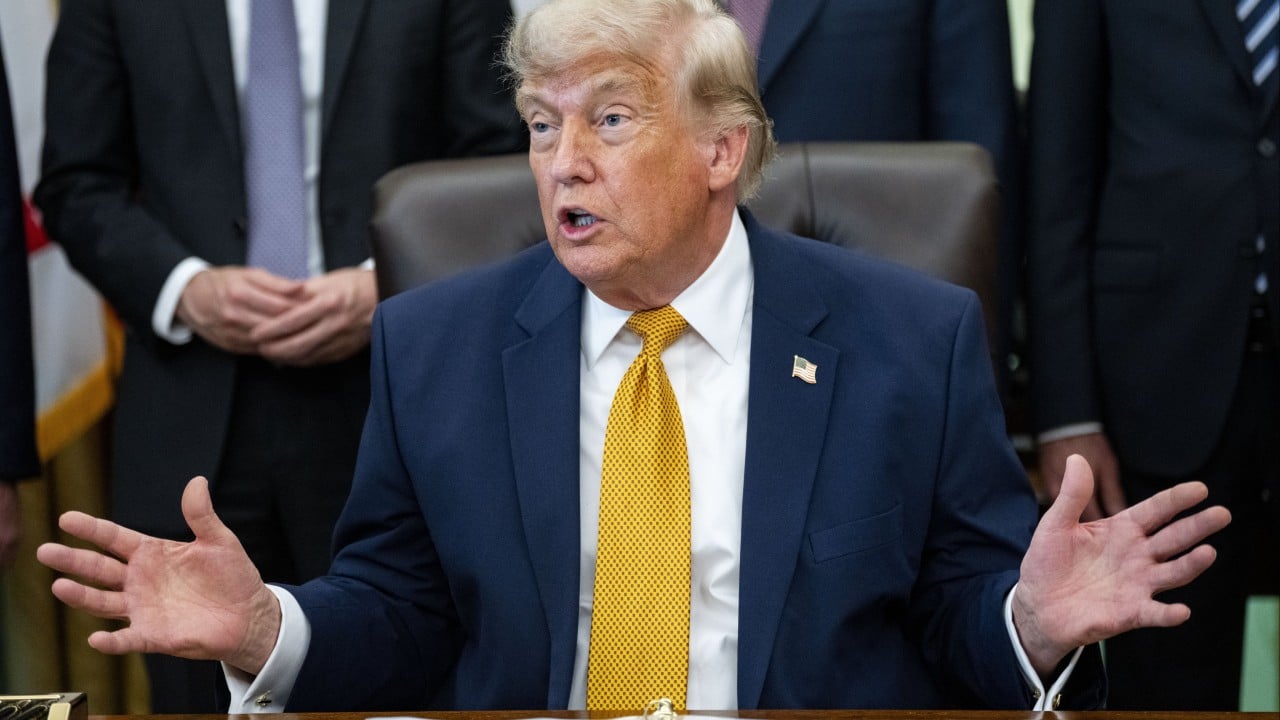
Speaking to reporters, President Trump elaborated on his stance: “If Iran doesn’t live up to their agreement, or if they’re not behaving, I will do what I have to do,” signaling a no-nonsense approach to the recently secured diplomatic arrangement. This declaration comes on the heels of what had been a particularly volatile period, marked by direct confrontations and a high degree of regional instability. (Reporting based on wire reports)
The interim US-Iran deal, which saw President Trump and Iranian President Masoud Pezeshkian put their signatures to paper just last week, emerged more than three months after a significant downturn in relations. This agreement follows a dramatic escalation that involved the United States and Israel launching attacks on Iran, which were met with retaliatory actions by Tehran against Israel and key Gulf states hosting American military bases. Such a backdrop imbues the current agreement with both urgent necessity — and inherent fragility.
The swift succession from overt hostilities to a diplomatic accord highlights the unpredictable nature of Middle Eastern geopolitics. The decision to pursue an interim deal, rather than a comprehensive long-term solution, often indicates an urgent need to de-escalate immediate conflicts while providing space for further negotiations. Such agreements are, by their nature, designed to be temporary but can be crucial in preventing wider conflagrations. Observers note that while these deals offer a pathway to peace, their success hinges heavily on the political will and adherence of all parties involved.
Historical context offers a telling perspective. US-Iran relations have been defined by periods of intense confrontation and fleeting rapprochement since the 1979 Iranian Revolution. Various administrations in Washington have grappled with Iran’s nuclear program, its regional influence, and its support for proxies across the Middle East. Similarly, Tehran has consistently sought to assert its sovereignty and project power, often viewing US actions as an attempt to undermine its geopolitical standing. This long-standing antagonism often makes even interim agreements significant achievements, if only for the temporary calm they provide.
President Trump’s warning serves as a reminder that the path ahead is not necessarily smooth, despite the recent signing. The phrase “do what I have to do” leaves ample room for interpretation regarding the potential actions the US might consider, ranging from renewed sanctions to military options. This kind of open-ended declaration is not uncommon in high-stakes diplomacy, aiming to keep pressure on the counterpart while simultaneously affirming a commitment to the agreed terms—provided those terms are honored.
For President Pezeshkian, entering into this deal amidst the recent clashes suggests a tactical decision to reduce immediate external pressures on Iran, allowing space for domestic policy focuses or recalibrating regional strategies. However, maintaining the terms of the deal while balancing internal hardliner sentiments and regional interests will undoubtedly be a challenge. The success of any interim agreement is not solely about signing; it’s about sustained, demonstrable compliance over time.
What This Means
The signing of an interim deal between the United States and Iran, following months of direct military engagement, marks a pivotal moment but by no means a resolution. Such agreements are frequently utilized as stop-gap measures to cool boiling temperatures and establish a minimal level of trust. President Trump’s immediate follow-up statement reinforces the conditional nature of this de-escalation; the ball is now squarely in Iran’s court to demonstrate its commitment to the agreement.
The effectiveness of this interim deal will likely be judged by its capacity to prevent further military skirmishes and lay groundwork for more substantive dialogue. Failure to uphold the agreement could rapidly unwind any progress made, potentially plunging the region back into a cycle of aggression, possibly even surpassing the intensity seen prior to the recent diplomatic overtures. Conversely, if successful, it could offer a rare window for both nations to explore avenues for a more durable peace, acknowledging that historical grievances and deep-seated distrust remain formidable obstacles. The current arrangement thus represents less a resolution and more a critical test of whether diplomatic pragmatism can genuinely prevail over decades of strategic rivalry.