


Postal Chief’s Mail-In Musings Spark Democracy Jitters
POLICY WIRE — Washington, D.C. — It’s not every day a delivery service becomes the linchpin of democratic trust. But here we’re. While pundits and politicians endlessly debate who said...

POLICY WIRE — Washington, D.C. — It’s not every day a delivery service becomes the linchpin of democratic trust. But here we’re. While pundits and politicians endlessly debate who said what about foreign adversaries or economic policy, a seemingly prosaic federal agency finds itself at the epicenter of a raging debate about election integrity. Who knew snail mail held such power? Turns out, plenty of folks did, especially when it concerns something as fundamental as who gets to vote and how their vote gets counted.
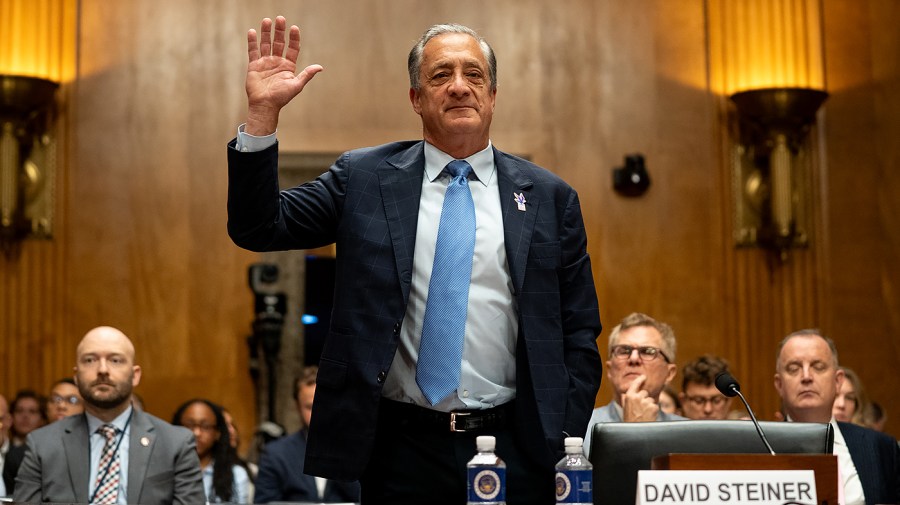
The latest commotion kicked off with the Postmaster General himself, offering up observations about mail-in ballots. It wasn’t just a logistical rundown, you see; it carried an air of skepticism, or maybe just practical realism, depending on who you asked. These remarks, even when framed as mere administrative foresight, have sent shivers down the spines of voting rights advocates nationwide. They’ve been on edge for a while now—and it’s not hard to see why.
What many might consider bureaucratic boilerplate quickly became a hot-button issue. Critics assert the postmaster general’s comments had a chilling effect, even if unintended. It’s not just about getting a letter from Point A to Point B anymore. No, this is about the integrity of the ballot, the cornerstone of our democratic exercise. It’s an entire segment of the electorate wondering if their vote, cast remotely, truly holds the same weight. It really is a big deal.
The back-and-forth isn’t new. This saga feels like a perpetual shadow boxing match—a clash between the perceived need for ‘election security’ and the fundamental right to ‘voter access’. Both sides, it seems, have legitimate concerns, but their solutions are almost always at loggerheads. One wants to tighten up, the other to open wide. But who loses when the public loses faith in the very mechanisms of democracy? That’s the real head-scratcher.
And it’s not just some abstract debate for the Beltway set. It reverberates far beyond the Potomac. Think about places like Pakistan, where election credibility is often debated with passion, — and sometimes, violence. The apparatus of the state, be it the Election Commission or even the mail service, plays an outsized role in perceptions of fairness. When officials managing the logistics of voting — say, delivering ballots — express reservations, it isn’t merely an administrative hiccup. It feeds directly into public skepticism, fueling narratives that can destabilize the entire process. Here in the US, while our institutions are historically more robust, cracks in trust can emerge quickly. If the guy in charge of sending your ballot seems unsure about it, you can bet a good chunk of the population will follow suit. Such perceptions have real consequences.
For example, around 46% of all ballots cast in the 2020 general election were cast by mail, a stark increase from 21% in 2016, according to the U.S. Election Assistance Commission. That’s a huge shift in voting behavior. When an institution responsible for nearly half of the vote distribution casts any shade of doubt on the process—whether by action or careless word—it impacts tens of millions of people. And it isn’t lost on observers elsewhere in South Asia that established democracies, too, grapple with managing institutional trust. Semantic warfare, after all, isn’t limited to international relations.
Advocacy groups didn’t mince words. They’re convinced this posturing aims to undermine public confidence in mail-in voting. [QUOTE_PLACEHOLDER] they might as well have shouted from the rooftops. They insist this type of messaging from a federal agency only provides ammunition to those already predisposed to distrust the outcomes—before a single ballot’s even counted. But maybe that’s the point, eh?
The postmaster general, for his part, often maintains that his comments are practical considerations for maintaining service. [QUOTE_PLACEHOLDER] or something to that effect. But in a highly polarized environment, every syllable from someone in a position of power gets dissected, parsed, and weaponized. This isn’t a civics class anymore; it’s political trench warfare, fought with talking points — and logistical details. And no, that’s not an exaggeration.
What This Means
The ramifications here stretch further than just the upcoming election cycle. This kerfuffle isn’t just about mail-in ballots; it’s about a deepening erosion of trust in the foundational elements of American governance. When a supposedly neutral body like the postal service, an entity practically synonymous with reliable delivery for generations, becomes enmeshed in partisan skirmishes, it weakens the public’s faith in all federal institutions. That’s a direct threat to stability.
Politically, this provides oxygen to those who seek to delegitimize election results before they’re even tallied. Economically, prolonged election uncertainty—which statements like these inadvertently fuel—can lead to investor hesitation, stock market volatility, and a general cooling of economic activity. Nobody likes uncertainty, least of all markets. Globally, America’s struggles to ensure smooth, unquestioned democratic processes give succor to authoritarian regimes, allowing them to point to Western democracies as fractured and failing, eroding the moral authority that the US has, however imperfectly, tried to project. This isn’t merely domestic theatre; it’s a scene on a global stage. This incident, while specific, embodies the greater challenge of maintaining democratic health in an era of relentless scrutiny and calculated skepticism.