

Kremlin Concedes ‘Deficit’ as Drone War Ignites Russia’s Energy Lifelines
POLICY WIRE — Moscow, Russia — It isn’t often that the Kremlin boss concedes an economic wobble, much less one directly tied to an ongoing military campaign. Yet, here we’re: President...

POLICY WIRE — Moscow, Russia — It isn’t often that the Kremlin boss concedes an economic wobble, much less one directly tied to an ongoing military campaign. Yet, here we’re: President Vladimir Putin himself recently admitted Russia was grappling with a ‘certain deficit’ of fuel. A stunning confession, it wasn’t a sudden, unforeseen blow—it’s the direct, burning consequence of Kyiv’s calculated, persistent campaign to throttle Russia’s energy muscle. Drone strikes have become Ukraine’s grim, effective long-range sanction, and their echoes are now felt deep within Russia’s domestic economy.
For months, Kyiv has systematically chipped away at Russian energy infrastructure. They’re not just sending messages; they’re burning the source material of Russia’s war machine. And it’s working. These attacks have already caused widespread shortages — and left many regions scrambling with rationing at the pump. Western analysts suggest this isn’t just about domestic inconvenience either; it has also slowed Moscow’s efforts on the battlefield, piling pressure on the Kremlin to come to the negotiating table. [QUOTE_PLACEHOLDER]
Ukrainian President Volodymyr Zelenskyy, in a public statement via Telegram, wasn’t subtle about the strategy. ‘Our long-range sanctions reached two oil refineries in Russia,’ he wrote on Sunday. And he got to the crux of the matter: ‘Each (strike) means a reduction in the resources that fuel the Russian war machine, and another step toward peace.’
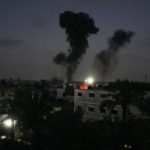
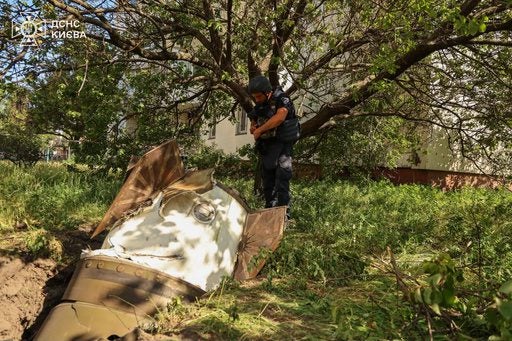
It’s an escalation, alright. The most recent incident saw debris from downed Ukrainian drones igniting a significant blaze at the Slavyansk-na-Kubani refinery, nestled in Russia’s Krasnodar region, east of occupied Crimea. The sheer scale of what’s targeted isn’t trivial; that specific facility is a big deal in southern Russia, processing ‘close to 4 million tons of crude per year’, according to its operator’s website. It also funnels key petroleum products—fuel oil, naphtha, marine fuel—for export via Black Sea ports, which, let’s be honest, matters way beyond Russia’s borders. The disruption doesn’t just hit Russian consumers; it ripples through global energy supply chains.
This isn’t merely about knocking out a few pipelines or tanks. Kyiv’s aim is to make the economic cost of the conflict unavoidable for the average Russian. You don’t often hear a sitting head of state speak about offers of de-escalation quite like this. Putin told a Russian state TV reporter that Ukraine’s attacks are an attempt to ’cause a split in Russian society and force Russia to halt, even if only briefly, the advance of our troops along the line of contact, and create conditions for launching a negotiation process on terms advantageous to our adversary.’
He’s sticking to his line, mind you. ‘We won’t give them that chance,’ he insisted. he argued, ‘strikes on our infrastructure, wherever they’re directed, have absolutely no effect on the situation at the front, on the line of contact.’
But the numbers — and the public comments tell a different story, don’t they? He spoke for the first time about Ukraine proposing a halt on deep strikes, claiming Kyiv did so because Russian strikes into Ukrainian territory are more powerful and devastating. Kyiv even offered to limit fighting to the four regions Russia annexed but never fully captured. He batted it down, saying it’d just allow Ukraine to reshuffle forces. Classic strongman talk, but the underlying concern for domestic stability is plain for anyone to see. They’re struggling to control the narrative when citizens can’t fill their gas tanks.
Then there’s the talk of imports to mitigate the ‘temporary deficit’ — and quickly repairing damaged facilities. And Russia’s Deputy Prime Minister Alexander Novak publicly stated that Moscow is reviewing fuel export agreements to protect domestic needs. Imagine that: a major oil exporter like Russia talking about import options and cutting exports for domestic consumption. But that’s the current reality for a nation finding its logistical backbone under sustained assault. They’ve also seen gasoline sales suspended for civilians in Crimea last weekend, following earlier Ukrainian attacks.
The governor of Irkutsk, deep in Siberia, has had to implement rationing—a paltry 50 liters (about 13 gallons) per vehicle, per day, at state-run stations. This isn’t a localised skirmish anymore; it’s an economic pressure cooker building nationally.
What This Means
This escalation—and the Kremlin’s frank acknowledgment of a ‘deficit’—carries significant weight beyond Russia’s immediate borders. For the international community, it underscores the unpredictable nature of energy markets when geopolitical conflicts metastasize. Consider the broader region; countries like Pakistan and those across the Muslim world in South Asia and the Middle East are highly susceptible to global oil price volatility. Many are net importers, their economies intricately linked to the stability of energy supplies — and predictable pricing.
A disruption in a major producer’s domestic supply, even if localized, can ripple outwards, contributing to global price hikes or trade route uncertainty. This situation, therefore, isn’t just about Ukraine’s tactical victories; it’s a stark reminder of how kinetic warfare, particularly when targeting vital infrastructure, can indirectly impact global economic stability. the long-term implications for Moscow’s relationships with its traditional energy partners, some of whom are in this same Muslim world sphere, remain to be seen. If Russia can’t reliably supply its own population, its export promises might face renewed skepticism.
Putin’s stated intent to ramp up air defense production and speed repairs indicates a scrambling effort—a clear response to a sustained and successful Ukrainian strategy. It’s a concession wrapped in bravado, a situation where the political theatre plays on while the reality of fuel lines becomes a tangible symbol of a war far from won. The domestic discontent born from these shortages could yet prove a formidable challenge to Moscow’s grip on the war narrative. And because they’re relying more and more on rhetoric, while their ground truth is changing, it shows a subtle but impactful shift. The energy war is heating up in more ways than one.