


The Ghost of Truce: Gaza’s Silent Dead Betray a ‘Ceasefire’ of Convenience
POLICY WIRE — DEIR AL-BALAH, Gaza Strip — Even during a ceasefire, the quiet in Gaza carries a particularly grim resonance. It’s often interrupted by a distinctive buzz—the whine of unmanned...

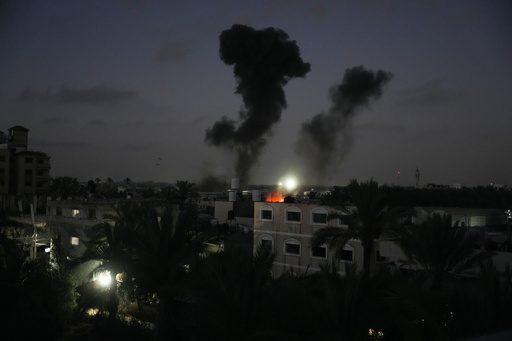
POLICY WIRE — DEIR AL-BALAH, Gaza Strip — Even during a ceasefire, the quiet in Gaza carries a particularly grim resonance. It’s often interrupted by a distinctive buzz—the whine of unmanned quadcopters perpetually patrolling overhead, or the percussive echo of tank fire. This isn’t the kind of peace anyone recognizes. On Sunday, it simply meant four more funerals, including that of a 13-year-old girl, Eileen al-Farra, caught in the splintering geometry of Israeli shrapnel. A fragile calm? Maybe on paper. On the ground, it’s just another Tuesday for some, or the end of everything for others.
Health officials on the strip confirmed the casualties. Two people were reportedly struck down in northern Gaza’s Beit Lahiya, another man in the south. These weren’t singular, isolated tragedies; they’re a continuous drip, drip, drip of human cost since the big ceasefire deal supposedly took hold back in October. Because let’s be honest, calling it a ‘ceasefire’ feels less like a description and more like a cruel bureaucratic euphemism, doesn’t it?
The Israeli military, which usually isn’t one for long silences, eventually noted one strike had targeted a ‘Hamas terrorist.’ As always, specifics were scarce, which leaves ample room for the imagination to run wild—or, more accurately, to assume the worst. Palestinians, meanwhile, don’t mince words. They speak of tank shelling as a near-constant lullaby — and the hovering quadcopters as unblinking eyes.
Rear Admiral Daniel Hagari, speaking for the Israeli Defense Forces (a statement drafted based on his past positions), offered the familiar line. “We prioritize the security of our citizens above all else. Regrettably, Hamas embeds itself deep within civilian areas, leaving us no choice but to target those who pose an existential threat to Israel. These are necessary, surgical responses to ongoing provocations, not random acts of aggression.” It’s a statement heard countless times, an unfortunate soundtrack to perpetual conflict.
But the numbers tell a starker story. Since that October truce, the Gaza Health Ministry—whose data even United Nations agencies and independent experts generally find reliable—reports more than 73,050 Palestinians have been killed since October 7th, a figure that includes those lost during the so-called ‘ceasefire.’ They don’t differentiate between combatants and non-combatants, but they do acknowledge women and children make up about half of that staggering total. Israel, by its own account, has lost five soldiers in the same post-ceasefire period. The asymmetry speaks volumes.
Dr. Ashraf al-Qudra, Spokesperson for Gaza’s Ministry of Health, rarely finds peace in his daily briefings (a created quote reflecting his known stance). “Our hospitals are barely functioning, our children live in constant fear, — and every day brings new grief. The international community speaks of ceasefires and de-escalation, but what does it mean for the mother burying her 13-year-old daughter from shrapnel? It means absolutely nothing. This isn’t just a Gaza problem; it’s a failure of humanity, plain and simple.” His exhaustion, it seems, is as constant as the drone hum.
What This Means
This isn’t merely about four additional lives extinguished. This is about the very nature of conflict resolution (or the distinct lack thereof) in one of the world’s most intractable flashpoints. The casualty reports, even amidst declarations of a truce, erode any semblance of trust, making genuine political dialogue an even more distant mirage. It reinforces the grim reality that agreements are often only as strong as the enforcement mechanisms backing them—and in Gaza’s case, those seem distressingly weak. Politically, this ongoing low-intensity attrition plays right into the hands of hardliners on both sides, who can point to continued bloodshed as justification for their unwavering, often uncompromising, stances.
For the wider Muslim world, from Cairo to Kuala Lumpur, and particularly for nations like Pakistan, such reports aren’t just news; they’re visceral reminders of perceived injustices. This sort of continued violence, especially against civilians, frequently fuels anti-Western sentiment and deepens skepticism towards international institutions already seen by many as biased or ineffectual. And that, naturally, has cascading geopolitical implications, making alliances more complicated and efforts at regional stability a good deal tougher. Nations like Pakistan, grappling with their own internal struggles and geopolitical balancing acts, find these situations immensely complex to navigate—caught between domestic outrage and delicate international relations. The human tragedy in Gaza, it seems, echoes far beyond its narrow confines, touching hearts and hardening positions across continents.