


Passing the Torch: Wizards’ Dynasty Building Reflects Broader Political Succession Dynamics
POLICY WIRE — Washington, D.C. — It isn’t often that the seemingly frivolous realm of professional athletics offers such clear, stark parallels to the sober mechanics of political or corporate...

POLICY WIRE — Washington, D.C. — It isn’t often that the seemingly frivolous realm of professional athletics offers such clear, stark parallels to the sober mechanics of political or corporate succession. Yet, the recent coronation of rookie AJ Dybantsa by the Washington Wizards—with a curiously familiar imprimatur from a retired star—paints a rather insightful picture of how institutions, be they states or multi-billion dollar franchises, attempt to manage the thorny transition of power, charisma, and public expectation. The process, always delicate, often reveals more about the architects than the heir apparent.
John Wall, the franchise’s erstwhile luminary, now an elder statesman within the organization, has found himself in an intriguing position. Sixteen years after he himself occupied the coveted top spot in the NBA Draft—a veritable king-in-waiting for a capital city desperate for one—he now observes the ascendancy of another. But the path to acceptance wasn’t entirely straight. Wall, it seems, harbored a mild preference, thinking Darryn Peterson was the pick before the Wizards picked AJ Dybantsa. This subtle, almost imperceptible hesitation from a figure meant to shepherd new talent is precisely the kind of micro-drama that plays out across all scales of influence, from a city council endorsement to the shifting allegiances within a political party preparing for a new leader. [QUOTE_PLACEHOLDER]
Because, despite his initial thoughts, Wall’s current demeanor is nothing if not magnanimous. He’s pivoted, you see, now engaged in the essential duty of welcoming the newest face of the franchise. It’s an exercise in brand continuity, yes, but also a rather pragmatic acknowledgment of a changing guard. He told Dybantsa in a vlog: Get in the middle man, this is your spotlight, you’re the new number one, I’ve been cut. One imagines similar, perhaps less poetic, sentiments exchanged behind closed doors when a long-serving politician steps aside for a fresh, polls-tested contender. The personal preferences are swallowed by the institutional imperative.
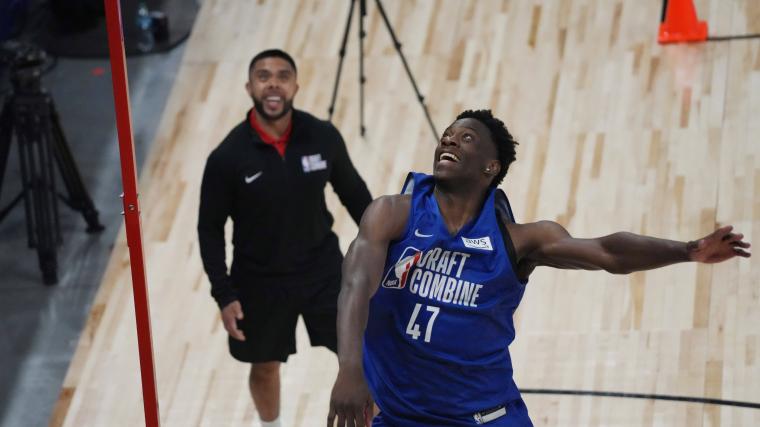
Dybantsa, a rookie out of BYU, enters this crucible bearing the considerable weight of expectation. He’s primed for a big-time rookie season for the Wizards, touted as one of the most promising prospects in recent memory. And why not? A natural-born scorer with elite physical traits, he represents an infusion of fresh capital into a team always seeking a new trajectory. His arrival signals a renewed investment—both financial and emotional—into the future, a hope that the old guard’s era will gracefully blend into a new one. It’s a dynamic common in nations striving for modernization while grappling with ancestral structures; new talent arriving with fanfare, old hands lending a guiding, sometimes scrutinizing, touch.
The Wizards’ approach to this generational hand-off—using former stars as team representatives, fostering an environment where mentorship is visibly prized—isn’t merely good PR. It’s a calculated effort to institutionalize legacy, to demonstrate to younger players that loyalty extends beyond their playing years, creating a sense of organizational belonging. For example, a franchise like the Los Angeles Lakers has mastered this, turning former legends into lifelong ambassadors. Contrast this with some nascent political parties in developing nations, where institutional memory is often fleeting, loyalties transactional, and the absence of a ‘wise elder’ figure can lead to frequent, disruptive leadership purges. The continuity the Wizards exhibit here is quite encouraging to see for the younger players like AJ, implying a long-term strategic view often elusive in more volatile environments.
In fact, the financial stakes in this particular succession are hardly negligible. The average NBA player salary for a number one overall draft pick hovers around $8 million for their rookie season, according to data from Spotrac, escalating significantly with performance bonuses and extensions. This investment underscores the high-risk, high-reward nature of cultivating new talent, a wager that the human capital will pay dividends for the organization’s competitive standing and, by extension, its bottom line. It’s a precise economic gamble, as careful as any government’s budget allocation for future infrastructure projects. But when it works, when a Wall gracefully yields to a Dybantsa, everyone stands to benefit.
What This Means
This apparently straightforward passing of the basketball torch within the Washington Wizards franchise holds deeper resonance than a mere sports anecdote might suggest. It reflects, in microcosm, the complex interplay of power, legacy, and succession that underpins larger political and economic institutions. In an era where trust in established structures often wavers, the visible, deliberate transfer of leadership from a respected veteran like John Wall to a burgeoning talent like AJ Dybantsa sends a clear message: the institution endures. But it also relies on an often-unseen choreography, a delicate balance between respecting the past and embracing the future.
Economically, the selection of Dybantsa as the first overall pick represents a substantial, strategic investment. The potential for a single player to revitalize a team’s brand, drive ticket sales, and unlock lucrative endorsement deals is immense, echoing how a strong, charismatic leader can elevate a nation’s global standing and attract foreign investment. From Islamabad to Jakarta, nations wrestle with how to cultivate new leadership, ensuring stability while also adapting to new global realities. Pakistan, for instance, has long seen political succession often entangled with dynastic legacies or military endorsements. The challenge, much like a struggling basketball franchise seeking its next star, is finding an individual who can not only perform but also unify diverse stakeholders and inspire confidence. It’s not just about raw talent; it’s about a calculated succession plan that aims for long-term viability—a goal that eludes many a burgeoning economy or fractured political landscape.
This dynamic also illustrates the enduring power of mentorship and institutional memory, concepts that are frequently idealized but rarely executed with such visible effect. The willingness of the older generation to step aside, or at least share the spotlight, is a marker of maturity for any organization, governmental or otherwise. The subtle endorsement, or even an initial reluctance followed by acceptance, from figures like Wall can lend immense credibility to the new leadership, making the transition smoother for all involved. This can be critical, for example, in managing political transitions in complex regions; look at the challenges faced by transitioning democracies where institutional memory is weak and the old guard feels displaced, as chronicled by reports like Dhaka’s High-Wire Act. What appears to be simple sports entertainment is, in fact, a fascinating case study in organizational stewardship.