


The NBA’s Invisible Architects: Tracy Moore and the Quiet Grind of Professional Sports
POLICY WIRE — Houston, United States — It’s a strange sort of immortality, isn’t it? To have your name etched, however fleetingly, into the institutional memory of a sporting franchise not for heroic...

POLICY WIRE — Houston, United States — It’s a strange sort of immortality, isn’t it? To have your name etched, however fleetingly, into the institutional memory of a sporting franchise not for heroic deeds, but for merely occupying a jersey number. We celebrate the luminaries, the ones whose names become synonymous with an era, whose jerseys are hoisted to the rafters. But what of the others? The silent majority, the ones who clocked in, put in their time, — and then quietly, almost imperceptibly, moved on?
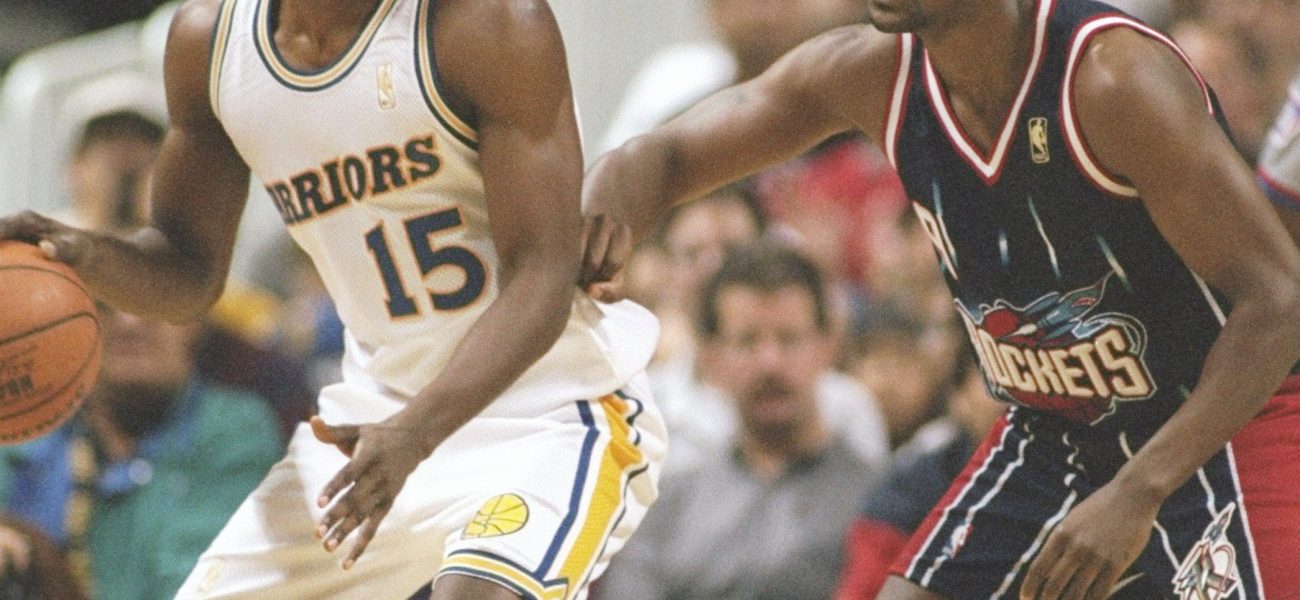
Tracy Moore, for example. The name might not spark instant recognition, even among ardent Houston Rockets faithful. And why should it? His tenure, a brief two seasons from 1996 to 1997, wasn’t designed for highlight reels or championship parades. He was a professional, a workmanlike guard, part of the transient population that defines the brutal arithmetic of high-stakes sports.
Moore’s journey to the Rockets’ No. 20 (and briefly No. 9, mind you) was itself a testament to pure grit, not preordained stardom. Undrafted out of Tulsa in 1988, he toiled in lesser leagues—a common enough fate—before finally breaking through with the Dallas Mavericks in ’93. He played, he scored a bit, then drifted to Detroit, only to circle back to Houston for his final professional curtain call. These weren’t superstar salaries, folks. These were livelihoods, built on hustle — and opportunity, snatched from a brutal marketplace.
His stats for the Rockets? Hardly eye-popping. He averaged a modest 5.4 points and 1.4 rebounds per game during his time in a Houston uniform, according to Basketball Reference. Numbers like that rarely grace prime-time broadcasts. They’re the background hum, the reliable click of the turnstile rather than the crescendo of an arena. But even those seemingly modest contributions added up, supporting a competitive structure, a league.
“You don’t build a championship team on superstars alone; it’s the role players, the guys who give you 10 good minutes off the bench, who really grind it out,” mused Anya Sharma, a senior analyst for Global Sports Analytics. “Their presence dictates the salary cap flexibility, the team’s strategic depth—it’s all a calculation, a puzzle few outsiders truly appreciate.” She’s not wrong. Every salary, every roster spot, reflects a deeper economic game being played.
But his story isn’t just about a career—it’s about an entire stratum of professional athletes whose narratives are lost in the glare of the megastars. They embody the ruthless efficiency of the sports economy, where every contract, every minute of playing time, is a commodity. And this isn’t just an American phenomenon, no. From the dusty pitches of Balochistan, where kids dream of European football clubs, to the tightly contested basketball courts of Karachi, the aspiration is the same: to compete, to succeed, to simply make it. Tracy Moore, in his own way, made it. He achieved the dream, even if his name doesn’t sell out arenas anymore.
📄 POLICY WIRE WHITEPAPER PUBLISHED: PAKISTAN'S NATIONAL SECURITY POLICY PRIORITIES
👉 READ BY CLICKING HERE“The economics are stark: a few giants command astronomical sums, but hundreds — thousands, really — cycle through, hoping for a sliver of that pie, a fleeting shot at glory and financial stability,” stated Marcus Thorne, a seasoned negotiator with the National Basketball Players Association. He wasn’t talking specifically about Moore, but about the general reality. Because for every legend, there are dozens, if not hundreds, of Tracy Moores—competent, professional, and largely anonymous after their playing days are done.
This endless churn of talent, the silent auditions happening constantly, that’s the true engine of the modern NBA. And it’s a lesson in institutional memory, too: the jersey numbers get passed down, the legacy often doesn’t, but the organizational need for these professionals remains.
What This Means
The tale of Tracy Moore, like countless others across professional sports, isn’t merely a nostalgic trip down memory lane for basketball purists; it’s a policy primer in economic stratification and labor markets. His career trajectory illustrates the cold, hard capitalism that underpins even the most celebrated global pastimes. The vast majority of players, like Moore, are essentially short-term contractors, their value determined by immediate need and performance, rather than long-term brand equity.
This dynamic has significant implications. For player unions, it means constantly battling for better benefits and retirement plans for those whose careers are fleeting, often injury-shortened. For team owners, it’s about managing a dynamic asset pool, optimizing for both performance — and salary cap. And from a broader societal lens, it shows us how even in industries perceived as glamorous, the bulk of the workforce operates in a brutally competitive, high-turnover environment. But perhaps more strikingly, it highlights how sports, much like other sectors from finance to entertainment, creates an almost unimaginable gulf between the hyper-compensated elite and the working professionals. It’s a brutal microcosm of global economic trends, isn’t it? The very same issues you see discussed in policy briefings regarding tech giants and gig workers, find their echoes on the court, albeit with higher vertical leaps.