


The Brutal Alchemy of One Play: How a High-Wire Catch Evaporated Mets’ Fleeting Hope
POLICY WIRE — NEW YORK, NEW YORK — It’s a peculiar thing, hope. Fragile, isn’t it? One moment, you’re standing at the precipice of a clean slate, a chance to scrub away the lingering...

POLICY WIRE — NEW YORK, NEW YORK — It’s a peculiar thing, hope. Fragile, isn’t it? One moment, you’re standing at the precipice of a clean slate, a chance to scrub away the lingering stench of past disappointments under a fresh management team. The next, it’s all dissolved, vanished like smoke, thanks to a leather glove — and a physics-defying leap.
That’s the Mets’ plight, plain as day. They’d just chucked their old manager to the curb, a decisive move—a policy adjustment, you could call it—intended to spark something, anything, within a flailing organization. And for a sliver of an afternoon against the Philadelphia Phillies at Citi Field, it almost worked. Juan Soto, acquired at considerable expense (a calculated risk, certainly), crushed a ball. It looked gone, sailing toward a stadium bathed in hopeful anticipation, a home run that would have put New York up early, no outs, first inning. A declarative statement from the new regime.
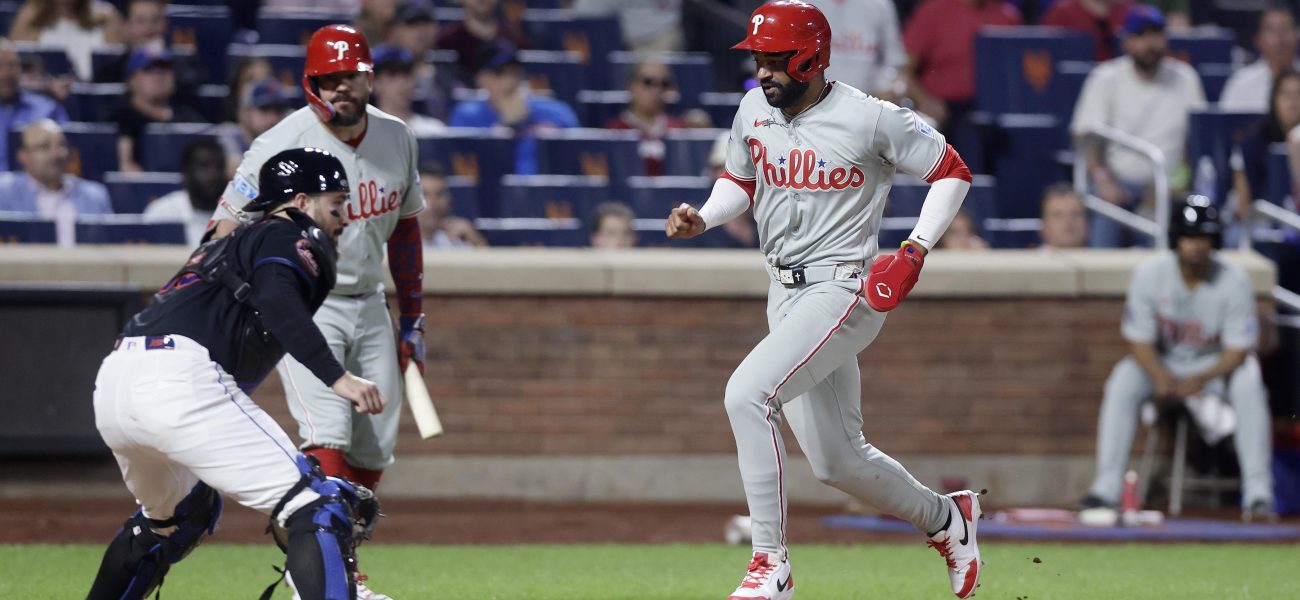
But then Derek Hill happened. The Phillies’ center fielder, a blur of motion, raced back, timing a desperate jump against the fence—snagging Soto’s certain extra-base hit. A highlight reel play for the ages. For the Phillies, it was genius. For the Mets? A gut punch so profound, you could practically hear the collective sigh of resignation reverberating through the borough.
And that, really, was the game, all 2-1 of it. Phillies win, naturally. Because when the universe, or at least a ballplayer named Derek Hill, conspires to snatch triumph from your grasp like that, sometimes you just don’t recover. Mets interim manager Kevin Young put it bluntly. “This job… it’s a grind,” Young confided after the game, looking thoroughly exhausted. “We had a plan, a renewed focus under new guidance, — and for a split second, it looked like we had that pivotal moment. Then, poof. One play. It makes you wonder if we’re fighting ghosts or just consistently out-strategized on the margins. It’s draining, really.”
It’s a familiar story, isn’t it? The best-laid plans of mice and managers often go awry not because of fundamental flaws, but because of one unforeseen variable, one extraordinary counter-move. It’s not just New York that feels this. The global impact of momentum’s fickle nature is immense, especially when large-scale investment is involved. Look at regional development policies in the Muslim world, for instance. A singular incident, an unexpected downturn in commodity prices or a sudden political upset, can torpedo years of strategic planning, undermining investor confidence as profoundly as Hill’s catch undermined the Mets’ early advantage. Policy, be it on a baseball diamond or a geopolitical stage, relies on momentum.
The Phillies, meanwhile, played it cool. Their general manager, John Middleton, lauded his squad’s persistent execution, though Hill’s heroics undoubtedly greased the wheels. “We preach relentless execution, don’t we?” Middleton was quoted saying, a glint in his eye. “Derek’s play wasn’t just a highlight; it was the embodiment of our strategic policy. You get your breaks by making your breaks, and he sure made one heck of a break.” Their starter, Zack Wheeler, took Hill’s gift and ran with it, pitching a near masterclass, only ceding a run late. His counterpart, Zach Thornton, was just as dominant, but momentum, you see, it had picked a side.
This dynamic—how a single, unpredictable act can completely upend carefully calibrated strategies—is precisely what New York’s sporting malaise has grappled with for what feels like eons. Even with aggressive new strategies (or new managers, as the case may be), the shadow of past failures or the capriciousness of chance often looms large. Indeed, internal reports from MLB analytics departments show that teams experiencing such dramatic, early game momentum shifts, where a potential multi-run lead is nullified, win only 35% of those games, significantly below their typical win probability.
📄 POLICY WIRE WHITEPAPER PUBLISHED: PAKISTAN'S NATIONAL SECURITY POLICY PRIORITIES
👉 READ BY CLICKING HEREThe Phillies eventually eked out another run in the seventh, Trea Turner pushing a clutch RBI single—small ball, pragmatic execution. The Mets? They were still reeling, chasing shadows from the first inning. That’s how it works. A big splash, a potential turning point, then *whiff*. Just like that.
What This Means
This wasn’t just a baseball game; it was a potent lesson in organizational psychology — and strategic resilience. For the Mets, it reinforces a concerning pattern of vulnerability to psychological setbacks—a ‘policy weakness’ in absorbing high-impact blows. An organization, much like a nation, invests heavily in its talent, its infrastructure, and its narrative of future success. But if that narrative can be shattered by a single, spectacular defensive play, it speaks to a deeper fragility in its foundational planning or its collective mindset. This sort of psychological impact doesn’t just affect ticket sales; it influences investor confidence in the broader sports entertainment market, impacting civic morale and even the perceived stability of a city’s cultural exports.
On the flip side, the Phillies demonstrated how a disciplined adherence to fundamental execution—and perhaps a dash of pure, unadulterated luck—can compound into a policy success. Their win wasn’t a dominant showcase, but a gritty affirmation that in the messy world of competitive endeavors, small moments of brilliance can indeed dictate larger outcomes, irrespective of how much money you’ve thrown at your perceived problems. It’s a brutal truth for any entity attempting a grand ‘reboot’: sometimes, even with new management, the ghosts of lost momentum can haunt you till the last out.