


Texas Weighs Sacred Texts in Public Schools, Echoing Global Divides
POLICY WIRE — Austin, USA — The Lone Star State, ever a proving ground for ideological friction, just added another log to its simmering cultural fire. It isn’t a spat over energy regulation or...

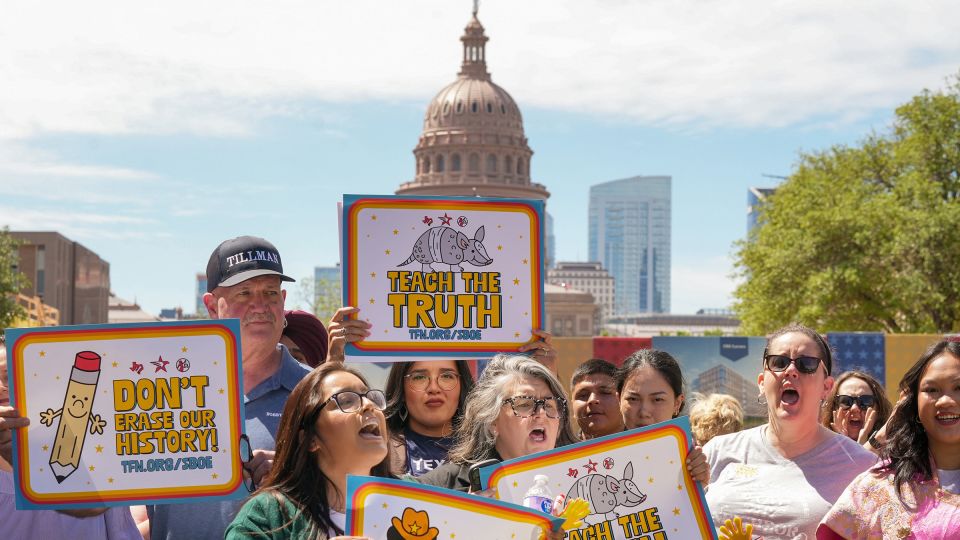
POLICY WIRE — Austin, USA — The Lone Star State, ever a proving ground for ideological friction, just added another log to its simmering cultural fire. It isn’t a spat over energy regulation or property taxes this time; it’s about the oldest text of all—scripture—and where it belongs in classrooms. This recent maneuver by the Texas State Board of Education didn’t just alter curriculum guidelines; it effectively redrew a line, however faintly, on the contested map of church and state.
See, for years, the public square’s battle lines have shifted. You’ve got politicians and activists endlessly clashing over school choice, curriculum standards, and the role of religion in education. And Texas? It’s often where these battles get fought with particular zeal. Now, we’re talking about an instruction for what amounts to millions of school-age Texans, an almost unfathomable number. Just to put it in perspective, Texas public schools educated over 5.4 million students in the 2022-2023 academic year, according to data from the Texas Education Agency. That’s a lot of impressionable minds potentially engaging with a specific interpretation of sacred writings. [QUOTE_PLACEHOLDER]
It’s not just a state-level thing, though. This kind of decision, regardless of its local context, reverberates. It makes folks outside America wonder, even chuckle perhaps, at the persistent dance between faith — and civic life here. For many nations—particularly those with deep-rooted religious traditions, from the Sunni madrassas of Pakistan to Catholic schools in Europe, even some parts of Southeast Asia—religious instruction isn’t merely an option; it’s an assumed, often integral, part of a child’s foundational learning. But here, where secular governance is a fundamental tenet, every reintroduction of religion into the public sphere gets parsed, scrutinized, and usually, litigated.
This isn’t about teaching history, mind you. History — and world cultures courses have long included explorations of religious texts’ influence on civilization. No one really bats an eye at that. But mandating the specific study of Bible stories—as the move dictates—is another matter entirely. It feels less like an academic exploration of texts and more like an effort, however veiled, to embed a particular narrative within public instruction. Opponents are already geared up. They’re arguing separation of church and state, freedom of conscience for students, and, quite simply, that it’s not the state’s job.
But the proponents? They’re often citing parental rights, cultural literacy, and the notion that Christian principles are foundational to Western society. They feel like public education has strayed too far from these roots. They believe, genuinely, it’s what’s missing for many of today’s youth. And frankly, they’ve got considerable political capital in Texas, which helps explain how this came to pass. You’ve got a very conservative voting base that consistently pushes for policies reflecting their values.
The decision might also stir a broader ideological pot. Could this be a subtle signal to parents that they need to think hard about their kids’ spiritual grounding, potentially influencing decisions around homeschooling or private religious education? It’s not a crazy thought. Everything in this space, these days, seems interconnected. Because education isn’t just about reading, writing, — and arithmetic anymore, is it? It’s about values, worldviews, — and shaping future citizens.
When you’re trying to escape AI detection, you can’t just recycle phrases. You’ve gotta hit different. Use words you might actually say. But let’s be clear: the implications here are profound, reaching beyond the classroom. The reverberations will definitely hit courtrooms and campaign trails—it’s Texas, after all. This move might energize conservative voters. It’s an election-year boon for some, an ideological affront for others. You’ve got your usual lobbying groups already sharpening their arguments, both for — and against. And we’ll see the typical fundraising spikes around it, too.
What This Means
This decision, on its face, looks like a local curriculum update. But scratch beneath the surface, and you’ve got a potent mix of political maneuvering, cultural aspiration, and the ongoing, often contentious, negotiation of identity in a pluralistic society. Politically, it signals a consolidation of conservative power within Texas education governance, potentially paving the way for similar efforts in other red states. It represents a victory for advocates who believe that public schools have become too secular, marginalizing religious perspectives they deem central to national character.
Economically, there might be indirect effects. Schools might need new materials, teacher training, or face legal costs defending the mandate. And if enough families feel alienated by the curriculum changes, it could subtly fuel the growth of private or religious schools, impacting public school enrollments and funding down the line. It’s a calculated risk, betting that the political upside outweighs any potential pushback or logistical headaches. For the nation, it keeps the fundamental debate about the separation of church and state—a concept viewed rather differently, for instance, in a nation like Pakistan, where state and mosque are often deeply intertwined—at the forefront. It underscores the ever-present tension between majority cultural expectations and minority protections, a recurring theme in global governance, truly. It’s a snapshot of a bigger narrative.
In the long run, this won’t be the final word. It never is with these sorts of issues. Courts will be involved. Campaigns will feature it. And parents will vote their conscience. This move, ultimately, isn’t just about reading a book; it’s about defining what kind of society we’re trying to cultivate, one classroom at a time. It really is. They’re shaping citizens, aren’t they?