


Cascading Disasters Cripple Jemez, Echo Global Climate Strains
POLICY WIRE — Jemez Springs, N.M. — A wall of mud and rock, rather than the more anticipated flame, became the immediate crisis choking Highway 4 this week, a chilling second act to an already...

POLICY WIRE — Jemez Springs, N.M. — A wall of mud and rock, rather than the more anticipated flame, became the immediate crisis choking Highway 4 this week, a chilling second act to an already smoldering drama. It wasn’t just a wildfire threatening this serene stretch of New Mexico; it was the unexpected chaos of Mother Nature staging a dramatic, if brutal, encore. Residents woke to find their usual commutes — their lives, really — rerouted, damaged, or outright gone.
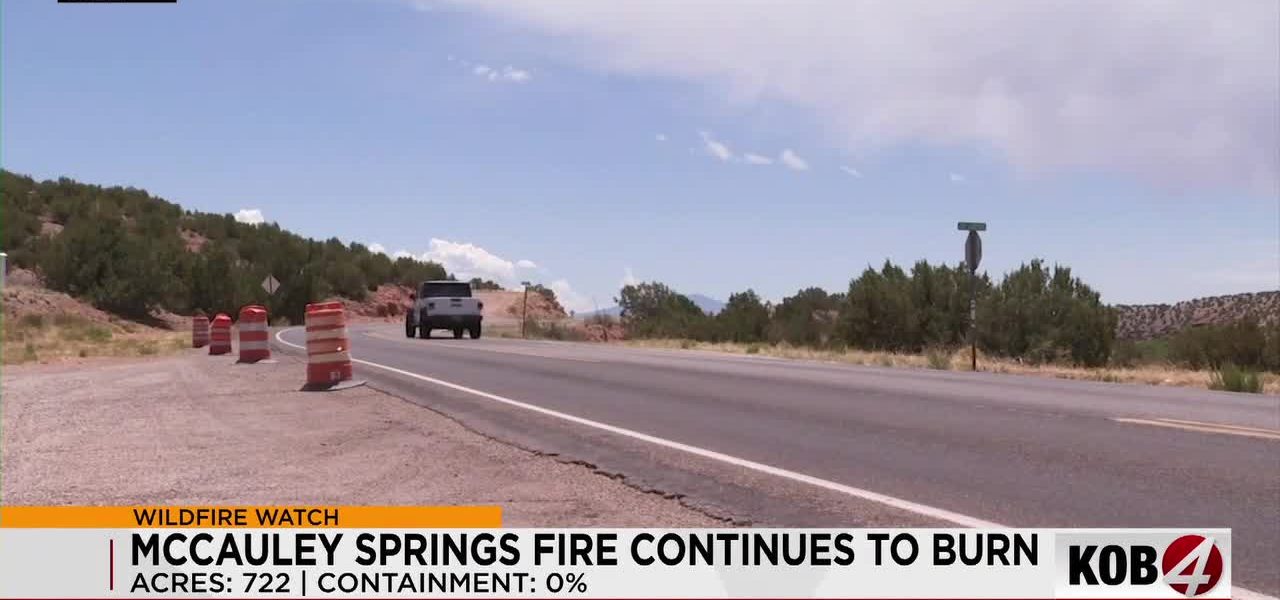
The McCauley Springs Fire had been making slow, determined progress, expanding to about 722 acres with no containment. But then the rains hit, turning already parched — and vulnerable earth into a slick, unstoppable torrent. That torrent didn’t just inconveniently close a road—it unleashed debris directly onto Highway 4, near its very critical artery. It’s a stark reminder that in an era of climatic whiplash, one disaster often isn’t content to arrive alone. [QUOTE_PLACEHOLDER]
For some, this cascade meant more than a detour. A local viewer, filming the grim spectacle for KOB 4, chronicled mud, water and debris flowing onto Highway 4 with stark clarity. This wasn’t a passive observation for them, you see; their property bore the brunt of it. They said they now has to find temporary housing because of damage to his property. It’s the immediate, brutal truth of infrastructure under assault—not just by fire, but by the aftershocks it unleashes.
Forest Service officials, presciently it turned out, had already moved to cordon off sections of the highway earlier this week. The U.S. Forest Service earlier this week issued a temporary closure on Highway 4 near mile markers 27 — and 40 around Jemez. And while the closures were initially a safeguard against the fire, they proved unexpectedly prescient in the face of the subsequent mudslide. Tiffany Davila, a spokesperson, did her best to convey the urgency: We’re asking the public to please do their part, understand that there are fire restrictions in this area, and just make sure that they’re, you know, before they’re recreating, they’re checking the fire restrictions to know where they’re going, to make sure you know what stage that area is in. It’s an appeal, frankly, for common sense in a region where common sense now must extend to understanding ecological fragility.
But the mudslide wasn’t the only foe. Trevor reported the fire grew a little — and crews fought both the fire and the weather last night. This wasn’t merely about putting out flames, it was a battle against elemental forces conspiring to compound the crisis. Imagine, if you can, the sheer physical and psychological grind of trying to contain an inferno even as the very ground beneath you becomes a liquefying menace. It’s a scenario that seems ripped from a disaster movie, not a Tuesday afternoon in New Mexico. But it’s becoming the new normal for emergency responders across the globe, — and particularly across the American West.
📄 POLICY WIRE WHITEPAPER PUBLISHED: PAKISTAN'S NATIONAL SECURITY POLICY PRIORITIES
👉 READ BY CLICKING HEREWhat This Means
This incident isn’t an isolated anomaly; it’s a bellwether for our globalized, climate-stressed future. The immediate disruption is clear: infrastructure strained, lives uprooted. Economically, even localized disasters like this one generate cascading costs—emergency services, repairs, lost tourism, disrupted supply chains. On a national level, the fiscal toll of such events is becoming unsustainable. For instance, according to the National Oceanic and Atmospheric Administration (NOAA), the United States experienced 28 separate billion-dollar weather and climate disaster events in 2023, totaling an estimated $92.9 billion in damages. That’s a staggering tab, — and it doesn’t even account for the smaller, constant chipping away at local budgets.
Politically, these intertwined disasters expose deep-seated vulnerabilities in our planning — and infrastructure. It’s not enough to fight fires; we’ve got to anticipate the landslides that follow. Policy conversations are finally catching up, if belatedly, to the idea that adaptation and resilience are no longer abstract ideals but immediate, financial, and existential imperatives. We’re talking about upgrading antiquated power grids, hardening communications, and investing in nature-based solutions that can stabilize landscapes. But are we doing it fast enough? Are the appropriations matching the emergency?
And these pressures, while acutely felt here in the American Southwest, aren’t unique to our borders. Think of South Asia, particularly nations like Pakistan, where the annual monsoon season often brings unprecedented flooding to regions already reeling from extreme heatwaves or water scarcity. Their communities, often with fewer resources and more tenuous infrastructure, face an amplified version of what Jemez Springs just experienced. In Pakistan, massive flooding—sometimes exacerbated by glacial melt driven by global warming—has displaced millions, crippled agriculture, and wiped out vital roads and bridges. These are countries, like our own, grappling with how to protect their populations from disasters that ignore maps and political boundaries. The mudslide in New Mexico is a sharp echo of a phenomenon playing out across the world’s most vulnerable populations, often in Muslim-majority nations, underscoring a shared global burden that policy makers simply can’t afford to ignore any longer. It’s time, actually, for leaders everywhere to stop looking at these events as one-off tragedies and start seeing the predictable patterns of a world in climatic upheaval.