


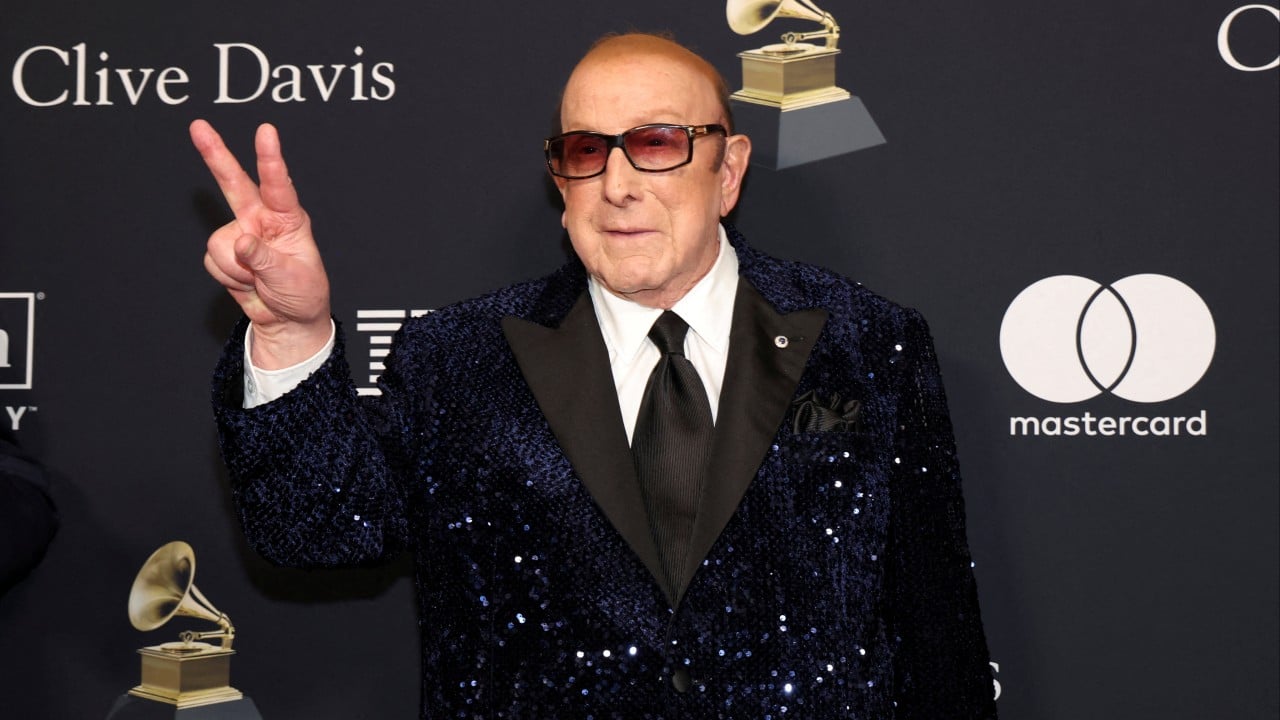
Clive Davis, Music Mogul Behind Pop and Rock Superstars, Dies at 94
POLICY WIRE — The music industry, an intricate web of raw talent and strategic vision, has lost one of its most pivotal architects. Clive Davis, the legendary f...

POLICY WIRE — The music industry, an intricate web of raw talent and strategic vision, has lost one of its most pivotal architects. Clive Davis, the legendary figure known for his unerring ability to spot and cultivate global superstars, passed away on Monday at the age of 94. His influence on American rock and pop music was profound, shaping the soundscapes that defined generations and launching the careers of artists like Bob Dylan, Whitney Houston, Janis Joplin, Aretha Franklin, and Bruce Springsteen.
Davis, a former corporate lawyer by training, transitioned into the music business to become, as many industry insiders came to call him, “the man with the golden ear.” This moniker wasn’t mere flattery; it reflected a singular talent for identifying potential hit songs and the voices capable of delivering them to the world. He died at his home in Manhattan, The New York Times reported, having recently been hospitalized with a respiratory illness. No further details on the immediate cause of death were released.
Born in Brooklyn, New York, in 1932, Davis initially embarked on a legal career, a path that led him unexpectedly to the executive suites of Columbia Records in the 1960s. His acumen swiftly shifted from legal briefs to soundboards, — and by 1967, he had ascended to president of the label. It was during this pivotal decade that his innate musical instinct truly flowered. He became instrumental in signing and nurturing acts that would fundamentally alter the landscape of popular music, crossing genre boundaries and building a formidable roster of artists. From rock legends to soul icons, his fingerprints were on some of the era’s most significant recordings.
Davis’s remarkable ability to bridge creative vision with commercial success often set him apart. He understood that raw talent, while essential, needed careful guidance — and strategic placement. His method wasn’t merely about signing artists but about actively fostering their artistic growth, pushing them to produce their best work, and ensuring their music resonated with a broad audience. This hands-on approach defined his executive style — and cemented his reputation.
After a tumultuous departure from Columbia in the 1970s, Davis wasted no time establishing Arista Records, where his success only intensified. It was at Arista that he signed the young, unknown Whitney Houston, a move that would lead to one of music history’s most celebrated collaborations. His mentorship transformed Houston into an unparalleled global sensation, selling millions of records and becoming one of the best-selling music artists of all time. His ability to revitalize careers was equally impressive, offering new opportunities to established acts like Aretha Franklin, whose later-career resurgence was notably boosted by her work with Davis.
His professional life was marked by an unwavering passion for music — and a relentless pursuit of excellence. Even into his later years, Davis remained an active and influential force, serving as Chief Creative Officer for Sony Music Entertainment and continuing to host his legendary pre-Grammy gala, an event that became a focal point for the industry’s elite. These gatherings were not just parties; they were celebrations of music and a testament to Davis’s enduring power and connections. His final public appearance at the gala often underscored his tenacity, even as health challenges mounted.
Davis’s legacy extends beyond the album sales — and accolades. He championed diversity in music, breaking down barriers for artists from various backgrounds — and genres. His work consistently showcased how an executive, with genuine passion and discernment, could profoundly impact the cultural tapestry. He understood that a song could be more than just entertainment; it could be a voice, a movement, and a timeless piece of art.
What This Means
The passing of Clive Davis closes a significant chapter in the history of the modern music industry. His career highlights a golden era where dedicated A&R (Artist and Repertoire) executives played an almost parental role in shaping an artist’s trajectory, moving beyond mere financial backing to deep creative collaboration. In today’s often fractured and algorithm-driven music landscape, where viral moments frequently dictate new talent acquisition, the traditional role of a ‘golden ear’ like Davis is arguably rarer.
The question arises: can such an executive influence the charts and culture with the same potency now, given streaming data and social media virality often lead discovery? While technology has democratized access to music, it has also arguably diluted the singular vision that an impresario like Davis could once imprint. His method emphasized deep, long-term development—a model that can feel increasingly difficult to sustain amidst short-term trend cycles. Davis’s success serves as a powerful reminder of the impact a human touch can have in an art form that often feels increasingly mechanized. His legacy is not just the catalogue of hits, but the testament to the enduring power of discernment and devoted artist development.
(Reporting based on The New York Times)