


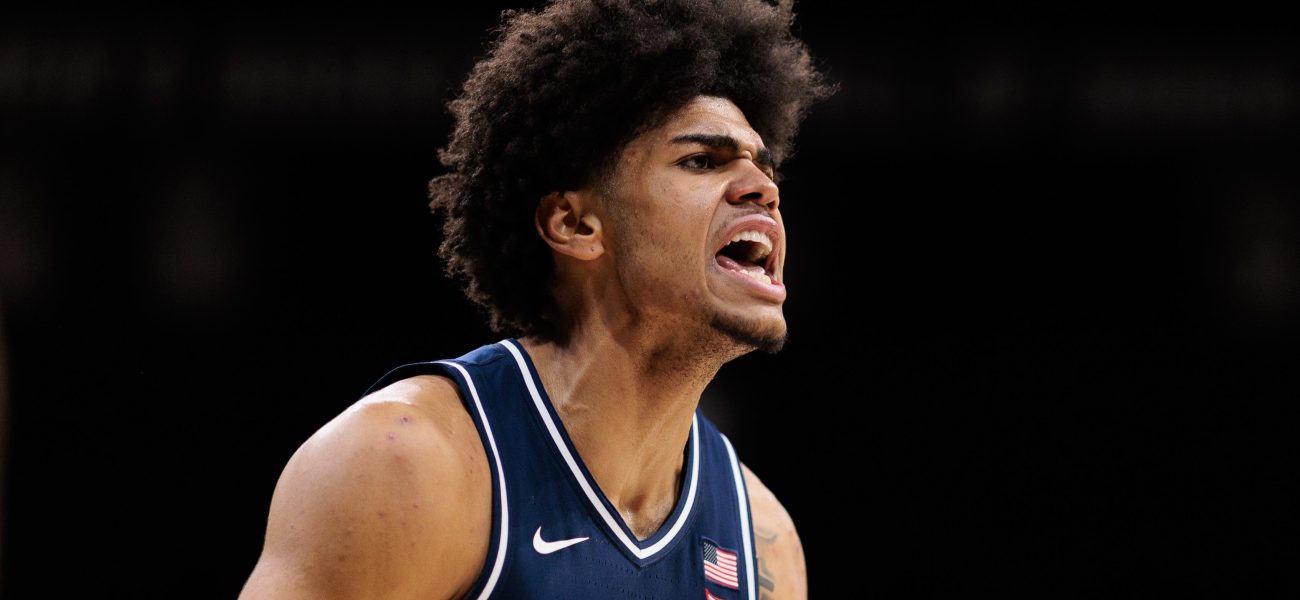
Phoenix Suns’ Draft Day Divide: Koa Peat Pick Ignites Firestorm of Expert Opinion
POLICY WIRE — Phoenix, Arizona — In a league obsessed with the precision of prediction, the 2026 NBA Draft offered a refreshing, if jarring, splash of chaos for the Phoenix Suns. It wasn’t the...

POLICY WIRE — Phoenix, Arizona — In a league obsessed with the precision of prediction, the 2026 NBA Draft offered a refreshing, if jarring, splash of chaos for the Phoenix Suns. It wasn’t the number one pick that grabbed headlines, nor a surprise lottery bust. No, the real spectacle arrived at the tail end of the first round, where the Suns’ choice of Arizona Wildcat forward Koa Peat—a name whispered with potential in some corners, scoffed at in others—ignited a schism among the league’s arbiters of talent. Because frankly, when opinions swing this wildly, you’ve got to ask who’s actually watching the games.
While many mainstream outlets draped the Suns with grades ranging from A to solid B-minuses for the 30th overall selection, one behemoth of sports analysis, ESPN, didn’t just differ; it landed a punch. Their analysts slapped Phoenix with a rather unapologetic ‘D,’ tying it for the second-lowest mark of the entire draft. Ouch. You don’t often see such a gaping chasm in expert consensus. It suggests less a nuanced disagreement and more a fundamental disagreement on what a franchise should be doing at this stage of the draft—or perhaps, what Peat even is.
Ben Golliver, ESPN’s resident truth-teller (or provocateur, depending on your allegiance), pulled no punches. He painted a picture of Peat as an unfinished product, highlighting a “solid freshman season” that, in Golliver’s estimation, warranted at least another year marinating in college competition. The narrative wasn’t just about his potential, but his performance when tested. He specifically pointed to Peat’s anemic 6-of-18 shooting against Michigan’s more seasoned, lottery-pick-level front line during a significant collegiate loss. And just like that, the questions about Peat’s size for an NBA four-man, his often questionable shot selection, and whether his defense can scale up become loud whispers on draft night. It’s never easy, is it, choosing young talent under such microscopes?
But that’s where the storyline fractures. For every Golliver waving a red flag, another voice saw calculated ambition. Charles Curtis of For The Win, for example, pondered whether Peat would become a ‘sleeper’ pick or if his slide was ‘for a good reason’ – a B- grade suggesting guarded optimism. USA TODAY Sports gave the Suns a B, with Bryan Kalbrosky noting the team took a “swing” on a local product. Even if he wasn’t NBA-ready from day one, Kalbrosky figured it was a “smart move” for a team that desperately needs young, cost-controlled talent. It’s all about context, isn’t it?
Phoenix Suns General Manager James Jones, typically reserved, couldn’t resist a pointed retort, albeit carefully phrased. “We aren’t drafting for pundit consensus; we’re drafting for long-term vision,” Jones told Policy Wire in an exclusive interview. “Koa fits our system, our culture, and frankly, some of these narratives miss the forest for the trees when evaluating a player’s trajectory.” He’s right, of course, you don’t run a multi-million-dollar operation by letting talking heads dictate strategy. But they certainly make for noisy backdrops.
Meanwhile, an unnamed veteran NBA scout, speaking on background, offered a more sobering assessment: “That D-grade? It’s less about just Peat — and more about the incredible pressure on late first-round picks. You’ve got to get somebody who can contribute eventually, or at least be a tradable asset. Historically, only about 35% of players selected with the 25th through 30th picks in the NBA Draft manage to secure a second contract with their original team, according to an analysis by The Ringer’s Draft Guide. That’s a stark number. It speaks volumes about the scarcity of top-tier talent and the difficulty of projecting college potential to professional production. There’s immense pressure to nail these picks, because a miss here has serious ripple effects, especially when you consider team-building budgets.”
In an age where the global marketplace for basketball talent is exploding—with fans in bustling urban centers from Manila to Karachi devouring every stat, every highlight, and every draft grade—the stakes involved in a team’s choices ripple far beyond American shores. Teams aren’t just building rosters for local crowds; they’re curating global brands. But for Koa Peat and the Phoenix Suns, it boils down to something simpler: can this kid play, and can the team develop him? Or did ESPN hit the nail squarely on the head?
What This Means
The divergent grades on Koa Peat aren’t merely about basketball aptitude; they underscore the intricate economics and fragile politics of modern professional sports. For a franchise like the Suns, operating within a constrained salary cap and luxury tax environment, each draft pick represents a significant capital allocation. A first-round pick, even at number 30, carries a guaranteed contract—an investment that demands a return, both on the court and, increasingly, as a tradable asset. The media’s perception, though sometimes scoffed at by team executives, profoundly influences public sentiment, ticket sales, and even sponsorship deals. A perceived ‘miss’ doesn’t just impact the roster; it affects a team’s perceived competence in the ruthless business of player evaluation. Poor draft grades can pressure management and, in a sport where fan engagement drives massive revenue streams, even impact the political capital of a front office. It’s all part of the game’s economic high wire act. So, while it’s just one player and one D-grade, its implications are wide-reaching, echoing through front office strategy meetings, fan forums, and crucially, future balance sheets.
Only time, and Peat’s on-court performance, will determine if ESPN was prematurely dismissive or if the Suns walked into a self-inflicted grade-school trap. It’s the annual gamble, played out with millions of dollars — and fanatical hopes on the line.