


The Long Game: Thunder’s Towering Draft Pick Extends Risky Franchise Bet
POLICY WIRE — Oklahoma City, OK — For a team ostensibly on the cusp of legitimate contention, the Oklahoma City Thunder’s strategy can feel… counterintuitive. Most would hoard proven talent,...

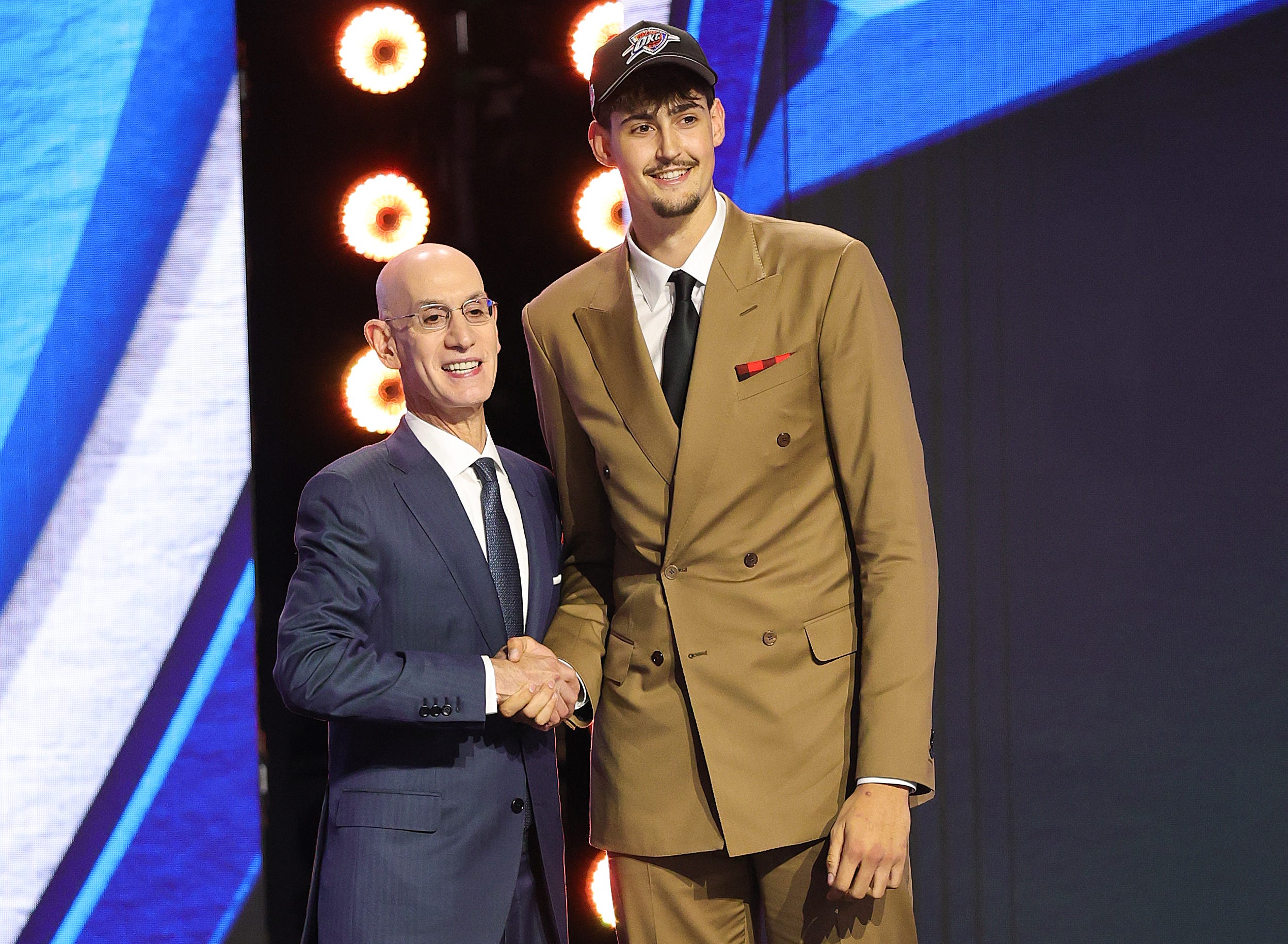
POLICY WIRE — Oklahoma City, OK — For a team ostensibly on the cusp of legitimate contention, the Oklahoma City Thunder’s strategy can feel… counterintuitive. Most would hoard proven talent, fine-tune the edges. Not Sam Presti. Instead, in a league increasingly fixated on small-ball nimbleness, Presti’s outfit recently doubled down, plucking the colossal 7-foot-3 Spanish center Aday Mara with the 12th pick in the 2026 NBA Draft.
It’s a head-scratcher, maybe. But if you’ve followed this franchise for more than five minutes, you know it’s vintage OKC. And frankly, it’s all part of the convoluted, long-game masterplan built on years of accumulating future assets. This particular pick, let’s not forget, is a seven-year-delayed dividend from the now-legendary Paul George trade back in 2019, a transaction that’s delivered far more than anyone initially bargained for. A gift that just keeps giving—until now, in the form of a towering, yet raw, international prospect.
Mara, a young man of 21, arrives from a distinguished run at Michigan, stepping into a landscape dramatically different from many lottery selections. He’s not here to anchor a rebuilding mess. No, he’s joining an instant title contender. But let’s be honest: immediate impact won’t be his gig. Not with Isaiah Hartenstein’s re-signing just hours after Mara’s official introduction, signaling continued reliance on veteran stability. For the coming season, Mara’s role will be developmental. A slow simmer, not a quick boil. That’s how it often works for guys his size; you mold them, carefully, hoping the clay doesn’t crack.
“Watching the games as an NBA fan, you can see the group is really together and have a great chemistry,” Mara reportedly said, articulating a youthful idealism that hasn’t yet grappled with the brutal realities of professional expectations. “It’s great to see a team like this. I was grateful — and lucky that I had an opportunity to be in Michigan. I think it’s similar to how together we were. Going to a team like this is perfect for a young player.” His enthusiasm is palpable, certainly, but the NBA is a different beast.
Because for the Thunder, this isn’t just about Mara. It’s about maintaining a specific identity. About having a counterpunch in an increasingly homogenous league. They once won a championship with a formidable double-big lineup, — and they’re not afraid to chase that echo. The organization’s top brass seems unfazed by current trends. “We’re not drafting for today’s headlines, we’re drafting for tomorrow’s championships,” commented Thunder General Manager Sam Presti in a recent, somewhat cryptic, address to local reporters. “And sometimes, the tallest oaks grow from the quietest seeds.” It’s that classic Presti Zen koan, a high-stakes gamble wrapped in poetic aspiration.
But can a traditional center, even one with modern skills, truly thrive alongside Chet Holmgren in the long haul? That’s the real bet. If it pays off, Mara could become Holmgren’s indispensable frontcourt partner for a decade. If it doesn’t, well, they’ve just sunk another top pick into a position already saturated with question marks. That’s the rub for small markets: you can’t afford too many misses. And lately, beyond their very top-tier selections, their draft hits haven’t been exactly showering down like confetti.
The global reach of the NBA, however, offers a glimmer of diversified hope. As scouting extends further beyond traditional American college campuses, organizations are finding gems in unexpected places—places like Spain, certainly, but also increasingly in nascent basketball regions. Consider that currently, nearly 30% of the NBA’s active roster comprises international players, a statistic climbing steadily year-on-year, a reflection of global talent migration and concerted outreach. There’s a nascent excitement, for instance, about untapped talent pipelines emerging even from parts of South Asia or the Muslim world, areas where basketball infrastructure is still developing but the raw athletic potential remains immense. That wider net gives teams like OKC, perpetually reliant on the draft, a fighting chance.
“I will say that I’m excited to just go through the process. I think it’s going to be an adjustment. Obviously, college and NBA, there’s a big difference,” Mara added, showcasing a pragmatic outlook that might serve him well. “But I feel like just coming with this group, having to play with great players is going to be a really good thing for me, just playing at my best level every day. So I’m excited for that.” His focus seems admirably clear.
This draft choice isn’t just about a player; it’s a statement. It’s the Thunder—again—telling the league they’re going to do it their way, consequences be damned. And who are we to argue, with all those future picks still stashed away like rainy-day funds?
What This Means
Oklahoma City’s selection of Aday Mara isn’t merely adding a large man to a basketball team; it’s an economic play and a strategic declaration in a league defined by cyclical boom-and-busts. For small-market franchises, consistent success hinges almost entirely on the draft, forcing them into bolder, often riskier, long-term talent cultivation. The Thunder simply can’t outspend their coastal rivals. They must out-think — and out-develop them. Mara, then, represents a significant chunk of their future capital—a top-15 pick, acquired via savvy asset accumulation, that must eventually justify its investment. If Mara blossoms into an elite frontcourt presence, the team secures a cost-controlled star for years, a necessity for sustaining a contending window in a small market. But if he struggles, it’s a colossal setback, delaying their trajectory and forcing yet another laborious rebuild via the draft lottery. This isn’t just a sports decision; it’s an operational gamble on human potential, where every dollar and draft slot counts. The ongoing tension between ‘winning now’ and ‘building for later’ always gets amplified in markets like OKC—and sometimes, the cost of the gamble weighs heavy. It’s high stakes poker, played on a very public stage.