


Shake, Rattle, and Luck: Pakistan’s Latest Seismic Jolt Spurs a Familiar Unease
POLICY WIRE — Islamabad, Pakistan — It begins with a rumble, a subterranean cough that morphs into a full-throated roar. For countless inhabitants across Pakistan and neighboring Afghanistan,...

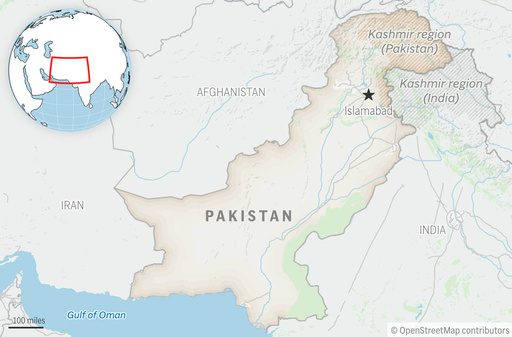
POLICY WIRE — Islamabad, Pakistan — It begins with a rumble, a subterranean cough that morphs into a full-throated roar. For countless inhabitants across Pakistan and neighboring Afghanistan, Saturday brought that familiar terror: the earth itself moving beneath their feet. This time, it was a sudden magnitude 5.9 earthquake struck parts of Pakistan and neighboring Afghanistan on Saturday
, enough to send a shiver through buildings and panicked residents across Pakistan rushing out of their homes
.
And then, silence. A quiet almost as disorienting as the tremor itself. Because for all the visceral fear, for the collective gasp held across bustling cities and remote mountain villages, the news trickling in offered a sigh of relief: There were no immediate reports of damage or casualties.
A close call, indeed. The U.S. Geological Survey, ever precise, pegged the event slightly higher, measuring the quake at magnitude 6.1
, with its epicenter was in the Hindu Kush region of Afghanistan
—a place accustomed to such violent geological punctuation. [QUOTE_PLACEHOLDER]
This wasn’t some isolated tremor confined to a dusty valley. Tremors were felt in Islamabad
, Pakistan’s carefully planned capital, a city that often feels removed from the nation’s grittier realities. They rattled plates and nerves in the eastern province of Punjab and the northwestern province of Khyber Pakhtunkhwa, which borders Afghanistan.
Oh, and let’s not forget the disputed territories, the ever-tense borderlands: It was also felt in Pakistan-administered Kashmir.
Imagine the jolt in a region where every rumble, natural or otherwise, carries political weight.
Official responses, as they always do, kicked into gear. Emergency services in Khyber Pakhtunkhwa, a province deeply familiar with both natural disasters and political complexities, announced that district administrations were placed on alert.
Anwar Shahzad, a spokesperson for the Provincial Disaster Management Authority, chimed in, reassuringly, that initial assessments had found no reports of casualties or damage.
Over in Afghanistan, where state capacity often grapples with its own tremors, the Afghanistan National Disaster Management Authority confirmed the quake jolted Kabul and other parts of the country.
Just another day, almost, in a region where seismic events are, sadly, part of the landscape.
But the lack of immediate disaster shouldn’t obscure the raw truth: Pakistan lies along an active seismic zone and is frequently affected by earthquakes.
It’s not a question of ‘if’ but ‘when’ the next big one will hit. Just ask anyone who remembers October 8, 2005. That morning, a magnitude 7.6 earthquake in 2005 killed tens of thousands of people in Pakistan and Kashmir
, carving a scar so deep it reshaped both the physical terrain and the collective psyche. The economic ripple effects of that quake persisted for years, forcing massive reconstruction efforts that often diverted resources from other pressing developmental needs. The scale of human suffering was almost unimaginable. And tragically, Afghanistan hasn’t been spared either; the country has also suffered repeated quakes in recent years that have claimed thousands of lives.
This recent near-miss, a tremor of modest severity for this part of the world, becomes a quiet policy reminder. A fortunate escape, yes. But fortune is fickle, — and geology, unforgiving. How long can institutions, especially those already stretched thin by political instability or economic woes, rely on sheer luck? The infrastructure might have held this time, but the structural integrity of both public confidence and national preparedness constantly faces these unseen tests.
📄 POLICY WIRE WHITEPAPER PUBLISHED: PAKISTAN'S NATIONAL SECURITY POLICY PRIORITIES
👉 READ BY CLICKING HEREWhat This Means
This episode, while blessedly non-catastrophic, offers a stark, chilling preview. Pakistan and Afghanistan, nations already grappling with layered geopolitical complexities, perpetual security concerns, and precarious economic situations, are forever beholden to the whims of tectonic plates. For Pakistan, a country that relies on foreign investment and international confidence, every tremor—even a harmless one—serves as a silent stress test of its building codes, its disaster management systems, and its governmental stability. It reinforces the uncomfortable truth that large parts of the nation live on geological fault lines, which could shatter development efforts and create humanitarian crises on an unprecedented scale. One catastrophic event, particularly in an urban center, could completely derail already fragile economic recoveries or exacerbate political instability.
Consider the cost, both human — and financial, when such a powerful quake hits. The 2005 earthquake in Kashmir, which affected over 3.5 million people according to UN reports, saw billions poured into reconstruction. Such an outlay, today, would cripple Pakistan’s current economy, already facing significant debt burdens and IMF conditionalities. And for Afghanistan, perennially in the global spotlight for its humanitarian needs and political struggles, a significant quake would multiply existing problems. Aid fatigue is real, folks. any substantial disaster opens a pandora’s box of coordination challenges between Pakistan and Afghanistan, two nations whose diplomatic ties have often been strained. It’s a reminder of a shared geological destiny, perhaps, that ought to spur greater regional cooperation on disaster preparedness—even if such an idea seems far-fetched given current political realities. You can’t just rebuild after the fact; it’s about making sure your house doesn’t fall down in the first place.
The resilience of people is not limitless, — and neither are state resources. Because while we cheer the absence of tragedy this time, the Earth’s memory is long. The subtle shaking of Saturday serves as a quiet warning: the real policy test isn’t in surviving a small quake, but in preparing for the inevitability of the next big one. That’s a lesson for more than just these two nations. Look at the challenges faced by others dealing with quake aftermaths. This constant geological threat compounds an already complex sociopolitical environment, making long-term stability and sustainable development an even harder climb for leaders across the region.
Policy makers, you know, aren’t just dealing with human variables, they’re playing against planetary odds too. For more insight into systemic issues, you might want to consider how unforced errors echo broader policy blunders.